Plant Overview
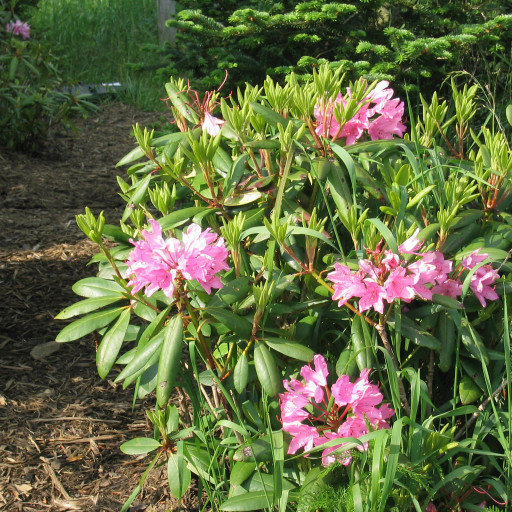
Known as the "Catawba Rosebay" or "Mountain Rosebay," this stunning evergreen is the crown jewel of the Appalachian Mountains. In late spring, it transforms rugged high-altitude slopes into a sea of vibrant violet and magenta. It is the hardy, wild ancestor of many of the colorful rhododendron hybrids found in suburban gardens today.
🔍 How to Identify
- 🌸 Flower Trusses: Large, rounded clusters of bell-shaped flowers, typically ranging from lilac-purple to pale pink with faint green or yellow freckles on the interior petals.
- 🍃 Leathery Foliage: Broad, oval-shaped leaves that remain dark green year-round. They have a thick, waxy texture and can grow up to 6 inches long.
- 🌳 Rounded Form: A dense, multi-stemmed shrub that naturally grows into a tidy, mounded shape, often reaching heights of 6 to 10 feet in the right conditions.
🏡 In Your Garden
- ⛰️ Acidic Preferences: Like most members of the Heath family, it craves acidic, well-draining soil. If your soil is naturally alkaline, the plant may develop yellow leaves (chlorosis) as it struggles to "breathe" and absorb nutrients.
- ❄️ Winter Hardiness: This species is exceptionally tough against the cold. While other broadleaf evergreens might wilt in a freeze, the Catawba Rhododendron is a champion of Northern climates.
- 💧 Shallow Roots: It possesses a very shallow, fibrous root system. It hates being planted too deep or having the soil compacted around its base, so a thick layer of organic mulch is its best friend to keep roots cool and moist.
⚠️ Safety & Toxicity
- 🚫 High Toxicity: All parts of the plant—leaves, stems, and flowers—contain grayanotoxins. It is considered highly toxic to humans, dogs, cats, and horses if ingested.
- 🍯 "Mad Honey" Warning: Even honey produced by bees that forage exclusively on these flowers can be toxic to humans, leading to a condition historically known as "honey intoxication" or "Mad Honey Disease."
✨ Fun Fact
The Catawba Rhododendron is a natural thermometer! When temperatures drop significantly below freezing, the leaves curl up into tight, cigar-like tubes and droop downward. This is a survival mechanism to prevent water loss and protect the leaf surface from harsh winter winds.

Detailed Care Instructions
If you are seeking shrubs for moon gardens and wonder if there is a white-blooming Catawba rhododendron, you are in luck. A cultivar of this popular flowering shrub with white flowers is Rhododendron 'Catawbiense Album'.
How long do Catawba rhododendrons live?
These robust shrubs can live to be 100 years old.
What are alternatives to Catawba rhododendrons?
If you're short on space, try planting azaleas. These small, compact cousins of rhododendrons offer beautiful blooms but take up less room. There are many types of azaleas to consider.
| Color | Most Commonly Lavender-Pink But Does Come In Other Colors |
| Soil Ph | Acidic |
| Soil Type | Fertile, Well-Drained |
| Bloom Time | April To June |
| Plant Type | Broadleaf Evergreen Shrub |
| Mature Size | Will Stay 6 To 8 Feet Tall And 4 To 6 Feet Wide For Many Years But Can Eventually Get Larger |
| Native Area | Southeastern United States |
| Sun Exposure | Partial Shade To Full Shade |
| Hardiness Zones | 4-8 |
To successfully grow Rhododendron Catawbiense plants, follow these steps:
- Choose the right location: Rhododendrons prefer partially shaded areas with well-drained soil that is slightly acidic (pH 4.5-6). Avoid planting in heavy clay soil or areas prone to waterlogging.
- Prepare the soil: Before planting, improve the soil's drainage by adding organic matter like compost or peat moss. This will help create a milder soil environment for healthy root growth.
- Planting: Dig a hole slightly larger than the root ball of the plant. Place the plant in the hole, ensuring the top of the root ball is level with or slightly above the soil surface. Gently backfill with soil, firming it around the roots to eliminate any air pockets.
- Watering: Water the newly planted Rhododendron thoroughly and keep the soil moist but not waterlogged. Be careful not to let the soil dry out completely between watering sessions.
- Mulching: Apply a layer of organic mulch, such as wood chips or pine needles, around the base of the plant. This will help retain moisture, suppress weeds, and moderate soil temperature.
- Fertilizing: Feed the Rhododendron annually with an acidic plant fertilizer in early spring before new growth starts. Follow the manufacturer's instructions for proper application and dosage.
- Pruning: Rhododendrons generally don't require much pruning, but if needed, do so immediately after flowering. Remove any dead, damaged, or weak branches. Avoid heavy pruning, as it can affect flowering in the following year.
- Protection: Pay attention to extreme weather conditions, particularly during winter. Cover the plants with burlap or other protective material if frost or freezing temperatures are imminent.
Remember to regularly monitor the plant's health, keeping an eye out for signs of pests or diseases. Providing adequate care and maintaining the optimal growing conditions should result in a thriving Rhododendron Catawbiense plant.

Place in a window with dappled sun or a spot in the middle of a room. Or directly in a window facing west or east.

Rhododendron Catawbiense plant requires regular watering to maintain its health and growth, primarily during the summer season when the soil tends to dry out quickly. When watering this plant, it is essential to avoid splashing water on the foliage because it may cause disease and fungal infections.
To water Rhododendron Catawbiense plant, we should carefully pour water at the base of the plant, allowing it to penetrate the soil deeply. It is recommended to use a watering can with a long spout to direct the water flow to the roots directly. The frequency of watering depends on the environmental conditions and the soil's drainage capacity.
It is best to avoid overwatering the plant, as it can lead to root rot and other fungal diseases. To check the soil moisture level, we can touch the topsoil with our fingers. If it feels dry, it is time to water the plant, and if it feels damp, the plant can wait for a day or two before the next watering.
We can also mulch around the base of the plant with organic matter like bark, leaves, or peat moss to retain soil moisture, regulate temperatures, and suppress weeds. Mulching also helps to reduce soil erosion and enhances the soil's fertility over time.
In conclusion, watering Rhododendron Catawbiense plant requires careful attention and frequency based on the environmental factors. By following the proper watering techniques and maintaining appropriate soil conditions, we can enjoy the stunning blooms of this beautiful plant for years to come.
To fertilize this plant, it is best to use a granular, acid-loving fertilizer with a ratio of 4-12-8 or similar. Apply the fertilizer in early spring before new growth appears and again in late summer after blooming has finished. Avoid getting the fertilizer on the foliage or stems of the plant, as this can cause burning. Water the fertilizer in well after application. Additionally, applying organic matter such as compost or leaf mold around the base of the plant can help improve soil fertility and retain moisture.
Rhododendron Catawbiense plants prefer well-draining acidic soils that are rich in organic matter. It is recommended to use a soil that has a pH level between 4.5 and 6.0, and a high percentage of peat moss or compost. The soil should also have good drainage to prevent waterlogging, as this can lead to root rot and other fungal diseases. It is important to avoid using soils that contain lime or other alkaline materials, as these can raise the pH level and make the soil unsuitable for Rhododendron Catawbiense plants. Additionally, adding a slow-release fertilizer to the soil can help provide the plant with the nutrients it needs to thrive.
To propagate this plant, you can take stem cuttings from a healthy adult plant during the summer months. The cutting should be approximately four to six inches long and contain a few sets of leaves. Remove the leaves from the lower two inches of the stem and dip the cut end in rooting hormone. Plant the cutting in a well-draining potting mix and keep it moist but not waterlogged. Place the pot in a warm, bright location with indirect sunlight. It should root within four to six weeks and be ready to transplant into the garden the following spring.








