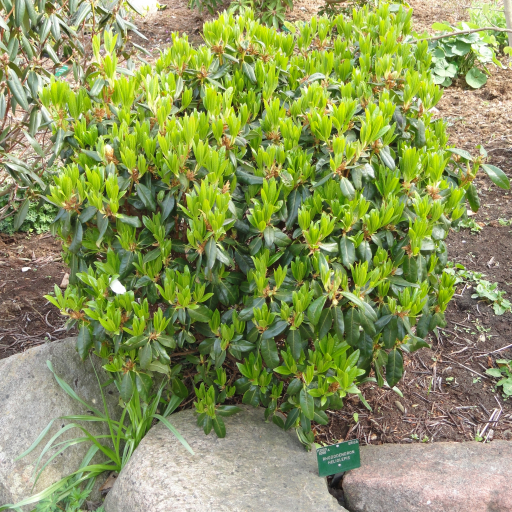
Plant Overview
Often called the "Scaly Rhododendron," this high-altitude beauty from the misty mountains of Southwestern China is a sensory treat for any woodland garden. While most Rhododendrons are prized solely for their flowers, Rhododendron heliolepis is a rare "double threat" because its evergreen foliage is intensely aromatic, releasing a spicy, camphor-like scent whenever you brush against it.
🔍 How to Identify
- 🍃 Aromatic Foliage: The leaves are thick, leathery, and lance-shaped. When crushed or rubbed, they release a distinct fragrance reminiscent of cloves or tea tree oil.
- 🌸 Spotted Blooms: The flowers appear in small clusters and are typically funnel-shaped. They range from pale rose to deep lavender, often featuring delicate brownish-red spots on the upper petals.
- ✨ Lepidote Scales: If you look at the underside of the leaf through a magnifying glass, you will see it is densely covered in tiny, overlapping scales. These scales help the plant manage moisture in its native alpine habitat.
🏡 In Your Garden
- ⛰️ Mountain Roots: Because this species originates from rocky slopes, it is highly sensitive to "wet feet." It requires exceptionally well-draining, acidic soil. If your garden has heavy clay, consider planting it in a raised bed.
- 🌤️ Dappled Light: It performs best in a "Goldilocks" environment—not too much direct afternoon sun, which can scorch the leaves, but enough light to encourage the spicy oils in the leaves to develop.
⚠️ Safety & Toxicity
- 🚫 Toxic Status: All parts of the Rhododendron heliolepis are toxic if ingested.
- 🐾 Pet & Child Safety: The plant contains grayanotoxins, which can cause nausea, dizziness, and heart rhythm issues. Keep this plant away from curious pets (especially dogs and horses) and ensure children do not play with the flowers or leaves.
✨ Fun Fact
The name Heliolepis comes from the Greek words helios (sun) and lepis (scale). This refers to the sun-like appearance of the microscopic scales on its leaves, which act like a "botanical sunscreen" to protect the plant from high-altitude UV rays.

Detailed Care Instructions








