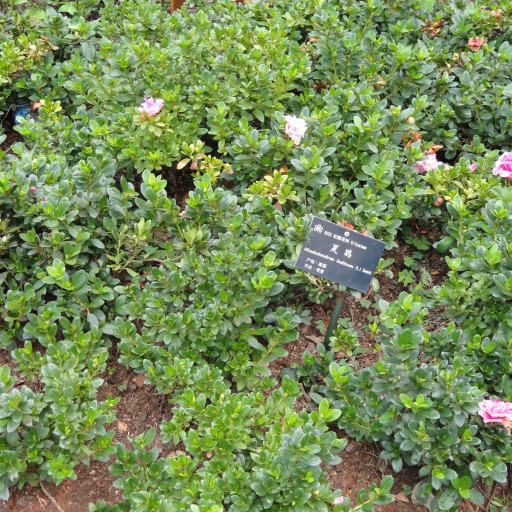
Plant Overview
Known as the "Satsuki Azalea," this elegant shrub is a crown jewel of Japanese horticulture. Despite its scientific name suggesting an Indian origin, it actually hails from the mountains of Japan, where "Satsuki" translates to "fifth month," referring to its late-blooming nature in the lunar calendar. It is a favorite among bonsai enthusiasts for its hardy wood and its ability to produce a breathtaking explosion of blooms long after other spring flowers have faded.
🔍 How to Identify
- 🌸 The Blooms: Funnel-shaped flowers that appear in late spring or early summer. They are famous for "sports"—varying colors or patterns (like stripes or flecks) appearing on the same branch.
- 🍃 The Foliage: Small, lance-shaped, dark green leaves that are evergreen. They often feel slightly leathery and may have tiny, subtle hairs on the underside.
- 🌿 Growth Habit: A dense, low-growing, and twiggy shrub. It naturally maintains a rounded, compact shape, which is why it responds so beautifully to meticulous pruning and shaping.
🏡 In Your Garden
- 🧪 Acidic Preferences: Like most members of the Heath family, it craves "sour" (acidic) soil. Without a low pH, the plant cannot properly "digest" iron, leading to yellowing leaves—a condition known as chlorosis.
- 💧 Root Sensitivity: It possesses a very shallow, fibrous root system. It hates "wet feet" but thrives in consistently moist, cool soil. Mulching with pine bark is a pro-tip to keep those shallow roots protected from the summer heat.
- ✂️ Post-Bloom Pruning: Because it sets its flower buds for the following year shortly after it finishes blooming, any heavy pruning should be done immediately after the flowers drop to avoid cutting off next year's show.
⚠️ Safety & Toxicity
- 🚫 Toxic Status: Highly toxic if ingested.
- 🐾 The Danger: All parts of the plant contain grayanotoxins, which can interfere with nerve and muscle function. It is particularly dangerous for curious cats, dogs, and horses.
- 🤢 Symptoms: Ingestion can lead to salivation, vomiting, weakness, and in severe cases, cardiac issues. Keep this beauty away from areas where pets like to nibble.
✨ Fun Fact
In the world of Bonsai, Rhododendron indicum is considered the "King of Azaleas." Some ancient specimens in Japan have been trained and passed down through generations for over 200 years, treated more like living sculptures than mere garden plants.

Detailed Care Instructions
| Color | Hot Pink |
| Soil Ph | Acidic |
| Lighting | Full Sun |
| Toxicity | Toxic |
| Soil Type | Fertile, Well-Drained |
| Bloom Time | April To June |
| Plant Type | Broadleaf Evergreen Shrub |
| Mature Size | 3 To 6 Ft. Tall |
| Native Area | Japan |
| Sun Exposure | Partial Shade To Full Shade |
| Hardiness Zones | 4-8 |
To grow Rhododendron Indicum plants, you can follow these tips:
- Location: Choose a planting site that has partial shade or filtered sunlight. Rhododendron Indicum plants thrive best in locations with morning sun and afternoon shade.
- Soil: Ensure the soil is well-draining and slightly acidic with a pH range of 5.0 to 5.5. Amend heavy clay soils with organic matter like compost or peat moss to improve drainage.
- Planting: Dig a hole that is wider and slightly shallower than the root ball of the plant. Place the Rhododendron Indicum into the hole, making sure the top of the root ball is level with or slightly above the soil surface. Backfill the hole with soil, gently firming it around the roots.
- Mulching: Apply a layer of organic mulch around the plant, such as pine needles or wood chips. This helps to conserve moisture, control weeds, and maintain a cool root environment.
- Watering: Keep the soil consistently moist, but avoid overwatering. Water deeply and thoroughly to ensure the roots receive ample hydration but allow the soil to dry slightly between watering sessions.
- Fertilization: Rhododendron Indicum plants benefit from regular fertilization. Use a balanced, acid-loving fertilizer formulated specifically for rhododendrons or azaleas. Follow the instructions on the fertilizer package for the proper application method and frequency.
- Pruning: Prune your Rhododendron Indicum plant after blooming to shape it and remove any dead, damaged, or overgrown branches. However, avoid excessive pruning as it can inhibit future flower production.
- Winter care: Protect your Rhododendron Indicum from harsh winter conditions by providing a layer of mulch around the base of the plant. This helps to insulate the roots and prevent temperature fluctuations.
- Pests and diseases: Regularly inspect the plant for any signs of pests or diseases. Common issues include aphids, mites, root rot, and powdery mildew. Treat any problems promptly using appropriate insecticides or fungicides.
- Propagation: Rhododendron Indicum plants can be propagated through stem cuttings. Take a 4-6 inch cutting from a healthy, mature plant with several leaves, remove the lower leaves, dip the cut end in rooting hormone, and plant it in a container filled with well-draining potting mix. Place the container in a warm and humid environment until roots develop.
Remember that Rhododendron Indicum plants are native to subtropical and tropical regions, so providing proper care and suitable growing conditions is essential for their successful growth.

Place in a window with dappled sun or a spot in the middle of a room. Or directly in a window facing west or east.

Rhododendron Indicum plant is a popular ornamental shrub that requires adequate watering to maintain its healthy growth. To water this plant, you need to follow these essential steps:
1. Check the soil: Before watering the plant, check the moisture level of the soil by inserting your finger into the soil up to an inch deep. If the soil feels dry, it's time to water the plant, but if it's damp, wait for some days until it becomes relatively dry.
2. Use the right amount of water: Rhododendron Indicum plant requires adequate water to thrive, but it's crucial to avoid overwatering as this can lead to root rot and other diseases. Use a watering can or hose to apply a moderate amount of water to the soil, ensuring that it is evenly distributed around the plant's roots.
3. Water at the right time: The best time to water the Rhododendron Indicum plant is in the morning or evening when the temperature is cooler. This helps to reduce water evaporation and also prevents the plant from getting burnt by the sun.
4. Consider the type of soil: If the soil is sandy, it may require more frequent watering, while clayey soil may hold more water for a longer period. So, it's essential to understand your soil type to determine the amount and frequency of watering required.
5. Monitor the plant: Keep an eye on the plant and observe how it reacts to your watering routine. If the leaves turn yellow, droop, or the soil becomes too wet, you may need to adjust your watering schedule.
By following these steps, you can successfully water your Rhododendron Indicum plant without using its common names.
When fertilizing this plant, it is important to choose a fertilizer specifically designed for acid-loving plants. Look for a fertilizer with an NPK ratio of approximately 3-1-2. Apply the fertilizer in early spring before new growth begins and again in late summer after flowering has ceased. Be sure to follow the instructions on the fertilizer packaging for proper dilution and application rates. It is also important to water the plant well before and after fertilizing to prevent the fertilizer from burning the roots.
Rhododendron Indicum plants require well-draining, organically rich soil that is slightly acidic with a pH of around 5.5 to 6.5. The soil should be moist but not waterlogged, as these plants are sensitive to both drought and overwatering. When choosing soil for Rhododendron Indicum plants, it is important to avoid using heavy clay soil, which can become waterlogged, or sandy soil, which may not retain enough moisture. Additionally, it is important to avoid using soil that is too alkaline, as this can lead to nutrient deficiencies and other problems. Instead, choose a soil mix that is specifically formulated for acid-loving plants, or create your own mix by combining equal parts peat moss, perlite, and compost.
To propagate Rhododendron Indicum plant, you can take softwood cuttings from the stem tip in early spring. The cuttings should be around 4-6 inches in length, with at least 2-3 sets of leaves. Remove the lower leaves and dip the cut end in rooting hormone. Place the cutting in a pot filled with peat moss and perlite mix. Water the pot and cover it with a plastic bag to retain moisture. Keep the pot in a warm and bright location, but away from direct sunlight. After a few weeks, the cutting will take root and can be transferred to a larger pot or planted in the ground. Propagation by layering is also possible, where you bend a low-growing branch and pin it to the ground until it roots, then sever the new plant from the parent.
Common pests of the satsuki azalea include Scale insect, mealybugs, spider mites, whiteflies. Make a habit of checking your satsuki azalea frequently for pests so that any infestations can be caught and managed early.








