Plant Overview
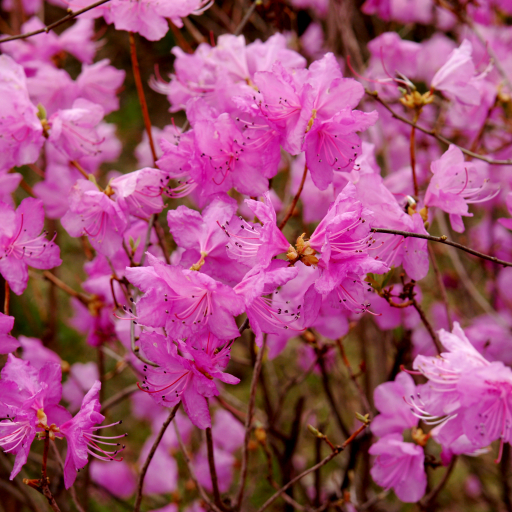
Known as the "herald of spring," the Korean Rhododendron is often the very first splash of color in a dormant landscape. Native to the rocky slopes of East Asia, this deciduous shrub is famous for its "naked" blooms, exploding into a cloud of lilac-purple flowers long before its leaves even think about waking up.
🔍 How to Identify
- 🌸 Pre-Leaf Blossoms: Unlike many other azaleas, this plant produces flowers on bare, woody stems in late winter or very early spring.
- 🎨 Floral Shape: The flowers are delicate, funnel-shaped, and usually range from a soft lavender to a vibrant rosy-purple.
- 🍂 Autumn Foliage: The narrow, elliptic leaves are thin and aromatic; they turn a striking reddish-bronze or golden yellow before dropping in the winter.
🏡 In Your Garden
- 🏔️ Mountain Roots: Because it naturally grows on rocky hillsides, it demands well-draining, acidic soil. It hates "wet feet," so avoid heavy clay areas where water sits.
- ☀️ Light & Shelter: While it loves the sun, its early buds are sensitive to late-season frosts. Planting it in a spot with "dappled shade" or a north-facing wall can help prevent the flowers from blooming too early and getting nipped by a sudden freeze.
- 🌿 Pruning Patience: If you must prune to shape the shrub, do it immediately after the flowers fade. Since it sets its flower buds for the following year in the summer, pruning too late will cut off next spring's display.
⚠️ Safety & Toxicity
- 🚫 Toxic Status: High. Like all members of the Rhododendron genus, this plant is toxic if ingested.
- 🐾 Pets & Kids: It contains grayanotoxins which can cause stomach upset, drooling, or more serious heart issues in dogs, cats, and horses. Keep it out of reach of curious nibblers.
- 🍯 "Mad Honey" Warning: Even the nectar can be problematic; honey made by bees that feed exclusively on Rhododendrons can occasionally be toxic to humans.
✨ Fun Fact
In Korea, the flowers are traditionally used to make a seasonal pancake called Jindallae-hwajeon. While the flowers are used sparingly in specific culinary traditions, hobbyists should stick to admiring them visually due to the plant's natural toxins!

Detailed Care Instructions
To grow a Rhododendron Mucronulatum plant, follow these steps:
- Soil preparation: Choose a site with well-draining, acidic soil with a pH between 4.5 and 6. Use a soil testing kit to check the pH of your soil and amend it with organic matter if needed.
- Planting: Dig a hole that is slightly larger than the root ball of the plant. Place the plant in the hole at the same depth it was in its container. Backfill the hole with the amended soil, ensuring the plant is securely planted.
- Watering: After planting, water the Rhododendron thoroughly and keep the soil consistently moist but not waterlogged. Water deeply once a week, especially during dry periods.
- Mulching: Apply a layer of mulch around the base of the plant, such as bark chips or pine needles. This will help retain soil moisture, regulate soil temperature, and suppress weeds.
- Sun exposure: Rhododendron Mucronulatum plants prefer part shade to full sun. Choose a location that receives morning sun and some afternoon shade to provide optimal growing conditions.
- Fertilization: Rhododendrons benefit from regular fertilization. Use a slow-release, acid-loving plant fertilizer and follow the manufacturer's instructions. Apply the fertilizer in early spring and again in late summer.
- Pruning: Prune the plant after it finishes flowering to remove any dead or damaged branches. Avoid heavy pruning, as Rhododendron Mucronulatum blooms on old wood.
- Pest and disease control: Keep an eye out for common pests like aphids, lacebugs, and spider mites. Treat any infestations promptly with a suitable insecticide. Watch for signs of diseases such as leaf spot or powdery mildew and take appropriate measures to control them.
- Winter protection: In areas with harsh winters, provide winter protection such as burlap wraps or anti-desiccant sprays to protect the plant from drying out or suffering frost damage.
By following these steps, you can successfully grow a Rhododendron Mucronulatum plant and enjoy its beautiful blooms.

Place in a bright room that is sun drenched almost all day. Or directly in a south-facing window.

When watering this plant, it is important to use a gentle hand. The soil should not be allowed to completely dry out, but be careful not to overwater as too much water can lead to root rot. The best way to water this type of plant is to give it a deep watering once per week. This can be achieved by slowly pouring water onto the soil at the base of the plant until the soil is moist all the way through. Be sure to avoid getting water on the leaves, as this can lead to disease and damage. During periods of hot and dry weather, the plant may require more frequent watering. Always check the soil moisture level before watering to avoid overwatering.
To fertilize this plant, use a slow-release fertilizer specifically formulated for acidic-loving plants. Apply the fertilizer in early spring before new growth appears, following the recommended application rate on the package. Alternatively, liquid fertilizers can be used during the growing season. Avoid getting fertilizer on the leaves or stems, and water the plant well after fertilization.
Rhododendron Mucronulatum plant prefers acidic soil with a pH range of 4.5 to 6.0. It grows well in well-drained soil that is rich in organic matter and has high moisture retention capacity. The soil should be loose, friable, and have good aeration. It is recommended to use a mixture of peat moss, pine bark, and perlite or vermiculite to create the perfect soil for the Rhododendron Mucronulatum plant. The use of fertilizer should be minimal and should be added in small amounts at regular intervals to avoid the root's burn. It is also essential to ensure adequate drainage to prevent waterlogged conditions that can harm the roots.
To propagate this plant, you will need to take a cutting from a healthy parent plant during the growing season, typically in early summer. Choose a stem that is healthy and has at least two leaf nodes where leaves attach to the stem. Using a clean, sharp knife or pruning shears, cut the stem at a 45-degree angle just below a node.
Next, remove all the leaves from the bottom half of the stem. Dip the cut end of the stem into rooting hormone powder to encourage root growth. Plant the stem in a container with well-draining soil, making sure the bottom of the stem is buried at least an inch deep in the soil.
Water the cutting thoroughly and cover the container with a plastic bag or clear plastic wrap to create a greenhouse effect and help retain moisture. Place the container in a warm, bright area, but not in direct sunlight. Mist the cutting occasionally to keep it moist.
After a month or two, check for root growth by gently tugging on the stem. If there is resistance, roots have likely developed and it is safe to remove the plastic covering. Continue to water the cutting regularly and transplant it to a larger pot or into the ground once it has established a healthy root system.








