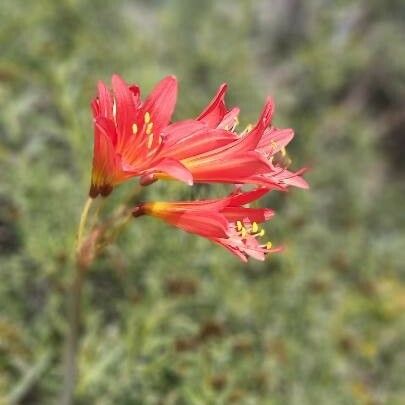
Plant Overview
Known as the "Añañuca Blanca," this desert beauty is a star of the Chilean Desierto Florido (Flowering Desert). Emerging from the parched earth of the Atacama after rare rainfall, it transforms barren landscapes into a sea of delicate, striped trumpets. Local folklore suggests the flower first bloomed from the grave of a woman named Añañuca, who died of a broken heart while waiting for her lover to return from the mountains.
🔍 How to Identify
- 🌸 Trumpet Blooms: Large, funnel-shaped flowers that usually appear in clusters of two to four atop a sturdy, leafless stalk.
- 🎨 Delicate Veining: The petals are typically white or a pale cream, decorated with striking pinkish-red or magenta stripes that radiate from the center.
- 🍃 Strap-like Foliage: Narrow, dark green leaves that grow directly from the underground bulb, often appearing only after the plant has started its flowering cycle.
🏡 In Your Garden
- 🏜️ Desert Origins: Because it hails from arid Chilean slopes, this plant requires exceptional drainage. It thrives in gritty, sandy soil and will rot quickly if left in heavy, water-retaining potting mix.
- 💤 Crucial Dormancy: Respect its "sleep" cycle. Once the foliage begins to yellow and die back, stop watering entirely to mimic the dry season of the Atacama, allowing the bulb to rest and prepare for the next bloom.
⚠️ Safety & Toxicity
- 🚫 Toxic if Ingested: Like most members of the Amaryllis family, this plant contains lycorine and other alkaloids that are poisonous if eaten.
- 🐾 Pet & Child Safety: Ingestion can cause stomach upset, vomiting, and lethargy in cats, dogs, and small children. It is best kept on high shelves or in restricted garden areas.
✨ Fun Fact
🌋 Volcanic Resilience: In its native habitat, Rhodophiala ananuca is frequently found growing in volcanic ash and rocky crevices where few other species can survive, making it a true master of extreme environmental endurance.

Detailed Care Instructions








