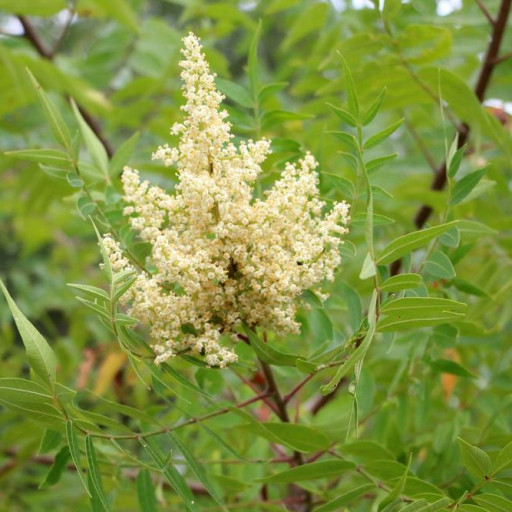
Plant Overview
Known as the Prairie Flameleaf Sumac, this native North American beauty is famous for transforming into a "pillar of fire" when autumn arrives. While it spends the summer in a modest coat of glossy green, its late-season transition to intense scarlet and orange makes it a showstopper in any landscape. It is a rugged survivor, often found clinging to rocky limestone hillsides where other plants might wither.
🔍 How to Identify
- 🍃 Winged Leaves: Look closely at the central stem of the compound leaf; it has narrow "wings" or leafy flaps of tissue between the leaflets, a signature trait of this species.
- 🍒 Fuzzy Fruit: In late summer and fall, female plants produce upright, cone-shaped clusters of small, hairy, bright red berries (drupes).
- 🌳 Growth Habit: It typically grows as a large, multi-stemmed shrub or a small tree, often forming dense colonies or "thickets" through its underground root system.
🏡 In Your Garden
- ☀️ Drought Warrior: This plant is incredibly tough and thrives in full sun and well-drained, rocky soil. It is the perfect choice for "un-watered" corners of the garden where you want high-impact color without the maintenance.
- 🦋 Wildlife Magnet: It serves as a vital resource for the ecosystem; the summer flowers provide nectar for bees and butterflies, while the persistent winter berries are a survival food for birds like robins and bluebirds.
⚠️ Safety & Toxicity
- ✅ Generally Safe: Unlike its distant cousin, Poison Sumac, the Prairie Flameleaf Sumac is non-toxic and does not cause the blistering rashes associated with urushiol-heavy plants.
- 🧤 Mild Sensitivity: While safe, the sap contains high levels of tannins. Very sensitive individuals might experience minor skin redness if they handle broken branches extensively without gloves.
✨ Fun Fact
The tart, red berries of the Prairie Sumac are covered in malic acid (the same stuff that makes green apples sour). Pioneers and Indigenous groups used to soak the berries in cold water and strain them to create a Vitamin C-rich drink known as "Indian Lemonade."

Detailed Care Instructions

Place in a bright room that is sun drenched almost all day. Or directly in a south-facing window.

To water this particular plant, it is important to give it a thorough soaking regularly. The soil should be kept consistently moist, but not waterlogged. It is best to water deeply and infrequently, allowing the soil to dry out slightly in between waterings. It is recommended to water at the base of the plant, avoiding getting water on the leaves as it may cause damage. It is also important to avoid over-fertilizing, as this can lead to excessive growth and weaken the plant's resistance to disease and pests.
It is recommended to use well-draining soil with a pH level between 5.5 and 7.5 for this specific plant. It can tolerate a variety of soil types, including sandy loam, loamy sand, and clay loam, as long as it is not waterlogged. The soil should contain sufficient nutrients, such as nitrogen, phosphorus, and potassium, to support healthy growth. Organic matter, such as compost or peat moss, can also be added to improve soil quality. It is important to avoid using heavy soils or those with a high clay content, as they can restrict root growth and cause waterlogging.







