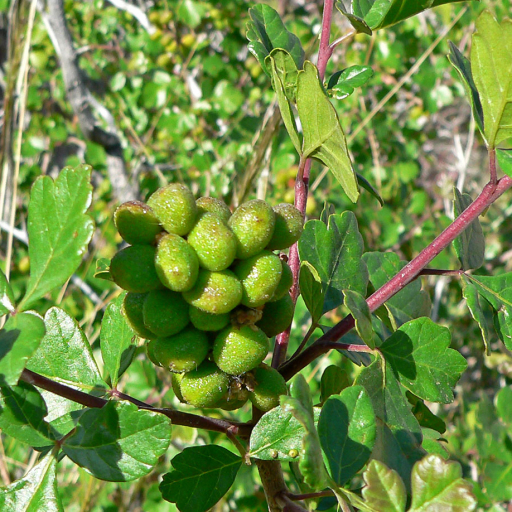
Plant Overview
Often referred to as Skunkbush Sumac or Three-leaf Sumac, this resilient shrub is a master of the American West’s rugged landscapes. While its crushed leaves emit a pungent, musky odor that earned it the "skunk" nickname, it is beloved by foragers and crafters alike. Historically, its flexible stems were so vital for weaving that it is sometimes called "Basketbush," serving as a cornerstone for indigenous artistry and survival.
🔍 How to Identify
- 🍃 The Leaves: It features "trifoliate" leaves (groups of three) that are glossy green. While they look similar to Poison Ivy, Skunkbush leaves are more deeply lobed and the center leaf lacks the long stalk seen on its itchy cousin.
- 🔴 The Fruit: In late summer, the plant produces tight clusters of bright orange-to-red berries. These "drupes" are covered in tiny, sticky hairs and have a distinctively tart, citrusy scent.
- 🌳 Growth Habit: It forms a dense, mounded thicket, usually reaching 3 to 6 feet in height. In autumn, the foliage puts on a spectacular show, turning vibrant shades of orange, red, and deep purple.
🏡 In Your Garden
- 🏜️ The Ultimate Survivor: This is a "plant it and forget it" species for dry climates. It thrives in poor, rocky, or sandy soil and is exceptionally drought-tolerant once its root system is established.
- 🛡️ Erosion Expert: Because of its sprawling, thicket-forming nature, it is one of the best choices for stabilizing slopes or creating a natural windbreak. It provides a "living wall" that offers privacy and protection for smaller garden birds.
⚠️ Safety & Toxicity
- ✅ Safe for Foraging: Unlike "Poison Sumac" (which has white berries), the red-berried Rhus trilobata is non-toxic. The berries are edible, though quite tart and seedy.
- 🐱 Pet Friendly: It is generally considered non-toxic to dogs, cats, and horses.
- 🧤 Skin Sensitivity: While not dangerous, the oils in the leaves can cause very mild skin irritation in people who are extremely sensitive to the Anacardiaceae family (the same family as cashews and mangoes).
✨ Fun Fact
Native Americans used the tart, acidic coating of the berries to create a refreshing beverage known as "Indian Lemonade." By soaking the berries in cold water and straining them, they produced a drink rich in Vitamin C that tastes remarkably like modern lemonade!

Detailed Care Instructions
To successfully grow Rhus trilobata, commonly known as skunkbush or three-leaf sumac, follow these steps:
- Choose the right location: Rhus trilobata thrives in full sun to partial shade and prefers well-drained soil. Ensure that the area you select has good air circulation.
- Prepare the soil: Amend the soil with organic matter, such as compost, to improve drainage and fertility. Rhus trilobata is tolerant of various soil types but prefers slightly acidic to neutral soil.
- Select healthy plants: Purchase Rhus trilobata seedlings from a reputable nursery. Look for plants with dark green leaves and a robust root system.
- Planting: Dig a hole slightly larger than the root ball of the seedling. Place the plant in the hole and backfill with soil, gently firming it around the roots. Make sure the soil level around the plant is slightly higher than the surrounding ground to allow for settling.
- Watering: After planting, water the Rhus trilobata deeply to settle the soil around the roots. Then, water regularly, especially during the first year, to help the plant establish a strong root system. Once established, this plant is drought-tolerant and requires minimal watering.
- Mulching: Apply a layer of organic mulch, such as wood chips or shredded leaves, around the base of the plant. Mulch helps retain moisture, control weeds, and regulate soil temperature.
- Pruning: Rhus trilobata can become bushy and benefit from occasional pruning to maintain a more compact shape. Prune in late winter or early spring before new growth emerges.
- Fertilizer: Rhus trilobata is generally not a heavy feeder and does not require regular fertilization. However, you can apply a slow-release, balanced fertilizer in early spring if the plant shows signs of nutrient deficiency.
- Propagation: Rhus trilobata can be propagated from seeds or by taking hardwood or softwood cuttings. Seeds need to go through a stratification process before germination, which involves chilling them in the refrigerator for a few weeks before planting. Softwood cuttings are best taken in late spring or early summer, while hardwood cuttings can be collected in late fall or winter.
- Pest and disease control: Rhus trilobata is generally resistant to pests and diseases. However, keep an eye out for common issues such as aphids, leaf spot, or powdery mildew. If necessary, treat with an appropriate organic pesticide or fungicide.
By following these guidelines, you can successfully grow Rhus trilobata and enjoy its attractive foliage and fall color.

Place in a bright room that is sun drenched almost all day. Or directly in a south-facing window.

To properly water this plant, first determine the moisture level of the soil by sticking your finger about an inch deep into the soil. If it feels dry to the touch, it is time to water. When watering, aim to water slowly and evenly across the soil, making sure not to overwater or cause soil erosion. It is important to avoid watering the leaves or stem of the plant, as this can lead to fungal growth or disease. Additionally, this plant prefers well-draining soil, so make sure excess water can easily drain away. Finally, take into account the environment and climate in which the plant is located, as factors such as humidity and temperature can also affect watering needs.
To fertilize this plant, use a balanced fertilizer with equal parts nitrogen, phosphorus, and potassium. Apply the fertilizer once in the spring and once in the fall. Be careful not to over-fertilize, as this can damage the plant. Always follow the package instructions for application rates.
When selecting soil for this particular plant, it is important to consider its natural habitat and growing conditions. This plant typically grows in dry, rocky soils that may be nutrient poor and well-draining. Therefore, it is recommended to use a mix of sandy soil and small gravel or rocks to enhance drainage and provide a coarse texture for the roots. Organic matter such as compost or leaf litter should be avoided as it may retain moisture and promote fungal growth, which can harm the plant. Additionally, the soil should not be too acidic or alkaline, with a neutral pH range of 6.5-7.5 being optimal for this species.
Propagation of this plant can be done through seeds, cuttings, or division of mature plants. For seeds, collect mature berries from the plant in late summer or early fall and remove the flesh. Sow the seeds in a mixture of sand and peat moss, keeping the soil moist until germination occurs. For cuttings, take stem cuttings in early spring before new growth begins, dip them in rooting hormone, and plant them in a well-draining soil mixture. Keep the soil moist and place the cuttings in a warm, bright location until roots form. For division, dig up a mature plant in early spring or fall and gently separate the root ball into smaller sections, replanting each section in a new location and ensuring they receive adequate water until established.








