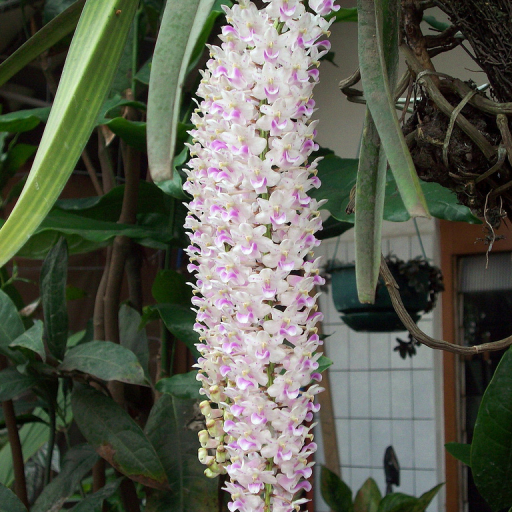
Plant Overview
Known as the Foxtail Orchid, Rhynchostylis retusa is a show-stopping epiphyte famous for its long, drooping flower clusters that look remarkably like a fluffy fox's tail. In India, particularly in Assam, it is known as "Kopou Phul" and is a symbol of love, fertility, and the arrival of spring, often worn by folk dancers during the Bihu festival.
🔍 How to Identify
- 🦊 The "Tail" Inflorescence: The most striking feature is its cylindrical, pendulous flower spike that can reach up to 15 inches long, densely packed with over 100 small, fragrant blooms.
- 🌸 Spotted Blooms: Each individual flower is white or pale pink, adorned with vibrant amethyst-purple spots and a darker purple "lip."
- 🍃 Sturdy Foliage: The plant features thick, leathery, strap-shaped leaves that grow in two vertical rows (distichous), giving the plant a structural, fan-like appearance even when not in bloom.
🏡 In Your Garden
- 🌬️ Air is Life: Because this is an epiphyte (an air plant), it grows naturally on tree branches. In a home setting, it hates being "suffocated" by traditional potting soil. It is best grown in slatted wooden baskets or mounted on cork to allow its thick, silvery roots to breathe and dangle.
- 💧 The Humidity Dance: This orchid thrives in "monsoon-like" conditions. It loves high humidity and frequent watering, but it must dry out quickly. If water sits in the crown (the center where leaves meet) for too long, it is highly prone to rot, so good air circulation is non-negotiable.
⚠️ Safety & Toxicity
- ✅ Pet & Human Safe: Rhynchostylis retusa is generally considered non-toxic to cats, dogs, and humans.
- 🧤 Handle with Care: While not poisonous, the roots are brittle. Avoid moving or repotting frequently, as the plant can go into "shock" and refuse to bloom for a season if its root system is disturbed.
✨ Fun Fact
In Assamese culture, the Foxtail Orchid is considered so essential to the Bihu dance that a young man is traditionally expected to climb tall trees to retrieve these blooms for his beloved to wear in her hair as a sign of affection.

Detailed Care Instructions
To grow Rhynchostylis retusa successfully, follow these steps:
- Choose the right lighting: Rhynchostylis retusa prefers bright but indirect sunlight. Place the plant near a window with filtered sunlight or provide it with 50-70% shade if grown outdoors.
- Provide the ideal temperature: This plant enjoys warm to hot temperatures. Maintain a temperature range of 70-90°F (21-32°C) during the day and a slightly cooler temperature at night.
- Use a well-draining potting mix: Rhynchostylis retusa grows well in a mix of bark chips, charcoal, and sphagnum moss. The mixture should be loose and airy to allow proper drainage and aeration. Avoid using regular potting soil, as it retains too much moisture.
- Watering routine: Water the plant thoroughly and allow excess water to drain. The potting mix should dry out slightly before the next watering. Avoid overwatering, as it can cause root rot. Mist the plant occasionally to maintain humidity.
- Fertilize regularly: Use a balanced orchid fertilizer, diluted to half-strength, and apply it every two weeks during the growing season. Reduce fertilizing frequency during winter when the plant is in its resting phase.
- Humidity requirements: Rhynchostylis retusa prefers high humidity levels. Place a tray filled with water and pebbles below the plant or place a humidifier nearby to increase humidity levels. Misting the plant often can also help.
- Repotting: Repot the plant every 2-3 years, or when the pot becomes too small for the roots. Carefully remove the plant from its pot, gently clean the old potting mix from the roots, and place it in a slightly larger pot with fresh potting mix.
- Pruning: Remove any dead or dying leaves and spent flower spikes to encourage new growth. Trim any aerial roots that become too long.
- Pest control: Watch out for common orchid pests such as aphids, scale insects, and mealybugs. Inspect the plant regularly and take appropriate measures if you notice any pests, such as using organic insecticidal soap or neem oil.
By following these steps, you can successfully grow and care for Rhynchostylis retusa. Remember to observe your plant and adjust its care if needed based on its specific conditions.

Place in a window with dappled sun or a spot in the middle of a room. Or directly in a window facing west or east.

Rhynchostylis Retusa plant should be watered regularly, but not excessively. The soil should be kept moist and well-drained, but not waterlogged. It is important to ensure that the water is able to properly drain out of the plant's container and not collect in the bottom. It is also important to avoid getting water on the leaves, as this can lead to the growth of fungus and other diseases. The frequency of watering will depend on various factors, such as the size of the plant, the temperature and humidity of the environment, and the type of soil it is planted in. It may be necessary to adjust watering schedules during different seasons or weather conditions to ensure that the plant receives the appropriate amount of water.
To fertilize this orchid plant, use a balanced fertilizer with equal parts nitrogen, phosphorus, and potassium. Apply the fertilizer every two weeks during the growing season, reducing the frequency to once a month during the resting period. Dilute the fertilizer to half or quarter strength to avoid burning the plant's roots. Always water the plant thoroughly before and after fertilizing to prevent salt buildup in the potting medium. Use a fertilizer specifically formulated for orchids or a general-purpose fertilizer labeled for flowering plants. Avoid using high-nitrogen fertilizers, as they can promote leaf growth at the expense of flower production.
The ideal soil for Rhynchostylis Retusa plant should be well-draining and rich in organic matter. It should have a pH range between 6.0 to 7.0. A mix of fine bark, sphagnum moss, perlite, and charcoal is often used as a growing medium for this plant. The soil mix provides ample air circulation to the roots and prevents waterlogging, which is crucial for the plant's health. The potting mix should be changed every two years to ensure proper drainage and nutrient availability. Additionally, careful attention to watering and fertilizing is essential to keep the Rhynchostylis Retusa plant healthy and thriving.
To propagate this plant, you will need to take a stem cutting that contains at least two nodes. It's important to make sure that the cutting is healthy and without any signs of disease or damage.
After you have chosen your cutting, remove any leaves from the bottom half of the stem, leaving only a few leaves at the top. Dip the cut end of the stem into rooting hormone powder to encourage root growth.
Plant the cutting in a well-draining soil mix and keep it moist, but not water-logged. It's a good idea to cover the cutting with a plastic bag or container to increase humidity and prevent the leaves from drying out.
Place the cutting in a warm, bright spot, but out of direct sunlight. Over the next few weeks, monitor the cutting for new growth and check the soil moisture regularly. Once you see new growth and roots forming, you can remove the plastic covering and begin to acclimate the plant to its new environment.
Common pests of the foxtail orchid include Scale insect, mealybugs, thrips. Make a habit of checking your foxtail orchid frequently for pests so that any infestations can be caught and managed early.








