Plant Overview
Commonly known as the Wild Gooseberry or Coastal Black Gooseberry, this native star of the Pacific Northwest is a true survivor of the wild. Often found hugging stream banks or hiding in the dappled shade of Douglas firs, it is a favorite for both foragers and wildlife. While its arching branches and sharp spines might seem intimidating, it rewards the patient observer with sweet-tart berries and a "living fortress" structure that provides vital habitat for local birds.
🔍 How to Identify
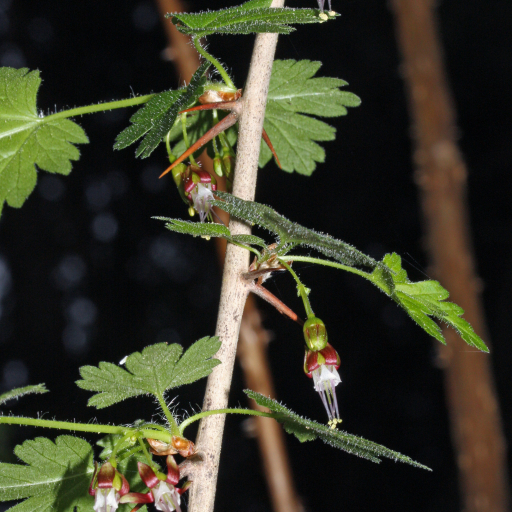
- 🍃 The Leaves: Small, bright green, and deeply lobed—resembling miniature maple leaves. They often have a soft, fuzzy texture on the underside and toothed edges.
- 🌸 The Flowers: Strikingly unique; the pale green-to-purplish sepals curve sharply backward (reflexed), making the white petals and stamens look like a tiny hanging chandelier or a shooting star.
- ⚔️ The Stems: Look for long, sharp spines (usually 1 to 3) at the nodes where the leaves meet the stem. The bark is typically grey or reddish-brown and tends to shred slightly with age.
🏡 In Your Garden
- 🛡️ Living Security: Because of its spreading, arching habit and formidable thorns, it makes an excellent "fenceline" plant to deter unwanted foot traffic while providing safe nesting sites for songbirds like wrens.
- 💧 Moisture Tolerance: Unlike many garden berries that demand perfect drainage, the Wild Gooseberry is surprisingly tolerant of "wet feet" and heavy clay, making it a hero for rain gardens or soggy corners of the yard.
⚠️ Safety & Toxicity
- 🍴 Edibility: The dark purple-to-black berries are safe and highly prized for jams and pies. They are tart when green and sweeten significantly as they darken.
- 🧤 Mechanical Injury: While not chemically toxic to pets or children, the spines are very sharp. Always wear thick leather gloves when pruning or harvesting to avoid painful punctures or skin irritation.
✨ Fun Fact
Native American tribes of the Coast Salish region didn't just eat the berries; they utilized the straight, thorny stems as ready-made fishhooks by carefully trimming the spines and binding them to cedar lines!

Detailed Care Instructions
To grow Ribes divaricatum, also known as Coastal Black gooseberry or Spreading gooseberry, you can follow these steps:
- Location: Choose a location that receives partial shade to full sun. This plant is native to coastal regions, so it grows well in cool and moderate climates.
- Soil: Ribes divaricatum prefers well-draining, fertile soil. Amend the soil with organic matter, such as compost or aged manure, before planting.
- Planting: Dig a hole that is slightly larger than the rootball of the plant. Place the plant in the hole, ensuring that the top of the rootball is level with the soil surface. Backfill the hole and gently firm the soil around the plant.
- Watering: Water the plant thoroughly after planting to help settle the soil and provide moisture. Afterward, water regularly to keep the soil evenly moist, but not waterlogged. Avoid wetting the foliage as it can lead to diseases.
- Mulching: Apply a layer of organic mulch around the base of the plant to conserve moisture, suppress weeds, and moderate soil temperature. Keep the mulch a few inches away from the plant's stem to prevent rot.
- Pruning: Ribes divaricatum can benefit from regular pruning to maintain shape and vigor. Prune in late winter or early spring before new growth starts. Remove any dead, damaged, or crossing branches. Thin out crowded growth to improve airflow and light penetration.
- Feeding: Apply a balanced organic fertilizer in early spring to provide nutrients for healthy growth. Follow the package instructions for proper application rates.
- Pest and Disease Control: Ribes divaricatum is generally resistant to pests and diseases. However, keep an eye out for aphids, gooseberry sawfly, or powdery mildew. If a problem arises, treat it with appropriate organic pest control methods.
- Propagation: Ribes divaricatum can be propagated through seeds or by taking softwood cuttings in summer. Seeds may require cold stratification before sowing. Softwood cuttings root easily under mist systems.
Remember to check and comply with any local regulations regarding the cultivation of Ribes divaricatum, as it may be considered invasive in some regions.

Place in a bright room that is sun drenched almost all day. Or directly in a south-facing window.

1. Determine the soil type - Ribes Divaricatum prefers a well-draining soil that is high in organic matter. If the soil has poor drainage, it can lead to root rot.
2. Watering requirements - The plant needs regular watering to establish well and grow vigorously. However, it is essential to ensure that the soil around the plant is moist but not waterlogged.
3. Watering frequency - The watering frequency depends on the weather condition. During hot weather, the plant requires more watering than during colder temperatures. It is better to water the plant deeply once or twice a week rather than watering it shallowly frequently.
4. Watering technique - The plant should be watered at the base, using a watering can or hose. The soil should be watered until it is moist but not waterlogged.
5. Mulching - Mulching around the plant helps to retain moisture, protects the roots from extreme temperatures and discourages weeds.
6. Observe the plant - Keep an eye on the plant for signs of overwatering or underwatering, such as yellow leaves, wilting, or root rot. Adjust the watering process accordingly.
Note: When watering Ribes Divaricatum, avoid getting water on the foliage as it can lead to fungal diseases.
To fertilize this plant, begin by mixing a balanced, slow-release fertilizer into the soil around the plant during the early spring. Apply fertilizer again during the early summer to promote healthy growth and blooming. Be sure to follow the instructions on the fertilizer packaging for proper application rates. It is also advisable to supplement with regular applications of organic compost or other natural fertilizers throughout the growing season. Finally, water the plant thoroughly after fertilization to help distribute the nutrients evenly throughout the soil.
Ribes Divaricatum plant prefers a well-draining soil that is rich in nutrients. It grows best in a soil that has a balanced pH level between 5.5 to 7.0. The soil should be loamy with a mix of sand, silt, and clay in equal proportions. Moreover, the soil should be moist but not waterlogged. Adequate drainage is important as the plant is susceptible to root rot. It is recommended to amend the soil with organic matter such as compost or well-rotted manure before planting. This will help to improve the soil structure and supply essential nutrients that the plant needs for healthy growth. Additionally, a layer of mulch on top of the soil will help to conserve moisture, suppress weeds, and regulate soil temperature.
To propagate this plant, take a cutting in early spring before new growth begins. Cut a 4-6 inch section of stem, just below a leaf node. Remove the lower leaves, leaving only two or three at the top.
Dip the cut end into rooting hormone and place the cutting into a pot filled with a well-draining soil mix. Cover the pot with a plastic bag or place it in a propagator to maintain humidity.
Place the pot in a shaded area with indirect light and keep the soil moist, but not waterlogged. Once roots have developed, typically within 4-6 weeks, transplant the new plant into a larger pot or into a garden bed.
Alternatively, this plant can also be grown from seed. Collect the seeds in the fall after they have matured and plant them in a cold frame or greenhouse in the autumn. Keep the soil moist and the seedlings should sprout by the following spring.