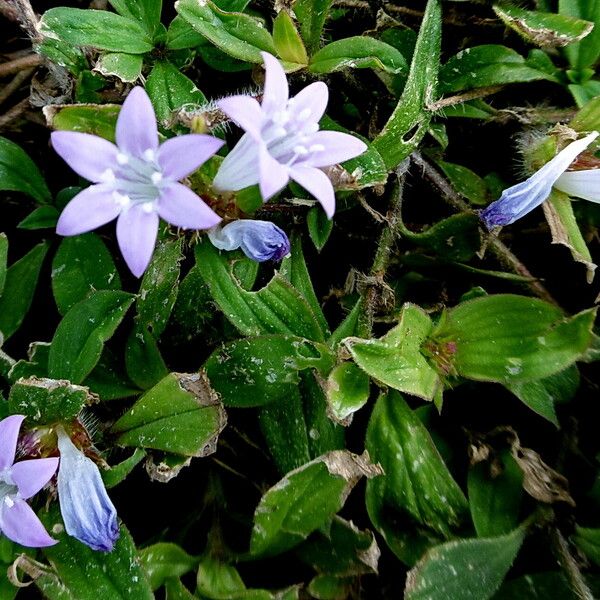
Plant Overview
Often called the Largeflower Mexican Clover, this low-creeping perennial is frequently seen painting suburban lawns and roadsides with splashes of lavender and white. While many homeowners consider it a stubborn "lawn weed," its delicate, star-shaped blossoms and extreme resilience make it a fascinating member of the Madder family. It’s a plant that thrives where others fail, turning dry, sandy patches into miniature wildflower meadows.
🔍 How to Identify
- 🌸 The Bloom: Look for clusters of funnel-shaped flowers, usually pink, pale violet, or white. Unlike many similar species, these typically have six distinct petals that form a perfect star shape.
- 🌿 Fuzzy Foliage: The leaves are small, oval-shaped, and grow opposite each other along the stem. They are covered in stiff, coarse hairs that give the plant a rough, sandpaper-like texture.
- 🌱 Prostrate Growth: This plant rarely grows upward; instead, it creates a dense, mat-like carpet that hugs the ground, allowing it to survive even the lowest lawnmower settings.
🏡 In Your Garden
- ☀️ Drought Warrior: This species loves sandy, well-drained soil and high heat. It is often the last thing standing during a dry spell, thanks to a deep taproot that searches for moisture far underground.
- 🦋 The Pollinator's Buffet: If you find this in your yard, you’ll likely see honeybees and small butterflies visiting. Because it blooms almost year-round in warm climates, it provides a consistent, reliable food source for local insects.
⚠️ Safety & Toxicity
- ✅ Status: Generally considered non-toxic to humans, cats, and dogs.
- 🧤 Skin Irritation: While not poisonous, the "hispid" (stiff) hairs on the stems can cause mild mechanical skin irritation or "itchiness" for some people if handled extensively without gloves.
- 🚜 Invasive Potential: In some regions, like Florida, it is considered an aggressive spreader. It can easily outcompete native grasses, so keep it contained if you decide to let it grow.
✨ Fun Fact
Despite its common name, "Mexican Clover," this plant isn't a clover at all! True clovers belong to the pea family (Fabaceae), while Richardia grandiflora is actually a distant relative of Coffee and Gardenias.

Detailed Care Instructions
To grow Richardia Grandiflora, also known as Florida pusley or Mexican clover, you can follow these steps:
- Choose the right location: The plant prefers full sun to partial shade. Select a location with well-draining soil that is rich in organic matter.
- Prepare the soil: Loosen the soil and remove any weeds or debris. Add compost or well-rotted manure to improve soil fertility and drainage.
- Sow seeds or plant transplants: You can start Richardia Grandiflora from seeds or purchase transplants from a nursery. If sowing seeds, sprinkle them on the prepared soil's surface and lightly press them into the soil. If using transplants, dig a hole slightly larger than the root ball and place the plant in it.
- Water the plant: Keep the soil consistently moist but not waterlogged until the seeds germinate or the transplants establish roots. Afterward, water the plants thoroughly when the top inch of soil feels dry.
- Mulch around the plants: Apply a layer of organic mulch, such as straw or wood chips, around the plants to conserve moisture, suppress weed growth, and maintain consistent soil temperature.
- Fertilize as needed: Richardia Grandiflora generally doesn't require heavy fertilization, but you can apply a balanced, slow-release fertilizer according to the package instructions to promote healthy growth.
- Regularly remove weeds: Monitor the area for weed growth and remove any weeds that compete with the plant for nutrients, water, and sunlight.
- Prune and deadhead: Trim back the plant occasionally to maintain its shape and encourage bushier growth. Deadhead any spent flowers to promote continuous blooming.
- Monitor pests and diseases: Richardia Grandiflora is relatively resistant to pests and diseases. However, keep an eye out for common garden pests like aphids or whiteflies. If identified, treat the infestation with organic insecticides or soapy water.
- Propagate: If you want to propagate the plant, you can collect seeds from mature flowers or take stem cuttings in late spring or early summer. Sow the seeds or place the cuttings in moist soil, and they should develop roots and grow into new plants.
Remember to check if Richardia Grandiflora is invasive or problematic in your region before planting, as it may have the potential to spread rapidly.

Place in a bright room that is sun drenched almost all day. Or directly in a south-facing window.

Richardia grandiflora is a plant that requires regular watering to thrive. When it comes to watering this plant, it is important to provide adequate moisture without overwatering. Here are some detailed guidelines on how to water Richardia grandiflora:
1. Assess the soil moisture: Before watering, check the moisture level of the soil by inserting your finger into the soil up to the first knuckle. If the soil feels dry at this depth, it is an indication that the plant needs watering.
2. Watering frequency: Richardia grandiflora generally requires watering once or twice a week, depending on the climate and environmental conditions. In hot, dry climates, more frequent watering may be needed, while in cooler, more humid conditions, watering can be less frequent.
3. Watering method: To avoid excessive moisture on the leaves and potential fungal issues, it is advisable to water the plant at the base rather than sprinkling water on the foliage. Using a watering can or a gentle hose attachment with a narrow spout is ideal for targeted watering.
4. Slow and deep watering: It is important to water Richardia grandiflora deeply to encourage the roots to grow deeper into the soil. Avoid shallow and frequent watering, as it can promote shallow rooting and weaken the plant's overall stability.
5. Water in the morning: Watering in the morning allows the plant's foliage to dry out during the day, reducing the risk of fungal diseases. It is best to avoid watering in the late afternoon or evening when the plant may stay wet for an extended period.
6. Monitor drainage: Ensure that the pot or planting area has proper drainage to prevent waterlogging, as excessive moisture can lead to root rot. If the soil is not well-draining, consider amending it with organic matter, such as compost or peat moss, to improve drainage.
7. Adjust watering during different seasons: Richardia grandiflora may have varying water requirements depending on the season. In warmer months when the plant is actively growing, it may need more frequent watering. Conversely, during cooler months or dormancy, water requirements may decrease.
8. Observe plant response: Keep an eye on the plant's appearance and response to watering. If the leaves appear yellow or droopy, it may indicate overwatering. On the other hand, if the leaves are dry and wilting, it could be a sign of underwatering. Adjust the watering regimen accordingly.
Remember, every plant and its specific conditions may have slightly different watering needs, so it is important to personalize your watering routine based on the specific requirements and requirements of your Richardia grandiflora.
To fertilize the Richardia Grandiflora plant, start by selecting a balanced, water-soluble fertilizer. Dilute the fertilizer according to the package instructions. Next, carefully apply the fertilizer to the soil surrounding the base of the plant, ensuring it does not come into direct contact with the foliage. Water the plant thoroughly after fertilizing to help distribute the nutrients in the soil. Depending on the specific fertilizer you choose, follow the recommended frequency of application, typically every 4-6 weeks during the growing season. Remember to always read and follow the instructions provided by the fertilizer manufacturer for best results.
Richardia grandiflora plant thrives best in well-draining soil that is rich in organic matter. It prefers a soil mix that is slightly acidic to neutral in pH, ranging from 6.0 to 7.0. The soil should be loose and friable, allowing for proper aeration and water drainage.
A suitable soil for Richardia grandiflora should retain moisture well, but not become waterlogged. It should have good water-holding capacity to ensure the plant receives adequate hydration without risking root rot.
Additionally, the soil should contain a balanced combination of sand, silt, and clay particles to promote good structure and stability. This helps the plant's roots to anchor firmly and access nutrients efficiently.
To enhance the soil's fertility, the addition of organic matter such as compost or well-rotted manure is beneficial. This enriches the soil with essential nutrients while improving its overall texture and moisture retention capabilities.
It is important to avoid using heavy clay soils or soils that are prone to waterlogging, as this can lead to root rot and hinder the plant's growth. Well-draining soils with a loamy or sandy texture are preferred.
To summarize, Richardia grandiflora thrives in well-draining, slightly acidic to neutral soil with good water-holding capacity, adequate aeration, and a balanced mix of sand, silt, and clay particles. Incorporating organic matter into the soil can further enhance its fertility and overall quality.
Propagation of Richardia grandiflora can be done through various methods such as division, stem cuttings, and seed germination. Here are the details on how to propagate this plant without mentioning its common names:
- Division: To propagate Richardia grandiflora through division, carefully remove a mature plant from the ground, ensuring that the root system remains intact. Then, divide the clump into smaller sections using a sharp, sterilized knife or garden shears. Each division should have healthy roots and a portion of the foliage. Plant the divided sections in separate pots or desired locations in the garden.
- Stem cuttings: Take stem cuttings from healthy and mature Richardia grandiflora plants during the active growing season. Choose a young, non-flowering stem and cut it just below a leaf node using a sterilized knife or pruning shears. Remove the lower leaves, leaving only a few at the top. Dip the cut end into a rooting hormone powder to encourage root development. Plant the cutting in a well-draining potting mix or directly in the garden, ensuring it is kept moist and placed in a warm, bright location.
- Seed germination: Collect mature seeds from the Richardia grandiflora plant when they turn brown and dry on the plant. Gently remove them from the seedheads and store them in a cool, dry location until ready for sowing. Fill a seed tray or small pots with a moist, well-draining seed starting mix. Sow the seeds evenly on the surface and lightly cover them with a thin layer of soil. Keep the soil consistently moist and provide bottom heat if possible to encourage germination. Place the tray or pots in a warm and bright location, avoiding direct sunlight. Once seedlings have developed a few sets of true leaves, they can be transplanted into individual pots or the garden.
Remember to provide adequate care such as regular watering, a suitable growing medium, and proper lighting conditions to ensure successful propagation of Richardia grandiflora using any of the above methods.








