Plant Overview
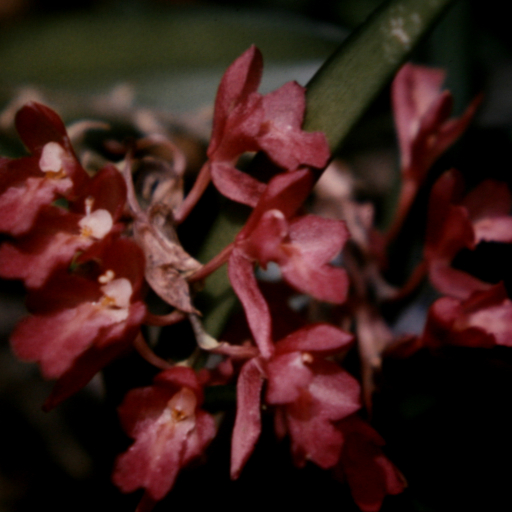
Often called the Lance-leaved Rodriguezia, this vibrant epiphytic orchid is a gem of the South American rainforests. Known for its "firework-like" displays of hot pink or coral blossoms, it creates a stunning visual as the flowers drape elegantly from the plant in long, graceful sprays. It is a favorite among orchid enthusiasts who love a "miniature" look with maximum color impact.
🔍 How to Identify
- 🌸 The Blooms: Features numerous small, vibrant pink to reddish-orange flowers that grow on long, arching stems (racemes) which can hold up to 25 blossoms at once.
- 🍃 The Foliage: True to its name, the leaves are "lanceolate"—long, narrow, and tapering to a sharp point, emerging from small, flattened pseudobulbs.
- 🕸️ The Roots: It possesses fine, white, wiry aerial roots that are designed to cling to tree branches and absorb moisture directly from the humid air.
🏡 In Your Garden
- 🪜 Epiphytic Lifestyle: This orchid is a natural "tree-dweller." While it can survive in a pot with very airy bark, it is happiest when mounted on a piece of cork or hardwood, allowing its roots to "wander" and dry out quickly after a rain.
- ☁️ Humidity & Airflow: It thrives in high humidity (60%+) and requires constant air movement. If the air becomes stagnant, the plant is prone to spotting, so a small fan or a breezy window spot is ideal.
⚠️ Safety & Toxicity
- ✅ Non-Toxic: Rodriguezia lanceolata is generally considered non-toxic to cats, dogs, and humans.
- 🛡️ Physical Fragility: While safe to touch, the flower spikes are quite delicate and can snap easily. It is best placed in a hanging basket or on a high shelf where it won't be bumped by busy households or curious pets.
✨ Fun Fact
In its native habitat, this orchid is incredibly widespread across the Amazon basin; it is often found growing on the very thin, outermost branches of trees where it competes for the best sunlight filtering through the canopy!

Detailed Care Instructions
To grow Rodriguezia Lanceolata plants, follow these steps:
- Planting: Choose a suitable pot or container with drainage holes. Use a well-draining potting mix, such as a mix of orchid bark, perlite, and sphagnum moss. Rodriguezia Lanceolata prefer to be slightly pot-bound, so choose a smaller pot that fits the size of the current root system.
- Light: Provide bright, indirect light for the plant. A shaded spot with filtered sunlight is ideal. Avoid direct sunlight as it can scorch the leaves.
- Temperature: Maintain a temperature range of 60-80°F (15-27°C) during the day, and slightly cooler temperatures at night. Avoid extreme temperature fluctuations.
- Humidity: Rodriguezia Lanceolata plants thrive in high humidity. To increase humidity, you can place a tray of water near the plants or use a humidifier. You can also group plants together to increase the humidity around them.
- Watering: Water the plant when the top inch of the potting mix feels dry. Rodriguezia Lanceolata prefer to dry out slightly between waterings. Ensure the water drains completely and does not sit in the bottom of the pot, as excessive moisture can lead to root rot.
- Fertilization: Use a balanced orchid fertilizer diluted to half strength. Feed the plant every 2-4 weeks during the growing season (spring and summer), and reduce or stop fertilizing in the fall and winter.
- Air circulation: Maintaining good air circulation around the plant is important to prevent the growth of mold or fungal diseases. Avoid overcrowding the plants.
- Repotting: Repot Rodriguezia Lanceolata plants every 2-3 years, or when the pot becomes overcrowded with roots. Use a fresh potting mix during repotting.
- Blooming: Rodriguezia Lanceolata plants typically bloom in the spring or summer. Flowers will emerge from the base of mature pseudobulbs and can last for several weeks.
By following these care guidelines, you can successfully grow Rodriguezia Lanceolata plants and enjoy their beautiful blooms.
Rodriguezia Lanceolata plant requires regular watering to thrive. You should water it when the top few inches of the soil feel dry to the touch. You want to avoid overwatering, as this can cause root rot. Water the plant slowly and deeply, allowing the water to soak down to the roots. You may want to use a watering can with a long spout to reach the roots more easily. It's important to use room temperature water and avoid getting water on the leaves or flowers, as this can lead to damage or disease. During periods of active growth, you may need to increase the frequency of watering, but be sure to let the soil dry out slightly between watering sessions. Overall, aim to provide consistent, even moisture to keep this plant healthy and happy.
The best way to fertilize this plant is to use a balanced fertilizer that has equal amounts of nitrogen, phosphorus, and potassium. During the growing season, fertilize every two weeks by diluting the fertilizer in water and applying it to the soil. Avoid fertilizing during the winter when the plant is dormant. Be sure to follow the instructions on the fertilizer package, as over-fertilization can harm the plant.
Rodriguezia Lanceolata plant thrives in a well-draining soil that is slightly acidic. A good mix for this plant can include coco coir, perlite, and finely shredded bark. It is important to avoid heavy soils that retain too much moisture, as they can lead to root rot. The soil should also have good aeration and be able to hold enough moisture to prevent the plant from drying out. Adding some orchid-specific fertilizer to the soil can also help support the growth and health of the plant.
Propagation of this plant can be done through division, which involves separating the plant into smaller sections and replanting them. To do this, carefully remove the plant from its pot and gently separate the roots. Make sure each section has a good amount of roots as well as healthy leaves or pseudobulbs. Plant the new sections in separate pots with fresh potting soil and water them thoroughly.
Another method of propagation for this plant is through back bulb division. This involves cutting the plant's back bulbs into smaller pieces, similar to division, but with a focus on the back bulbs rather than the whole plant. This method is best done during the plant's dormant period in the winter.
Finally, this plant can also be propagated through seed. To do this, collect and clean the seeds from a mature plant, and then sow them in a seed starter mix. Keep the soil moist and warm, and the seeds should sprout within a few weeks.








