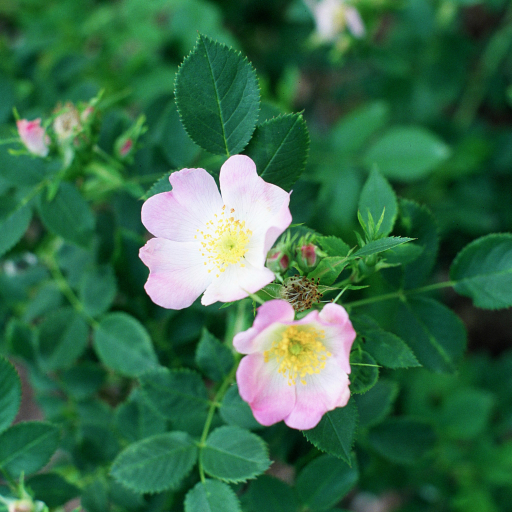
Plant Overview
Often called the "Smooth Rose" because it lacks the aggressive thorns of its cousins, Rosa blanda is a hardy North American native that brings a touch of wild elegance to any landscape. Unlike the fussy hybrid tea roses found in florist shops, this species thrives in colder climates and serves as a vital sanctuary for local pollinators. Its delicate pink blooms and vibrant red hips make it a favorite for those looking to create a natural, "cottagecore" aesthetic in their woodland gardens.
🔍 How to Identify
- 🌿 The Stems: Look for reddish-brown stalks that are notably smooth to the touch. While most roses are "prickly," this one is famous for having few to no thorns, especially on the upper growth.
- 🌸 The Flowers: Single, five-petaled blooms in shades of soft candy-pink, featuring a bright cluster of golden-yellow stamens in the center.
- 🍃 The Foliage: Compound leaves usually consisting of 5 to 7 oval, tooth-edged leaflets that turn a lovely deep red or purple in the autumn.
🏡 In Your Garden
- ❄️ Winter Warrior: This rose is incredibly cold-tolerant. It has evolved to survive harsh northern winters, making it a "plant-and-forget" option for gardeners in chilly climates where other roses might perish.
- 🌱 Natural Spreader: It likes to expand through underground suckers. This makes it fantastic for filling in large gaps or stabilizing soil on a slope, but you may need to prune the roots if you want to keep it in a small, tidy spot.
⚠️ Safety & Toxicity
- ✅ Non-Toxic: Rosa blanda is generally considered safe and non-toxic for both humans and curious pets like cats and dogs.
- 🧤 Minor Prickles: Though it is called the "Smooth Rose," don't be totally fooled! The very base of the older stems near the ground may still have a few tiny, hair-like prickles, so use care when weeding at the root.
✨ Fun Fact
The vibrant red "hips" (the fruit of the rose) that appear in late summer are a powerhouse of nutrition; they contain significantly more Vitamin C by weight than oranges and were historically used to make medicinal syrups during the winter.

Detailed Care Instructions
To grow Rosa Blanda plants, follow these steps:
- Select a suitable location: Rosa Blanda plants thrive in full sun, so choose a spot in your garden that receives at least 6 hours of direct sunlight per day. Ensure the soil is well-draining and rich in organic matter.
- Prepare the soil: Before planting, loosen the soil to a depth of about 12 inches and mix in compost or well-rotted manure to improve its fertility. This will also enhance drainage.
- Planting: Dig a hole slightly larger than the root ball of the Rosa Blanda plant. Place the plant in the hole, making sure the bud union (the swollen area near the base of the plant) is level with or slightly above the soil surface. Backfill the hole with soil, firming it gently around the roots.
- Watering: After planting, water the Rosa Blanda thoroughly to settle the soil around the roots. Then, ensure the soil remains consistently moist but not waterlogged. Water deeply and less frequently rather than light, frequent watering.
- Mulching: Apply a layer of organic mulch, such as wood chips or compost, around the base of the plant. This helps conserve moisture, suppresses weeds, and provides some insulation to the roots.
- Pruning: Rosa Blanda plants generally do not require heavy pruning. However, remove any dead, damaged, or diseased branches as needed. Light pruning can also help maintain shape and promote new growth.
- Fertilizing: Apply a balanced, slow-release fertilizer in spring and again in midsummer to provide essential nutrients. Follow the instructions on the fertilizer packaging for application amounts.
- Pest and disease control: Regularly inspect your Rosa Blanda plants for any signs of pests or diseases, such as aphids, black spot, or powdery mildew. If needed, treat them with appropriate organic or chemical controls.
- Winter care: Rosa Blanda plants can be sensitive to harsh winters. In colder regions, protect the plant by mulching heavily around the base, wrapping the plant in burlap, or using a plant cover.
By following these steps, you should be able to successfully grow Rosa Blanda plants and enjoy their beautiful flowers.

Place in a bright room that is sun drenched almost all day. Or directly in a south-facing window.

Rosa Blanda is a type of flowering plant that requires regular watering to maintain its overall health and vigor. When watering this plant, it is important to pay close attention to the soil moisture levels and ensure that the water is provided evenly and consistently.
One effective way to water Rosa Blanda is to use a watering can or pitcher to carefully water the soil around the base of the plant. It is best to avoid getting water on the leaves or flowers, as this can lead to damage or disease.
Another approach is to use a drip irrigation system, which can be set up to slowly and evenly release water directly into the soil around the plant. This is a good option for those who want to conserve water and ensure that the plant is not overwatered.
Regardless of the method used, it is important to water Rosa Blanda regularly and consistently in order to promote healthy growth and prevent dehydration. This plant typically requires more water during periods of hot, dry weather, so be sure to monitor soil moisture levels and adjust watering frequency as needed.
To fertilize this plant, use a well-balanced fertilizer with equal amounts of nitrogen, phosphorus, and potassium. Apply the fertilizer in early spring before new growth appears, and again in early summer after the first flush of blooms. Use about one tablespoon of fertilizer per foot of plant height, and water thoroughly after fertilizing. Avoid over-fertilizing as it can cause excessive growth and weaken the plant.
When planting the Rosa Blanda plant, it is important to choose a soil that is well-draining and rich in nutrients. The soil should be slightly acidic, with a pH ranging from 5.5 to 6.5. An ideal soil for this plant would be a loamy soil, which provides good drainage and moisture retention. Compost or aged manure can be added to the soil to increase its nutrient content, and perlite can be added to improve drainage. Avoid using heavy clay soils, as they can retain too much moisture and lead to root rot. Soil preparation should be done before planting, by digging a hole two to three times larger than the root ball and mixing in any additives or amendments. The plant should be planted at the same depth as it was in its previous container, and the soil should be gently tamped down around the roots.
To propagate this plant, you will need to take stem cuttings from the mature plant during the growing season. Choose stems that are healthy and free from any signs of disease. Cut a 4-6 inch stem cutting just below a node, where there is a leaf attached. Remove the leaves from the bottom half of the stem, leaving a few leaves at the top.
Prepare a container filled with moist potting mix that is well-draining and rich in nutrients. You may add a rooting hormone to encourage faster root growth. Insert the stem cuttings into the soil, burying at least half of the stem. Water the soil but be careful not to overwater, as the cuttings can rot in soggy soil.
Cover the container with a plastic bag or a clear plastic dome to create a humid environment for the cuttings. Place the container in a location that receives bright, indirect light, but not direct sunlight. Maintain the moisture level in the soil and mist the leaves daily to keep them hydrated.
After a few weeks, the cuttings should start to show signs of new growth, indicating that they have rooted successfully. At this point, you can gradually acclimate the plants to brighter light and less humidity. Once they have developed enough roots and leaves, you can transplant them to individual pots or into the ground.
Common pests of the smooth rose include Spider mites, aphids, larvae. Make a habit of checking your smooth rose frequently for pests so that any infestations can be caught and managed early.








