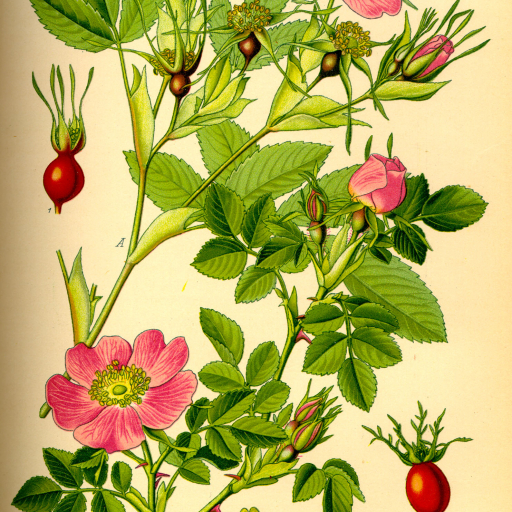
Plant Overview
Known affectionately as the "Cinnamon Rose" or "May Rose," this European native is a timeless heirloom that has graced gardens for centuries. While it doesn't actually smell like cinnamon, its distinctive reddish-brown, woody stems give it its spicy name. This is one of the hardiest roses in existence, often the very first to bloom in the spring, signaling the official end of winter's chill.
🔍 How to Identify
- 🟤 The Stems: Look for the signature smooth, cinnamon-brown or purplish bark on the older canes. This dark coloration is a primary giveaway, as most modern roses have bright green stems.
- 🌸 The Bloom: The flowers are typically deep pink to purplish-red. In the wild, they are "single" (five petals), but garden varieties are often "double," looking like ruffled pom-poms.
- 🌿 The Foliage: The leaves are a soft, matte greyish-green with serrated edges, usually consisting of 5 to 7 leaflets that feel thinner and more delicate than a standard florist's rose.
🏡 In Your Garden
- 💪 Heritage Hardiness: This rose is a survivor. It is exceptionally cold-hardy and can thrive in northern climates and poor soils where more delicate tea roses would perish.
- 🏃 A Spreading Habit: Unlike modern hybrid roses that stay in a neat clump, the Cinnamon Rose likes to "travel" via underground suckers. It is best used for a naturalized hedge or a wild corner of the garden where it has room to roam.
- ☀️ Sun Seeker: To get the best floral display, place it in full sun. While it can handle partial shade, the stems may become "leggy" as they stretch toward the light.
⚠️ Safety & Toxicity
- 🐾 Pet Friendly: The Cinnamon Rose is non-toxic to cats, dogs, and horses. The rose hips (the fruit left after flowering) are actually a powerhouse of Vitamin C and are often used in herbal teas.
- ⚔️ Prickle Warning: While it is "friendly" in terms of toxicity, it does have thorns. The base of the stems can be quite prickly, so keep it away from narrow walkways where it might snag clothing or curious toddlers.
✨ Fun Fact
- 🏰 A Living Antique: Rosa cinnamomea is one of the oldest rose species ever recorded in European literature. It was a favorite in monastery gardens during the Middle Ages and was one of the first roses to be selectively bred for "double" petals by early botanists.

Detailed Care Instructions
To grow Rosa Cinnamomea plants, also known as cinnamon roses, you can follow these steps:
- Getting the plant: Purchase a Rosa Cinnamomea plant from a reputable nursery or online supplier. Make sure it is a healthy and disease-free specimen.
- Planting location: Choose a location in your garden that receives full sun to partial shade. The soil should be well-draining and fertile.
- Soil preparation: Before planting, amend the soil with organic matter like compost to improve fertility and drainage. Rosa Cinnamomea plants prefer slightly acidic soil.
- Planting: Dig a hole that is slightly larger than the root ball of the plant. Gently place the plant in the hole and refill it with soil, firming it gently around the base. Leave a slight depression around the plant to retain water during watering.
- Watering: Water the newly planted rose deeply to encourage root establishment. Afterwards, water regularly, providing about an inch of water per week. Ensure the soil remains moist but not waterlogged.
- Mulching: Apply a layer of organic mulch, such as wood chips or straw, around the base of the plant to conserve moisture, suppress weeds, and protect the roots during extreme temperatures.
- Pruning: Regularly prune Rosa Cinnamomea to remove dead, damaged, or diseased branches. This will maintain plant health and shape. Pruning can be done in late winter or early spring before new growth begins.
- Fertilizing: Feed your cinnamon rose plant with a slow-release rose fertilizer in early spring and again in late summer. This will provide necessary nutrients for healthy growth and blooming.
- Protecting from pests and diseases: Monitor the plant for common rose pests like aphids, spider mites, and black spot disease. Use organic insecticides or fungicides if necessary, and maintain good airflow around the plant to discourage diseases.
- Winter care: In colder regions, Rosa Cinnamomea might require some winter protection. Mulch around the base of the plant and consider wrapping it with burlap or using a protective covering to shield it from harsh winter conditions.
By following these steps and providing proper care, you can successfully grow Rosa Cinnamomea plants and enjoy their beautiful blooms.

Place in a bright room that is sun drenched almost all day. Or directly in a south-facing window.

To water this plant, you should first check the soil around the base of the plant to see if it is dry. If the top inch of soil feels dry to the touch, it is time to water. Use a watering can or hose to slowly water the soil around the plant until it is evenly moist. Be careful not to overwater, as this can lead to root rot. It is also important to avoid getting water on the leaves or flowers, as this can encourage fungal growth and disease. When watering, aim for the base of the plant and avoid spraying the foliage. Watering once a week is usually sufficient, but this may vary depending on the climate and conditions in your area.
To effectively fertilize the Rosa cinnamomea plant, follow these instructions:
- Choose a balanced, slow-release fertilizer: Select a fertilizer with equal parts nitrogen (N), phosphorus (P), and potassium (K) or a ratio close to 10-10-10.
- Time the fertilization: Apply fertilizer during the growing season, generally in early spring just before new growth appears. Avoid fertilizing in late summer or fall to prevent stimulating new growth that might not withstand winter.
- Dilute the fertilizer: Mix the fertilizer with water, following the manufacturer's instructions for the appropriate dilution ratio.
- Apply the fertilizer: Slowly pour the diluted fertilizer around the base of the plant, avoiding direct contact with leaves and stems. Alternatively, use a liquid fertilizer and apply it foliarly, spraying a fine mist on the leaves.
- Water thoroughly: After fertilizing, water the plant deeply to help the nutrients reach the root zone.
- Monitor foliage color: Observe the plant's leaves for signs of nutrient deficiencies or excesses. Yellowing leaves may indicate a need for more nitrogen, while stunted growth or burnt leaf tips might indicate an excessive fertilizer application.
- Adjust fertilizer frequency: Depending on the needs of your Rosa cinnamomea plant, consider fertilizing on a regular basis, every 6-8 weeks, or as needed for optimal growth and health.
Remember, it is essential to follow the specific requirements of the Rosa cinnamomea plant regarding sun exposure, moisture, and other care practices to ensure its overall well-being.
The ideal soil for Rosa Cinnamomea plant should be well-drained, rich in organic matter and nutrients. It should have a pH level between 6.0 to 7.0, which is slightly acidic to neutral. The soil texture should be loamy or sandy, which allows for good drainage and air circulation. Adding compost, peat moss or aged manure to the soil can help improve its structure and fertility. Avoid using heavy clay soils or soils that are too alkaline, as they can cause root rot or nutrient deficiencies. It is important to keep the soil consistently moist, but not waterlogged, and to fertilize the plant regularly with a balanced fertilizer to ensure healthy growth and flowering.
To propagate this plant, you will need to start by collecting seeds from the plant. It is important to ensure that the seeds are mature, which can be determined by their color and texture. Once you have collected the seeds, you can soak them in water for 24 hours to help soften the outer coating and promote germination.
After soaking the seeds, you can sow them in a nutrient-rich soil mix that is well-draining and has a neutral pH level. Cover the seeds lightly with soil, and water them well. Place the pot in a brightly lit area but avoid direct sunlight. Seeds can take anywhere from a few days to several weeks to germinate.
Once the seedlings have developed their first few true leaves, you can transplant them into individual pots. Keep them in a sunny location, and ensure that the soil remains consistently moist without being waterlogged. As the plants grow, you can begin to fertilize them with a balanced plant food every two weeks.
In addition to propagating from seed, Rosa cinnamomea can also be propagated through stem cuttings. Take a cutting from a healthy plant, removing a length of stem that contains at least two nodes. Remove the leaves from the lower half of the stem, and dip the cut end of the stem in rooting hormone. Plant the stem in a well-draining soil mix, and cover it with a plastic bag to create a humid environment. Place the cutting in a bright, warm location but out of direct sunlight. As with growing from seed, the cuttings will require consistent moisture and regular fertilization.








