Plant Overview
Known as the legendary "Musk Rose," Rosa moschata is an ancient species that has captivated poets and gardeners for centuries. Unlike modern roses that bloom in early summer, this romantic climber waits for the heat of late August and September to unfurl its blossoms. It is famously mentioned in William Shakespeare’s A Midsummer Night's Dream, cementing its place in literary and botanical history as a symbol of late-summer enchantment.
🔍 How to Identify
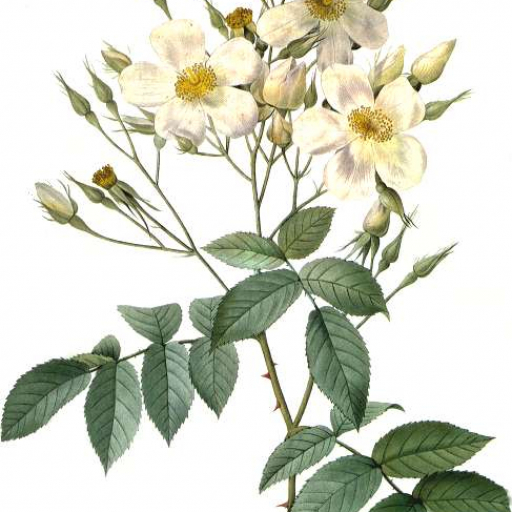
- 🌸 The Flowers: Produces clusters of simple, five-petaled blossoms that are creamy-white. Unlike many roses, the centers feature a prominent boss of golden-yellow stamens.
- 👃 The Scent: The "musk" fragrance is unique because it originates from the stamens rather than the petals, meaning the scent wafts easily through the air on a breeze.
- 🌿 The Foliage: The leaves are a soft, grayish-green with a graceful, slightly drooping habit. The plant itself is a vigorous "scrambler," capable of reaching great heights if given a trellis or a sturdy tree to climb.
🏡 In Your Garden
- ⏳ Late Season Star: This plant is perfect for gardeners who want color when other roses have faded. Because it blooms on "new wood," you should avoid heavy pruning in early spring to ensure you don't cut off the future flower buds.
- ☀️ Air Circulation: While it is relatively hardy, the Musk Rose loves a sunny spot with plenty of air movement. Because of its dense, arching growth, good airflow helps prevent the powdery mildew that can sometimes affect older rose varieties.
⚠️ Safety & Toxicity
- ✅ General Safety: Rosa moschata is considered non-toxic to humans, dogs, and cats. In fact, rose hips (the fruit produced after flowering) are often used in herbal teas.
- 🌵 Thorn Warning: Like most wild-type roses, it possesses sharp, curved thorns along its canes. Always wear thick gardening gloves when pruning or training the stems to avoid skin punctures or "rose gardener's disease" (sporotrichosis).
✨ Fun Fact
The scent of the Musk Rose is so potent that in the 16th century, it was believed that just sitting near a blooming bush could cure a "heavy heart" or melancholy. It remains one of the primary ancestors of the famous Noisette rose category.

Detailed Care Instructions
To grow Rosa Moschata, also known as the Musk Rose, follow these steps:
- Choose a suitable location: Musk Roses prefer full sun to partial shade. Pick a spot in your garden that receives at least 6 hours of direct sunlight daily.
- Prepare the soil: Ensure that the soil is well-draining by adding organic matter such as compost or well-rotted manure. This will help to improve the soil structure and fertility.
- Planting: Musk Roses can be planted either in the spring or fall. Dig a hole that is slightly larger than the root ball of the plant. Place the plant in the hole, ensuring that the graft union (the swollen area where the rose is grafted onto the rootstock) is above ground level. Backfill the hole with soil and gently firm it down.
- Watering: Water the plant thoroughly after planting and keep the soil consistently moist but not waterlogged. Avoid overwatering, as it can lead to root rot.
- Mulching: Apply a layer of organic mulch around the base of the plant, such as wood chips or straw, to help conserve moisture, suppress weeds, and regulate soil temperature.
- Pruning: Prune the Musk Rose during the dormant season to remove dead or damaged wood, shape the plant, and promote better air circulation. This will help prevent diseases and encourage new growth.
- Fertilizing: Apply a balanced rose fertilizer according to the manufacturer's instructions in spring and then again in mid-summer to promote healthy growth and abundant blooms.
- Pest and disease control: Monitor the plant regularly for pests such as aphids, spider mites, or caterpillars. Treat them using organic insecticides or by using natural predators such as ladybugs or lacewings. Additionally, keep an eye out for common rose diseases like blackspot or powdery mildew. If necessary, use appropriate fungicides following the instructions provided.
- Support: Musk Roses may require support, especially if they are climbers or have arching canes. Provide a trellis, arbor, or other structural support to prevent the canes from bending or breaking.
- Regular maintenance: Regularly remove spent flowers, known as deadheading, to encourage the plant to produce more blooms and prevent the formation of rose hips. Also, monitor the plant for any signs of stress or disease and take appropriate action promptly.
With care and proper maintenance, Rosa Moschata should thrive and reward you with its beautiful blossoms and fragrance.

Place in a bright room that is sun drenched almost all day. Or directly in a south-facing window.

The plant prefers well-drained soil where water does not pool. It is important to water the plant regularly during the growing season to ensure healthy growth. When watering, it is best to avoid getting the leaves wet as this can increase the risk of fungal diseases. Instead, water at the base of the plant to ensure the roots receive the necessary moisture. It is also important to avoid overwatering the plant as this can lead to root rot. To determine when to water, use a finger or shovel to check the soil moisture levels and only water when the top 2.5 to 5 cm of soil is dry. During periods of drought, it may be necessary to water more frequently or provide supplemental irrigation.
To fertilize this plant, first, determine the soil's nutrient requirements by performing a soil test. Choose a fertilizer that suits the soil's needs, such as a balanced or nitrogen-rich fertilizer. Apply the fertilizer to the soil in the plant's root zone during the growing season, following the manufacturer's instructions. Water the plant thoroughly after fertilizing to help the nutrients enter the soil. Avoid fertilizing the plant during the dormant season.
The ideal soil for the Rosa Moschata plant is a well-draining, slightly acidic soil with a pH between 5.5 to 6.5. The soil should be rich in organic matter and have good moisture retention properties. A mixture of loam, sand, and peat moss is a good soil combination. The soil should also have good aeration to prevent waterlogging, which can cause root rot. It is recommended to amend the soil with compost and other organic matter to improve fertility and soil structure. The Rosa Moschata plant prefers soil that is slightly on the dry side, so be careful not to over-water the plant.
To propagate this plant, first, choose a healthy stem that is about 15cm in length and makes a cut below a leaf node. Remove the leaves from the lower half of the stem.
Prepare a pot of well-draining soil mixture, and dip the stem into rooting hormone before planting it into the soil. Water the cutting thoroughly, and cover it with a plastic bag to maintain humidity.
Keep the pot in a warm and bright location but avoid direct sunlight. Mist the cutting occasionally, and check the soil moisture level to ensure it remains moist but not waterlogged.
After about 4 to 6 weeks, the cutting should have developed roots. At this point, remove the plastic bag, and gradually acclimatize the new plant to outdoor conditions before transplanting it into a bigger pot or garden bed.








