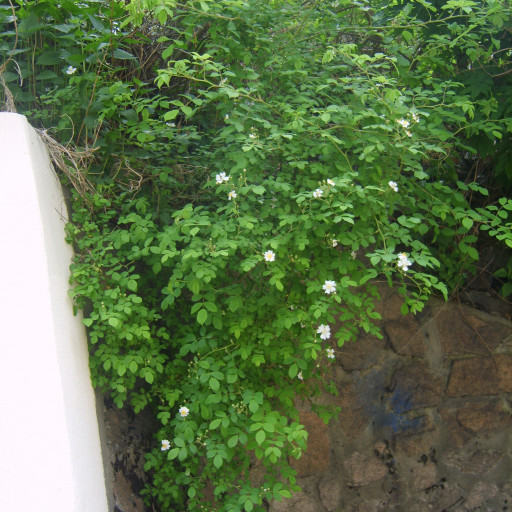
Plant Overview
Often called the "Baby Rose" or "Rambler Rose," Rosa multiflora is a romantic-looking climber that hides a wild side. Originally brought from East Asia to serve as a "living fence" for livestock and to prevent soil erosion, this vigorous grower has earned a reputation as a green wall that can quickly overtake a backyard or woodland edge. It is a plant that tells a story of unintended consequences—a delicate ornamental that became an unstoppable wanderer.
🔍 How to Identify
- 🌸 Clustered Blooms: Unlike many garden roses, this species produces dozens of small, white (occasionally pale pink) flowers that grow in pyramid-shaped clusters called panicles.
- 🌿 Fringed Stipules: If you look closely at the base of each leaf stalk, you’ll find small, feathery or "comblike" fringes. This unique "beard" is the surest way to distinguish it from native rose species.
- 🍒 Bright Red Hips: In the autumn, it produces tiny, hard, pea-sized red fruits known as hips. These remain on the plant through winter, standing out vividly against the snow.
🏡 In Your Garden
- 🧱 The Great Escape: Its long, arching canes can grow up to 15 feet long, forming impenetrable thickets. Because it can grow in sun or shade and survives in many soil types, it often "escapes" the garden and competes with native plants for nutrients and light.
- ✂️ Vigorous Management: This rose is exceptionally hardy and difficult to eradicate once established. It spreads through "layering"—where the tips of the canes touch the soil and sprout new roots—meaning one plant can quickly become a colony if not pruned aggressively.
⚠️ Safety & Toxicity
- ⚔️ Physical Hazard: The most significant danger comes from its curved, "cat-claw" thorns. They are incredibly sharp and positioned to "grab" skin or clothing. Always wear heavy-duty leather gardening gloves when handling.
- 🐾 Non-Toxic but Prickly: While the plant is not considered poisonous to pets or humans, the dense thickets can be a haven for ticks. Furthermore, the hips can cause mild stomach upset in pets if ingested in very large quantities.
✨ Fun Fact
- ⏳ The 20-Year Wait: A single Multiflora Rose bush can produce up to 1,000,000 seeds in a single season. These seeds are so resilient that they can sit dormant in the soil for up to 20 years, waiting for the perfect moment to sprout and start a new thicket.

Detailed Care Instructions
The Rosa Multiflora plant, also known as the multiflora rose or baby rose, is a vigorous and fast-growing shrub. Here are some steps to help you successfully grow the Rosa Multiflora plant:
- Choose the right location: Select a sunny or partially shaded spot in your garden that receives at least 6 hours of direct sunlight daily. The soil should be well-draining, fertile, and slightly acidic.
- Prepare the soil: Prior to planting, add organic matter such as compost or well-rotted manure to improve the soil's fertility and drainage. Remove any weeds or grass from the planting area.
- Planting: Dig a hole that is slightly wider and deeper than the plant's root ball. Place the Rosa Multiflora plant in the hole and backfill with soil, gently firming it around the roots. Make sure the plant is at the same level as it was in its nursery container.
- Watering: Water the plant thoroughly after planting to settle the soil and provide moisture to the roots. Keep the soil consistently moist but not waterlogged throughout the growing season. Increase or decrease watering depending on rainfall and weather conditions.
- Mulching: Apply a layer of organic mulch around the base of the plant to help retain moisture, regulate soil temperature, and suppress weed growth. Keep the mulch a few inches away from the plant's stem to prevent rotting.
- Pruning: Pruning is essential for maintaining the shape and health of the Rosa Multiflora plant. Prune in early spring before new growth begins or after flowering. Remove any dead, damaged, or crossing branches. Always use clean and sharp pruning tools.
- Fertilizing: Feed the Rosa Multiflora plant with a balanced slow-release fertilizer in early spring and early summer. Follow the manufacturer's instructions regarding dosage and application method.
- Pest and disease control: Monitor the plant regularly for signs of pests such as aphids or diseases like black spot. Treat any issues promptly using appropriate organic or chemical controls.
- Support if needed: As the plant grows, it may require support in the form of trellises, stakes, or a fence. Install these structures early on to avoid damaging the plant later.
- Regular maintenance: Regularly remove any spent flowers to encourage more blooms and prevent the plant from producing excessive rose hips.
With proper care and maintenance, the Rosa Multiflora plant should thrive and provide you with beautiful clusters of fragrant, small, white flowers in the spring.

Place in a bright room that is sun drenched almost all day. Or directly in a south-facing window.

To provide adequate water for this plant, it is important to check the soil moisture regularly. Before watering, ensure that the top layer of soil is dry to the touch. When watering, avoid getting the leaves wet as this can lead to fungal diseases. Instead, water at the base of the plant, allowing the water to soak into the soil and reach the roots. Use a watering can or hose with a gentle flow to avoid damaging the plant. It is important not to overwater as this can lead to root rot. Consider using a drip irrigation system to provide a consistent amount of water without overwatering.
To fertilize this plant, apply a balanced fertilizer with equal parts nitrogen, phosphorus, and potassium in the early spring. Fertilize again after the first bloom, using a fertilizer high in phosphorus. Be sure to follow the instructions on the fertilizer packaging and do not over-fertilize, as this can cause damage to the plant. Water the plant thoroughly after fertilizing.
The ideal soil for Rosa Multiflora plant should be well-draining and rich in organic matter. It should have a neutral pH range of 6.0 to 7.0. A sandy loam or loamy soil with good water retention capability is suitable. A soil with good aeration is preferred as it allows the roots to breathe properly. The texture of the soil should be friable, and it should not possess any compact layers. A balanced blend of sand, clay, and organic matter can provide the ideal soil mix for optimal growth and thriving of the plant. It is essential to ensure that the soil is not waterlogged and is well-draining to prevent water stagnation and root rot.
To propagate this plant, you will first need to take stem cuttings from a healthy parent plant. Select a stem that is about 6 inches long and has several leaves attached. Cut the stem just below a node, using sterilized pruning shears.
Remove the bottom leaves from the stem, leaving only the top set of leaves. Dip the cut end of the stem into rooting hormone powder, which will help the cutting root faster.
Prepare a soil mixture of peat moss and sand, and moisten it well. Make a hole in the soil mixture with a pencil or a stick, and insert the stem cutting into the hole.
Cover the pot with clear plastic, which will create a humid environment that will help the cutting root. Place the pot in a bright, but indirect, light location and keep the soil moist, but not soggy.
After a few weeks, check the cutting for root growth by gently tugging on the stem. If the stem resists, it has rooted. If it easily slides out of the soil, it needs more time to root.
Once the cutting has rooted, remove the plastic cover and transplant the new plant into a larger pot or directly into the ground. Water the new plant well and continue to care for it as you would any other Rosa Multiflora plant.
Common pests of the multiflora rose include Spider mites, aphids, larvae. Make a habit of checking your multiflora rose frequently for pests so that any infestations can be caught and managed early.








