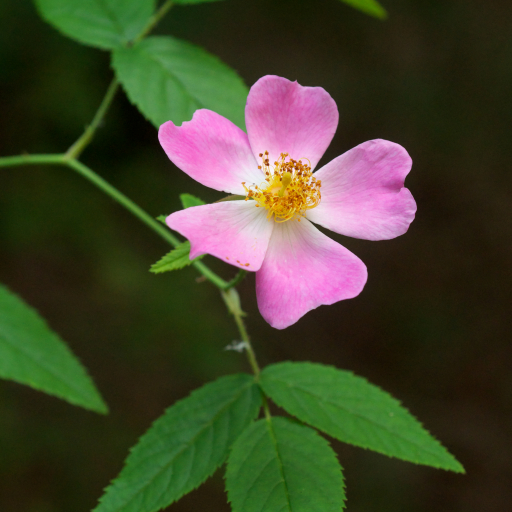
Plant Overview
Often called the Climbing Prairie Rose or the Illinois Rose, this native North American beauty is a bit of a romantic rebel. Unlike most roses that grow in tidy bushes, Rosa setigera sends out long, elegant canes that arch and weave through fences or trees. It is one of the few roses native to the continent that has a climbing habit, turning wild thickets into cascades of pink blossoms every midsummer.
🔍 How to Identify
- 🍃 The Three-Leaflet Look: While most roses have five to seven leaflets, this species uniquely features only three leaflets on most of its leaves, giving it a cleaner, more distinct appearance.
- 🌸 Transforming Blooms: The flowers appear in clusters and are famous for their "color-shift"—opening as a deep, vibrant pink and gradually fading to a soft, romantic white.
- 🏹 Arching Canes: Look for long, flexible stems that can reach up to 15 feet. These canes don't have tendrils; they "climb" by leaning their weight and hooking their thorns onto nearby structures.
🏡 In Your Garden
- 💪 Clay Specialist: This rose is exceptionally hardy and is one of the few that can actually thrive in heavy clay soils where other garden roses would struggle with root rot.
- 🦋 A Wildlife Feast: Because the flowers are "single" (meaning they have only one row of petals), the nectar and pollen are easily accessible to native bees and butterflies, unlike the tightly packed petals of modern hybrid roses.
- 🍂 Winter Interest: In the fall, the plant produces small, bright red "hips" (fruit) that persist through the snow, providing a vital food source for songbirds during the lean months.
⚠️ Safety & Toxicity
- 🛡️ Non-Toxic: This plant is generally considered safe and non-toxic for humans, dogs, and cats. In fact, the hips are high in Vitamin C.
- ⚔️ Prickly Defense: The stems are armed with stout, curved thorns. While not "poisonous," they can cause deep scratches or snag clothing, so it is best planted away from narrow walkways or child play areas.
✨ Fun Fact
Rosa setigera is a historical superstar! In the 19th century, it was used by early American plant breeders to create the very first "climbing" rose varieties that could survive the harsh, freezing winters of the Midwest and Canada.

Detailed Care Instructions
To grow Rosa setigera (also known as the Illinois rose or wild prairie rose), you can follow these steps:
- Choose the right location: Rosa setigera prefers full sun, so select a location in your garden that receives at least 6 hours of direct sunlight per day. It can tolerate a range of soil types but prefers loamy, well-draining soil.
- Planting: The best time to plant Rosa setigera is in early spring or late fall. Dig a hole that is wide and deep enough to accommodate the root ball of the plant. Place the plant in the hole, ensuring that the bud union (swollen area where the rose was grafted onto the rootstock) is level with the soil surface. Fill the hole with soil, gently firming it around the plant.
- Watering: Water the plant thoroughly after planting and continue to water regularly, especially during dry periods. Avoid overwatering as it can lead to root rot. Allow the soil to dry out slightly between waterings.
- Mulching: Apply a layer of organic mulch, such as wood chips or shredded bark, around the base of the plant to help conserve moisture, suppress weeds, and insulate the roots. Keep the mulch a few inches away from the stem to prevent rotting.
- Pruning: Rosa setigera generally requires minimal pruning. However, remove any dead, damaged, or diseased branches whenever you notice them. Prune to shape the plant in early spring before new growth begins.
- Fertilizing: Apply a balanced slow-release fertilizer formulated for roses in early spring. Follow the package instructions for application rates. Avoid excessive fertilization, as it can lead to weak growth and increased susceptibility to diseases.
- Pest and disease control: Rosa setigera is generally resistant to common rose pests and diseases. However, keep an eye out for any signs of aphids, spider mites, or fungal diseases such as black spot. If necessary, treat them with appropriate organic or chemical controls.
- Propagation: If you want to propagate Rosa setigera, you can collect its seeds after the flowers have faded and the hips have formed. Plant the seeds in a well-prepared bed or container in the fall, and they will likely germinate in the following spring.
By following these steps, you can successfully grow Rosa setigera and enjoy its beautiful blooms and low-maintenance nature. Remember to provide regular care, monitor for any issues, and enjoy the beauty of this native rose species.

Place in a bright room that is sun drenched almost all day. Or directly in a south-facing window.

To properly water the Rosa Setigera plant, it is important to consider several factors such as the type of soil, weather conditions, and season. Generally, the plant requires moderate watering, which should be done every 10-14 days during the growing season. Before watering, ensure that the soil is slightly dry to the touch, and avoid overwatering, as this may lead to root rot and other diseases.
To water the plant, use a watering can or hose with a gentle, steady stream of water. Direct the water to the base of the plant, avoiding the leaves and flowers. Water the plant until the soil is moist, but not waterlogged. If the plant is in a pot, make sure that it has adequate drainage holes to avoid water accumulation at the bottom.
During the dry season or when the weather is hot, the Rosa Setigera plant may require more frequent watering, but still be cautious not to overwater. Additionally, avoid watering the plant in the late afternoon or evening, as this may increase the risk of fungal infections. Instead, water the plant early in the morning when the temperatures are cool.
Overall, watering the Rosa Setigera plant should be done with care, ensuring that the soil is moist but not waterlogged, while also considering the plant's watering requirements.
To fertilize this plant, apply a slow-release, balanced fertilizer in early spring as new growth begins. Then, every four to six weeks during the growing season, apply a liquid fertilizer diluted according to the package instructions. Be sure to avoid getting fertilizer on the foliage, and water the plant deeply after fertilizing. Stop fertilizing in early fall to allow the plant to prepare for dormancy.
The ideal type of soil for Rosa Setigera plant would be a well-draining sandy loam soil that is slightly acidic and rich in organic matter. It should also have a pH range of 6.0 to 6.5. The soil should be fertile, well-aerated, and able to hold moisture without becoming waterlogged. Additionally, it should have good drainage to allow excess water to drain away quickly. The soil should be prepared by adding compost and other organic matter to improve its fertility and structure. It is important to avoid heavy clay soils, as they will not provide adequate drainage for the Rosa Setigera plant.
- Prepare a cutting: Take a cutting from a healthy Rosa Setigera plant, ideally from a stem that is 6-8 inches long and has several nodes. Remove any leaves or flowers from the bottom part of the stem.
- Rooting hormone: Dip the bottom end of the cutting into rooting hormone powder, which will help stimulate the growth of new roots.
- Soil mix: Fill a small container with a mix of potting soil and perlite or sand to provide good drainage. Water the soil slightly.
- Plant the cutting: Make a small hole in the soil mix and insert the cutting into the hole. Tamp the soil around the cutting firmly to make sure it is secure.
- Water: Water the cutting gently, being careful not to wash away the rooting hormone. Keep the soil slightly moist, but avoid overwatering.
- Cover with a plastic bag: Cover the container with a clear plastic bag to create a greenhouse effect, trapping humidity and warmth. Place the container in a warm and bright but not direct sunlight location.
- Check the cutting: After a few weeks, gently tug on the cutting to see if it has rooted. If there is resistance, it means that the cutting has developed new roots. If not, put the plastic bag back and check again in a week.
- Transplanting: Once the cutting has developed roots, it can be transplanted into a larger container or outside in the garden.
Common pests of the climbing rose include Spider mites, aphids, larvae. Make a habit of checking your climbing rose frequently for pests so that any infestations can be caught and managed early.








