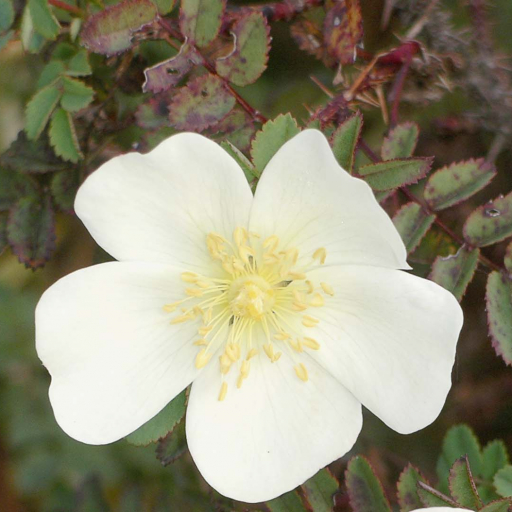
Plant Overview
Often called the "Scotch Rose" or "Burnet Rose," Rosa spinosissima is the rugged, wild spirit of the rose family. Native to the windswept coasts of Europe and Asia, this hardy shrub is famous for its ability to thrive in sandy dunes and rocky cliffs where more delicate roses would wither. In folklore, it is deeply tied to Scottish identity, often cited as the "White Rose of Scotland" and celebrated for its fierce resilience and delicate, almond-scented blooms.
🔍 How to Identify
- ⚔️ The Thorns: True to its name (spinosissima means "most thorny"), the stems are densely packed with a mixture of large prickles and smaller, needle-like bristles.
- 🌿 The Foliage: Unlike the broad leaves of garden hybrids, these leaves are tiny, fern-like, and dainty, usually consisting of 7 to 11 small, rounded leaflets.
- 🌸 The Flowers: It produces simple, single flowers with five petals, typically in shades of creamy white or pale pink, appearing early in the summer.
- 🌑 The Hips: While most roses produce red or orange fruit, this species is famous for its unique, globose "hips" that turn a deep, dark purple or almost jet-black when ripe.
🏡 In Your Garden
- 🏖️ Coastal Champion: This plant is an excellent choice for seaside gardens. It is highly salt-tolerant and actually prefers sandy, well-draining soil over heavy, nutrient-rich garden beds.
- 🛡️ Natural Fencing: Because of its suckering habit (it spreads via underground runners) and its intense thorniness, it makes an impenetrable and beautiful low-growing hedge or "living fence."
- ✂️ Low Maintenance: Unlike modern tea roses, the Scotch Rose hates being fussed over. It requires very little pruning and is exceptionally resistant to common rose diseases like black spot and mildew.
⚠️ Safety & Toxicity
- 🟢 Status: Generally non-toxic to humans and pets.
- 🩹 Physical Hazard: The primary danger is mechanical. The thorns are incredibly numerous and sharp; always wear heavy-duty gauntlet gloves when handling or pruning this plant to avoid skin punctures.
- 🐕 Pet Safety: While the plant isn't poisonous if nibbled, the prickly stems can cause mouth or paw injuries to curious dogs or cats.
✨ Fun Fact
During the 18th and 19th centuries, "Scotch Roses" became a massive horticultural craze. Gardeners bred hundreds of varieties in every color from lemon yellow to deep maroon, but today, many of those antique varieties have been lost to history, leaving the original wild white form as the most iconic survivor.

Detailed Care Instructions
To grow Rosa Spinosissima, follow these steps:
- Choose a suitable location: Rosa Spinosissima prefers full sun to partial shade, so select a spot in your garden that receives at least 6 hours of sunlight per day. The soil should be well-draining and fertile.
- Prepare the soil: Before planting, amend the soil with compost or organic matter to improve drainage and fertility. Remove any weeds or rocks from the planting area.
- Propagation: Rosa Spinosissima can be propagated from seeds or cuttings. If using seeds, scarify them by making small cuts on the seed coat or soak them in warm water for 24 hours to enhance germination. Sow the seeds in a seed tray or pots filled with well-draining potting mix. Cover the seeds lightly with soil and keep them moist but not waterlogged. Germination may take several weeks to a few months.
- If using cuttings, select healthy stems from an established Rosa Spinosissima plant. Cut a 6-8 inch stem just above a bud and remove the lower leaves. Dip the cut end in rooting hormone and plant it in a pot filled with a well-draining rooting medium. Keep the cutting moist and place it in a warm location with indirect sunlight. Roots should develop in several weeks.
- Planting: Once your seedlings or cuttings have reached a suitable size (around 10-12 inches tall), they can be planted in the garden. Dig a hole slightly larger than the root ball and gently place the plant in it. Backfill the hole with soil, firming it gently around the roots. Water thoroughly to settle the soil.
- Watering: Rosa Spinosissima requires regular watering during its first year of growth to establish a strong root system. Water deeply once or twice a week, ensuring that the soil remains moist but not waterlogged. After the plant is established, it can tolerate occasional dry periods.
- Pruning: Pruning helps maintain the shape and health of the plant. In early spring, before new growth begins, remove any dead, damaged, or overcrowded branches. Trim back any overly long or leggy growth to promote bushier growth.
- Mulching and fertilizing: Apply a layer of organic mulch around the base of the plant, taking care not to mound it against the stem. Mulching helps retain moisture, control weeds, and enrich the soil. Fertilize with a balanced slow-release fertilizer in early spring and again in mid-summer to promote healthy growth.
- Disease and pest control: Keep an eye out for common rose diseases such as black spot or powdery mildew. If necessary, treat with appropriate fungicides or insecticides following the instructions on the product label.
- Enjoy your Rosa Spinosissima: With proper care and maintenance, your Rosa Spinosissima plant should grow and produce beautiful blooms for years to come.

Place in a bright room that is sun drenched almost all day. Or directly in a south-facing window.

To water this particular plant, it is important to start by checking the soil moisture level. The level of watering required will largely depend on the moisture level in the soil. If the soil is completely dry, it will require more water than if the soil is still moist.
To water the plant correctly, ensure that the water reaches the roots of the plant. One of the easiest methods is to water from the base of the plant, rather than watering from the top. This helps to avoid damage to the leaves and stems of the plant.
When watering the plant, it is crucial to avoid over-watering, as this can lead to root rot and other related problems. To avoid this, it is important to wait until the soil has dried out before watering it again.
Finally, keep a close eye on the plant to ensure it is healthy and thriving. If you notice the leaves becoming wilted or discolored, it may be time to adjust your watering schedule or make other changes to the plant's care routine.
To fertilize this plant, use a balanced fertilizer that is formulated for shrubs and apply it according to the package instructions. It is best to apply the fertilizer in early spring before new growth begins. Avoid over-fertilizing, as this can damage the plant and lead to excessive growth. Always water the plant well after fertilizing to help the nutrients penetrate the soil and reach the roots.
The ideal soil for Rosa Spinosissima plant should be well-draining and moderately fertile. It should have a neutral to slightly acidic pH level, ranging from 6.0 to 7.0. The soil should be organic-rich and loamy, with good water retention capacity but should not be waterlogged. The plant also requires good aeration of the soil for optimum growth. It is advisable to amend the soil with organic matter such as compost or well-rotted manure before planting the Rose Spinosissima. Avoid using heavy clay soil as it can retain too much moisture, thus leading to root rot and other plant diseases. On the other hand, excess sandy soils will not retain sufficient moisture, making it challenging to grow the Rose Spinosissima plant.
To propagate this plant, you will need sharp, clean pruning shears, a rooting hormone powder, a container filled with well-draining soil, and water.
- Choose a healthy stem that is at least 6 inches long and has multiple leaves. Make sure to select a stem that is free of diseases and pests.
- Using the pruning shears, make a clean cut near the base of the stem, just below a leaf node.
- Remove the leaves from the bottom half of the stem, leaving only a few leaves at the top.
- Dip the cut end of the stem into the rooting hormone powder and gently tap off any excess.
- Make a hole in the soil with your finger or a pencil and insert the stem into the hole, making sure that at least two leaf nodes are covered by the soil.
- Gently firm the soil around the stem and water thoroughly.
- Place the rooted stem in a bright, but shaded location and keep the soil moist. You can cover the container with a clear plastic bag to increase humidity.
- After a few weeks, you should start to see new growth on the stem, indicating that it has taken root. At this point, you can remove the plastic bag and continue to care for the plant as you would for a mature Rosa Spinosissima plant.
Common pests of the burnet rose include Spider mites, aphids, larvae. Make a habit of checking your burnet rose frequently for pests so that any infestations can be caught and managed early.








