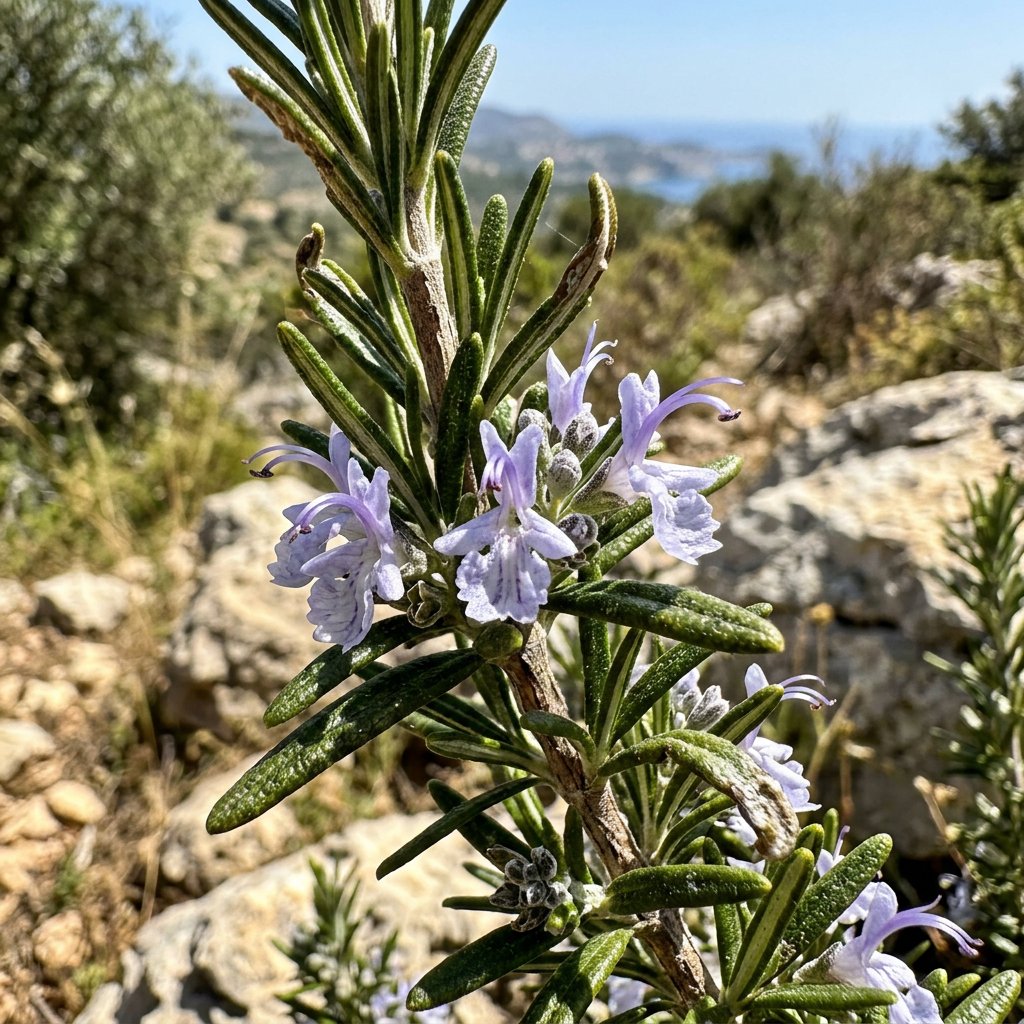
Plant Overview
Known as the "Dew of the Sea" (from the Latin ros and marinus), Rosemary is much more than a common kitchen staple. This fragrant evergreen shrub has been a symbol of remembrance and fidelity for centuries, famously mentioned by Shakespeare’s Ophelia. Whether it's cascading over a stone wall or sitting in a terracotta pot, it brings a Mediterranean soul to any space.
🔍 How to Identify
- 🌿 The Foliage: Look for narrow, needle-like leaves that are dark green and glossy on top, with a distinct silvery-white, fuzzy underside.
- 🌸 The Blooms: Small, delicate, two-lipped flowers that typically appear in shades of pale blue or violet, though white and pink varieties exist.
- 🪵 Growth Habit: It grows as a woody perennial shrub; older branches become thick and bark-like, while new growth is flexible and green.
🏡 In Your Garden
- ☀️ The "Lean and Mean" Rule: Rosemary thrives in "poor" soil. It actually prefers sandy, rocky earth over rich, heavy potting mixes. Too much fertilizer can actually dilute the flavor and scent of the leaves.
- 💧 Drainage is Vital: This plant hates "wet feet." It is highly susceptible to root rot if left in standing water. Always ensure your pot has excellent drainage and let the soil dry out significantly between waterings.
- 🌬️ Air Circulation: In humid climates, Rosemary can struggle with powdery mildew. Give it plenty of "elbow room" and a sunny, breezy spot to keep the foliage dry and healthy.
⚠️ Safety & Toxicity
- ✅ Status: Generally safe and non-toxic.
- 🐾 Pets & Kids: Rosemary is listed by the ASPCA as non-toxic to dogs, cats, and horses. It is a very safe choice for a family sensory garden.
- 🧴 Essential Oil Note: While the herb is safe, concentrated rosemary essential oil should be used with caution, as it can be irritating to the skin or stomach if used improperly.
✨ Fun Fact
Ancient Greek students used to wear garlands of rosemary around their heads while studying for exams. They believed the herb's pungent aroma would stimulate the brain and help them remember their lessons!

Detailed Care Instructions
| Color | Green |
| Soil Ph | 6.0-7.0 |
| Humidity | Normal |
| Lighting | Full Sun |
| Toxicity | Non-Toxic |
| Soil Type | Sandy, Loamy, Well-Drained |
| Bloom Time | Spring, Summer |
| Difficulty | Medium |
| Plant Type | Perennial, Grown As An Annual |
| Hibernation | Cold Period |
| Mature Size | 2-6 Feet Tall |
| Native Area | Mediterranean |
| Temperature | 10°C - 30°C |
| Sun Exposure | Full Sun |
| Hardiness Zones | 2-11 |
To help grow a Rosmarinus Officinalis plant, also known as rosemary, follow these steps:
- Choose the right location: Rosemary plants require plenty of sunlight, so select a spot that receives at least 6 to 8 hours of direct sunlight per day.
- Prepare the soil: Rosemary prefers well-draining soil with a pH level of 6 to 7. If your soil is heavy or dense, consider adding compost or sand to improve drainage.
- Planting the rosemary: If starting from seed, sow the seeds directly into the soil, about ¼ inch deep. If planting from a nursery-bought plant, dig a hole slightly larger than the plant's root ball and place it in the hole, backfilling with soil. Space multiple plants about 2 to 3 feet apart.
- Watering: Initially, water the plant generously right after planting. Once established, rosemary plants are drought-tolerant and prefer slightly dry conditions. Water thoroughly only when the soil feels dry to the touch. Avoid overwatering, as rosemary is susceptible to root rot.
- Fertilization: Rosemary doesn't require heavy feeding. Applying a balanced, slow-release fertilizer once or twice a year during the growing season is usually sufficient.
- Pruning: Regularly trim or prune the rosemary to maintain its shape and encourage bushier growth. Pruning also helps prevent the plant from becoming too woody.
- Winter protection: If you live in a cold climate with freezing temperatures, consider protecting the plant during winter. Apply a thick layer of mulch around the base to insulate the roots and cover the plant with burlap if necessary.
- Harvesting: Rosemary leaves can be harvested once the plant reaches maturity, usually after about three months. Trim small sprigs from the plant as needed, and use them fresh or dry the sprigs for later use.
Remember, rosemary is a perennial plant that can live for many years if properly cared for. With the right conditions and care, you can successfully grow Rosmarinus Officinalis in your garden or even in pots on a sunny patio.

Place in a bright room that is sun drenched almost all day. Or directly in a south-facing window.

To water this particular plant, you should ensure that the soil is completely dry before giving it a good watering. It is important to water it deeply, allowing the water to soak all the way down to the roots. It is recommended to water it once a week, but this may need to be adjusted depending on environmental factors such as the temperature and humidity levels. Overwatering may lead to root rot, so it is important to not let the plant sit in water or have waterlogged soil. Additionally, it is best to water the plant in the morning or early afternoon to allow for proper absorption and to prevent any water from sitting on the leaves during cooler nighttime temperatures.
To fertilize this plant, use a balanced fertilizer with equal parts nitrogen, phosphorus, and potassium. Apply the fertilizer in early spring, just before new growth appears, and again in early fall. Avoid over-fertilizing, as this can lead to excessive growth and reduced flavor of the foliage. Always follow the instructions on the fertilizer packaging for proper application rates.
The plant in question prefers a well-draining soil mix that is slightly alkaline with a pH between 7.0-8.0. A mixture of sand, perlite, and peat moss is recommended. Avoid using heavy clay or soil that retains too much moisture, as this can lead to root rot. Additionally, adding organic matter like compost can help improve the soil's quality and provide necessary nutrients for the plant's growth.
To propagate this plant, one will need to take softwood cuttings from the plant in spring or early summer. These cuttings should be taken from new growth that is still tender and flexible. The cut should be made just below a leaf node with a sharp, clean knife. The cutting should be around 4 to 6 inches long.
Once the cutting has been taken, remove the lower leaves from the stem, leaving only the top 2 or 3 sets of leaves. Dip the cut end of the stem in rooting hormone powder and then plant the cutting into well-draining soil. Water the soil to moisten it and then cover the cutting with a clear plastic bag, creating a miniature greenhouse around the cutting. Place the cutting in a warm, bright location out of direct sunlight.
Over the next few weeks, the cutting will begin to form roots and the plastic bag may be removed once new growth appears. Once the roots have formed sufficiently, the new plant can be transplanted into its permanent location.
Common pests of the rosemary include Spider mites, thrips. Make a habit of checking your rosemary frequently for pests so that any infestations can be caught and managed early.








