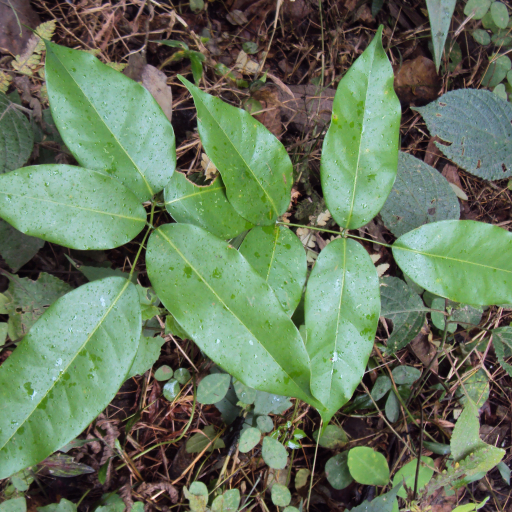
Plant Overview
Known as the Jungle Vine or Lesser Rourea, this woody climber is a master of the tropical underworld. Often found scrambling through the rainforests of Southeast Asia and Africa, it is a plant of dualities—admired for its delicate, fragrant blooms but respected for its rugged, "forest rope" strength. In many cultures, its flexible stems have historically been used as natural cordage for building and crafting.
🔍 How to Identify
- 🌿 The Foliage: It features glossy, compound leaves (pinnate) that usually consist of 3 to 9 oval leaflets. The leaves have a smooth, leathery texture that helps them shed heavy tropical rain.
- 🌸 The Flowers: Small, star-shaped blossoms that appear in airy clusters. They are typically creamy white or pale pink and carry a soft, sweet scent that attracts local pollinators.
- 🍒 The Fruit: Perhaps its most striking feature; the fruit is a small, curved pod (follicle) that turns a vibrant orange-red when ripe. When it splits open, it reveals a single dark seed cradled in a fleshy, bright yellow or orange coating.
🏡 In Your Garden
- 🧗 Support is Key: As a natural liana (woody vine), Rourea minor is not a "stand-alone" plant. If you are growing it, provide a sturdy trellis or allow it to scramble over a stone wall to mimic its natural habit of climbing forest trees.
- 💧 Tropical Humidity: This species thrives in "monsoon" conditions. It prefers deep, well-draining soil rich in organic matter and requires high humidity to truly flourish. It dislikes "wet feet," so ensure the pot or ground doesn't stay waterlogged.
⚠️ Safety & Toxicity
- 🚫 Status: Caution Advised.
- 🐾 Details: While the roots and wood of Rourea minor have a long history in traditional medicine for various ailments, many parts of the plant contain saponins and other compounds that can be toxic if ingested in large quantities. It is best kept away from curious pets and children, as the bright red fruits may look deceptively like edible berries.
✨ Fun Fact
In the wild, Rourea minor acts as a vital "highway" for the canopy. Its thick, rope-like stems connect distant tree branches, allowing arboreal animals like monkeys and squirrels to travel safely through the forest without ever touching the ground!

Detailed Care Instructions
Rourea minor, commonly known as the "wild or lesser rattan," is a tropical plant that can be grown for ornamental purposes or for its unique characteristics. Here are some guidelines for successfully growing Rourea minor:
1. Growing Conditions:
- Climate: Rourea minor thrives in tropical to subtropical climates. It prefers warm temperatures and is sensitive to frost.
- Light: It can tolerate partial shade, but prefers bright, indirect light.
- Soil: Use well-draining, rich organic soil. A mix of potting soil and perlite or sand can offer good drainage.
2. Watering:
- Keep the soil consistently moist but not waterlogged. Water when the top inch of the soil feels dry.
- Reduce watering in the winter when the plant's growth slows down.
3. Humidity:
- Rourea minor enjoys high humidity levels. If grown indoors, consider using a humidity tray or misting the plant regularly.
4. Fertilizing:
- Feed the plant with a balanced, diluted liquid fertilizer every 4-6 weeks during the growing season (spring and summer). During the fall and winter, reduce feeding.
5. Propagation:
- Rourea minor can be propagated from stem cuttings. Take a cutting from a healthy plant, allow it to callous over for a few hours, then plant it in a well-draining soil mix.
- Keep the cuttings in a humid environment until roots develop.
6. Pruning:
- Prune the plant to promote bushy growth and remove any dead or unhealthy parts.
7. Pests and Problems:
- Watch for common pests like spider mites and aphids. If you notice any infestations, treat them promptly with insecticidal soap or neem oil.
- Ensure good air circulation around the plant to prevent fungal issues.
8. Container Growing:
- If growing in pots, choose a pot with drainage holes. Make sure to select a size that allows for growth but is not excessively large.
9. Seasonal Care:
- In colder regions, consider bringing the plant indoors during the winter months to protect it from frost.
Additional Tips:
- Research more about the specific care needs based on your local climate and environment.
- Regularly check for any signs of stress or nutrient deficiencies and adjust care accordingly.
With proper care and attention, Rourea minor can be a beautiful addition to your indoor or outdoor plant collection!

Place in a bright room that is sun drenched almost all day. Or directly in a south-facing window.

To water Rourea minor, consider the following guidelines:
1. **Soil Condition**: Ensure the soil is well-draining. It should retain some moisture but not become waterlogged. Opt for a mix that allows for aeration and drainage.
2. **Moisture Level**: Check the moisture level of the soil before watering. Insert your finger about an inch deep into the soil. If it feels dry at this depth, it's time to water.
3. **Watering Method**: Use a watering can or a hose with a gentle spray to avoid disturbing the roots. Water the base of the plant rather than overhead to minimize fungal diseases.
4. **Quantity**: Provide enough water to saturate the root zone, typically allowing for about 1-2 inches of water, depending on the size of the plant and the conditions. Ensure that excess water can drain away.
5. **Frequency**: Water regularly, but adjust frequency based on environmental conditions such as humidity, temperature, and seasonal changes. During dry periods or warmer months, you may need to water more often.
6. **Signs of Overwatering**: Watch for yellowing leaves, wilting, or root rot. If these occur, reduce watering and allow the soil to dry out.
7. **Signs of Underwatering**: Look for wilting leaves, dry soil, or stunted growth. If you notice these signs, increase the frequency and quantity of watering.
By following these guidelines, you can effectively water your Rourea minor plant and promote its health and growth.
To effectively fertilize Rourea minor, follow these guidelines:
- Type of Fertilizer: Use a balanced, slow-release fertilizer with an N-P-K ratio of around 10-10-10 or similar. Organic options like compost or well-aged manure can also be beneficial.
- Timing: Fertilize during the growing season, typically in early spring as new growth begins, and again in mid-summer if needed.
- Application Rate: Follow the manufacturer's instructions on the fertilizer package for application rates. For a slow-release granular fertilizer, a general guideline is to apply about 1-2 pounds per 100 square feet.
- Method of Application:
- Granular Fertilizer: Evenly distribute the granules around the base of the plant, avoiding direct contact with the stem. Water thoroughly after application to help the nutrients penetrate the soil.
- Liquid Fertilizer: If using a liquid fertilizer, dilute according to the instructions and apply it directly to the soil around the plant, ensuring it is watered in well.
- Granular Fertilizer: Evenly distribute the granules around the base of the plant, avoiding direct contact with the stem. Water thoroughly after application to help the nutrients penetrate the soil.
- Frequency: If using a slow-release formula, once or twice per growing season is usually sufficient. If opting for liquid fertilizers, consider applying every 4-6 weeks during the active growing season.
- Soil Considerations: Prior to fertilizing, check the soil pH and nutrient levels if possible. If the soil is particularly deficient, you may need to adjust your fertilizing strategy accordingly.
- Observation: Monitor the plant’s growth and health. Yellowing leaves or poor growth may indicate the need for more nutrients, while overly lush growth with minimal flowering could suggest excessive fertilization.
Remember to avoid over-fertilizing, as this can lead to nutrient runoff and harm the plant’s overall health.
Rourea minor, a species from the family Connaraceae, thrives best in well-draining soil that retains some moisture but does not become waterlogged. A suitable soil mix for this plant would be one that includes:
- Organic Matter: Incorporating compost or well-rotted leaf mold can improve nutrient availability and enhance soil structure.
- Aeration: Adding similar materials like perlite or coarse sand will aid in drainage and prevent compaction, ensuring adequate aeration for the roots.
- pH Balance: A slightly acidic to neutral pH (around 6.0 to 7.0) is ideal. You might want to test your soil and amend it as necessary with sulfur or lime to adjust the pH.
- Nutrient Content: This plant can benefit from a balanced mix that includes macro and micronutrients. Avoid excessively nutrient-rich media, as it may promote overly lush growth that is prone to pests and diseases.
- Texture: The soil should ideally be loamy, providing a good balance of clay, silt, and sand to ensure both moisture retention and drainage capacity.
When potting or planting, ensure that the bottom of the pot or planting area is well-drained to prevent standing water, which can lead to root rot. Regularly monitor the moisture levels, as Rourea minor prefers consistently moist conditions without waterlogging.
Propagating Rourea minor can be achieved through several methods, primarily using seeds or cuttings. Here’s how you can go about each method:
1. Propagation by Seeds
Collecting Seeds:
- Gather ripe fruits from the plant. Seeds are typically found inside the fruit.
- Allow the fruits to fully ripen, and then extract the seeds. Rinse them to remove any pulp and debris.
Preparing Seeds: - Soak the seeds in water for 24 hours to enhance germination rates. This can help soften the seed coat.
Sowing: - Use a well-draining potting mix or seed-starting media.
- Plant the seeds at a depth of about twice their diameter.
- Water the soil lightly to avoid displacing the seeds.
Germination Conditions: - Place the pot in a warm location with indirect sunlight.
- Maintain consistent moisture without waterlogging. A humidity dome or plastic cover can help retain moisture but ensure to ventilate regularly to avoid mold.
Transplanting: - Once seedlings develop a few true leaves and adequate root systems, transplant them into individual pots or directly into your garden.
2. Propagation by Cuttings
Selecting Cuttings: - Choose healthy, semi-hardwood stems from the plant. Ideally, the cuttings should be around 4-6 inches long with a few leaves.
Preparing Cuttings: - Make a clean cut just below a node (the point where leaves are attached).
- Remove the lower leaves, leaving only a few at the top to reduce water loss.
Rooting Hormone: - Dip the cut end of the cutting in rooting hormone to promote root development (this step is optional but recommended).
Planting Cuttings: - Insert the cuttings into a well-draining potting mix, ensuring that at least one node is buried in the soil.
- Water the soil lightly to settle it around the cuttings.
Creating Humidity: - Cover the pot with a clear plastic bag or a humidity dome to maintain high humidity. Be sure to ventilate regularly to prevent mold growth.
Light Conditions: - Place the pot in a location with bright, indirect light, avoiding direct sunlight which may scorch the cuttings.
Root Development: - After a few weeks, check for roots by gently tugging on the cuttings. If you feel resistance, roots are developing.
Transplanting: - Once roots are established, transplant the cuttings into larger pots or outdoor beds.
General Care
- Maintain moderate moisture levels during both seed and cutting propagation.
- After transplanting, provide appropriate care tailored to the plant's environmental needs, including suitable light, water, and soil conditions.
By following these methods, you can successfully propagate this plant.








