Plant Overview
Often referred to as the "Himalayan Blackberry," Rubus bifrons is a vigorous, sun-loving giant that evokes a love-hate relationship with many. While it produces some of the most succulent and heavy harvests of summer berries, its aggressive growth and "armor" of thorns make it a formidable presence in any landscape. Despite its common name, this berry-bearer actually originated in Europe and Armenia before traveling across the globe to become a staple of wild foraging.
🔍 How to Identify
- 🌿 The Foliage: Leaves are typically arranged in groups of five (palmately compound) with a dark green upper surface and a distinctively pale, almost silvery-white velvety underside.
- ⚔️ The Canes: It features stout, arching stems that can grow up to 10 feet long. These canes are often angular (pentagonal) and armed with large, recurved thorns that act like hooks.
- 🌸 The Flowers: In late spring and early summer, it produces clusters of white to pale pink flowers, each with five petals and a crown of numerous stamens.
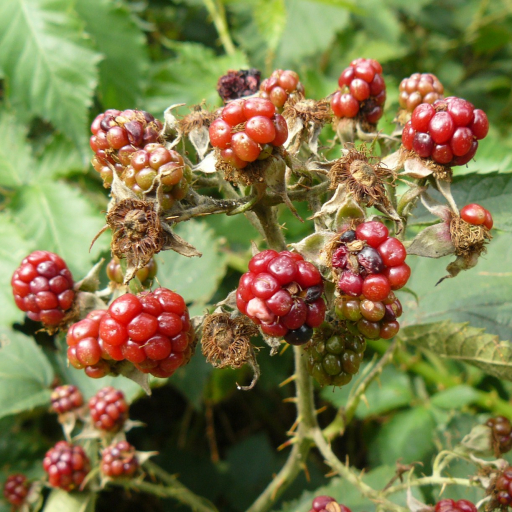
- 🍇 The Fruit: The berries are large, round, and transition from green to red, finally ripening into a deep, glossy black.
🏡 In Your Garden
- 🚀 Invasive Tendencies: This plant is an opportunistic grower. It spreads not just by seed, but through "tip-rooting"—where the ends of the long canes touch the ground and sprout new roots, creating dense, impenetrable thickets.
- 🐝 Pollinator Paradise: If you have a patch nearby, expect a flurry of activity. It is a major nectar source for honeybees, bumblebees, and various butterfly species during the mid-summer "nectar gap."
⚠️ Safety & Toxicity
- 🟢 Edibility: The ripe fruit is safe and delicious for humans, often used in pies, jams, and wines.
- 🛡️ Physical Hazard: The primary danger is the thorns. They are exceptionally sharp and can easily tear through clothing or skin. Protective gear is a must during pruning or picking.
- 🐾 Pets and Wildlife: While the berries are a safe treat for dogs, the dense, thorny thickets can be a "trap" for pets, leading to scratches or stuck fur.
✨ Fun Fact
A single Himalayan Blackberry bush can produce thousands of seeds per year, and those seeds can remain viable in the soil for over five years, waiting for a gap in the canopy to spring back to life!

Detailed Care Instructions
To grow Rubus bifrons (Himalayan blackberry) successfully, follow these steps:
- Seed or cutting selection: Choose healthy seeds or purchase young Rubus bifrons plants from a reliable nursery. If you opt for cutting selection, make sure to select healthy cuttings with multiple nodes.
- Location: Select a sunny spot in your garden that receives at least 6 hours of direct sunlight daily. The soil should be well-draining, rich in organic matter, and slightly acidic (pH around 5.5-6.5).
- Soil preparation: Remove weeds, rocks, and debris from the planting area. Dig the soil and add compost or well-rotted manure to improve its fertility and drainage. Ensure that the soil is loose and crumbly.
- Planting: If you are starting from seeds, sow them in the prepared soil with a depth of about 1/4 inch. Alternatively, if you have selected cuttings, dip the lower end of the cuttings in rooting hormone and plant them about 4-6 inches deep in the soil. Space the plants about 3-5 feet apart.
- Watering: Keep the soil evenly moist but not waterlogged, especially during the initial growth stage. Water deeply, providing an inch of water per week. Avoid overhead watering to prevent leaf diseases.
- Mulching: Apply a layer of organic mulch around the base of the plant to conserve moisture, suppress weed growth, and maintain a stable soil temperature.
- Pruning: Prune the plant regularly to maintain its shape, control its spread, and promote better air circulation. Remove dead or diseased canes, as well as any weak or crossing branches.
- Fertilizing: Feed the plant with a balanced fertilizer (10-10-10) during the growing season, following the package instructions. Apply it around the base, avoiding direct contact with the stems.
- Support: Install trellises, fences, or stakes to support the long canes as they grow. This will help prevent them from sprawling on the ground and facilitate easier harvesting.
- Harvesting: Rubus bifrons typically bears fruit in late summer or early fall. Harvest ripe berries by gently picking them from the plants. Be cautious of the plant's thorny nature and wear protective gloves.
Remember to check your local regulations regarding planting Himalayan blackberry, as it can be considered an invasive species in some areas.

Place in a bright room that is sun drenched almost all day. Or directly in a south-facing window.

To water this plant, first ensure that the soil is completely dry around the roots before watering. When watering, pour water slowly over the soil until it has thoroughly absorbed the moisture. Avoid getting water on the leaves or stem of the plant as this can cause damage and increase the risk of disease. It is important to not overwater the plant, as this can lead to root rot and other issues. It is recommended to allow the top layer of soil to dry out between waterings, and to ensure adequate drainage in the plant's pot or container.
- Choose a balanced fertilizer: Rubus Bifrons can benefit from a balanced fertilizer with equal amounts of nitrogen, phosphorus, and potassium.
- Apply fertilizer in early spring: Fertilize the plant in early spring, before new growth begins, to promote healthy growth and fruit production.
- Measure the fertilizer: Measure out the appropriate amount of fertilizer according to the manufacturer's instructions; apply too little, and the plant may not receive enough nutrients, but too much can burn the roots.
- Spread fertilizer evenly: Spread the fertilizer evenly around the base of the plant, being careful not to get any on the leaves or stems.
- Water after application: Water the plant thoroughly after fertilizing to help distribute the nutrients throughout the soil and to prevent fertilizer burn.
- Repeat application: Repeat the fertilizer application every six to eight weeks during the growing season to encourage healthy growth and fruit production.
- Avoid fertilizing in late summer: Avoid fertilizing in late summer or fall, as this can encourage new growth that may not have time to harden off before winter, making the plant susceptible to cold damage.
Rubus bifrons is a plant that prefers well-draining soils that are rich in organic matter. The soil should be slightly acidic with a pH between 5.5 and 6.5. A good soil mix can be achieved by combining equal parts of loam, compost, and sand. This will create a soil that is rich in nutrients and moisture-retentive, while also allowing excess water to drain away. It is important to avoid using heavy clay soils or soils that are prone to waterlogging, as this can lead to root rot and other fungal diseases. When planting Rubus bifrons, it is recommended to amend the soil with compost or aged manure two weeks before planting to add nutrients to the soil. Additionally, ensuring proper drainage by planting on a slight slope or mounding the soil can help prevent disease and promote healthy growth.
Rubus bifrons can be propagated by taking stem cuttings in the late spring or summer. Select a healthy stem that is a couple of years old and about pencil thickness in diameter.
Cut the stem into 6-8 inch sections and remove the leaves from the bottom half. Dip the cut end of the stem into rooting hormone powder and plant it in a well-draining soil mix.
Water the cutting well and keep it in a warm, humid location with indirect sunlight. Mist the cutting regularly to keep it moist and prevent it from drying out.
After a few weeks, the cutting should start to grow new leaves and roots. Once it has established a good root system, it can be transplanted into a larger pot or planted in the garden.








