Plant Overview
Often referred to as the Henry Raspberry or Creeping Raspberry, Rubus irenaeus is a hidden gem of the bramble family. Unlike its tall, thorny cousins that form messy thickets, this species is a graceful, evergreen groundcover that hugs the earth like a plush, metallic-green carpet. Originally discovered in the mountain forests of China by plant hunter Augustine Henry, it brings a touch of ancient woodland elegance to modern shaded gardens.
🔍 How to Identify
- 🍃 The Leaves: Broadly heart-shaped (cordate) and almost circular, the leaves have a distinct leathery texture. They are deep, glossy green on top and often feature a soft, pale felt-like coating underneath.
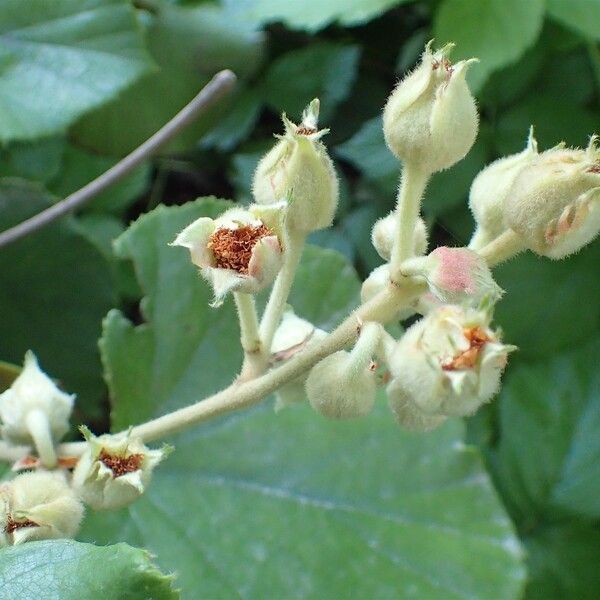
- 🌸 The Blooms: In mid-summer, small, five-petaled white flowers emerge. They are relatively inconspicuous, often tucked away beneath the dense canopy of foliage.
- 🍓 The Fruit: The plant produces small, bright red aggregate fruits (raspberries). These berries are round and shiny, looking like tiny jewels scattered across the garden floor.
🏡 In Your Garden
- 🌿 The Perfect Living Mulch: This plant is a "living mulch" superstar. It spreads via creeping runners to form a dense mat that suppresses weeds effectively, making it an excellent choice for stabilizing banks or filling gaps under large trees.
- ☁️ Shade Enthusiast: While most berry-producing plants crave full sun, Rubus irenaeus is remarkably shade-tolerant. It thrives in dappled light and moist, well-draining soil, providing lush greenery in corners where grass typically fails.
⚠️ Safety & Toxicity
- ✅ Edibility: The berries are non-toxic and edible. However, they are often described as having a mild, slightly tart flavor that isn't as sweet as the common garden raspberry.
- 🧤 Hidden Prickles: While it is much smoother than a blackberry bush, the stems do possess very fine, hooked prickles. These can cause minor skin irritation or snag delicate clothing, so wearing gloves during maintenance is a smart move.
✨ Fun Fact
Rubus irenaeus is prized by landscape designers for its "metallic" leaf finish. In certain lighting, the leaves can take on a bronze or copper sheen, earning it a reputation as one of the most ornamental "utilitarian" plants in the horticultural world!

Detailed Care Instructions

Place in a bright room that is sun drenched almost all day. Or directly in a south-facing window.

When the top few inches of soil dry out, water your plants. If the top few inches of soil are still moist, do not water your plant. Wait a few days, then poke your finger into the soil to see if anything has changed. Overwatering poses a disease risk, such as the development of fungal diseases in the roots. These plants have adaptations in there leaves that allow them to survive in low water supply.








