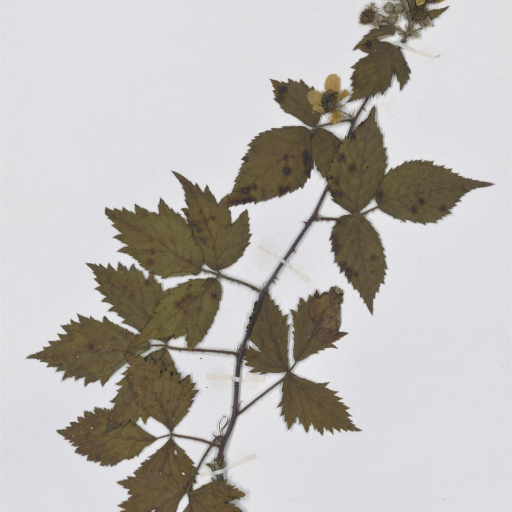
Plant Overview
Often called the Pyramidal Bramble, this wild shrub is a cornerstone of European hedgerows and woodland edges. It is known for its architectural flowering spikes and its ability to turn a messy corner of a garden into a sanctuary for birds and pollinators. While it closely resembles the common blackberry, its distinctively pointed flower clusters and elegant arching canes give it a more structured, "pyramidal" silhouette in the wild.
🔍 How to Identify
- 🏰 Pyramidal Blooms: Unlike other brambles with rounded flower heads, this species produces white-to-pale-pink flowers in a tall, narrow, pyramid-shaped cluster.
- 🌿 Soft Leaves: The leaves typically feature five leaflets that feel remarkably soft or "felted" on the underside, often sporting a grayish-green hue.
- 🏹 Arching Canes: Look for long, vigorous stems (canes) that are often tinged with deep purple and armed with sharp, downward-curving prickles.
🏡 In Your Garden
- 🛡️ Natural Security: Due to its vigorous growth and sharp thorns, it acts as a "living barbed wire." It is excellent for perimeter hedging where you want to deter intruders while supporting local wildlife.
- 🦋 Pollinator Paradise: Because these are wild-type flowers, their nectar is easily accessible. You will find it buzzing with honeybees, hoverflies, and butterflies throughout the mid-summer months.
- 🌱 Soil Specialist: It is incredibly hardy and thrives in slightly acidic, sandy, or gravelly soils where more delicate garden plants might struggle.
⚠️ Safety & Toxicity
- 🍇 Edible Berries: The fruit is a classic aggregate drupe (blackberry) that is safe and delicious for humans, birds, and small mammals.
- 🧤 Physical Hazard: The primary "danger" is the plant's defense system. The prickles are sharp and can easily pierce skin or thin clothing. Always wear heavy-duty gauntlets when pruning.
- 🐾 Pet Safety: It is non-toxic to dogs and cats, though the thorns can occasionally get stuck in long fur or cause paw irritation.
✨ Fun Fact
The Rubus genus is famously "taxonomically chaotic." There are hundreds of micro-species that look almost identical, but Rubus pyramidalis is one of the few that botanists can identify relatively easily because of its unique "pointed" flower arrangement!

Detailed Care Instructions








