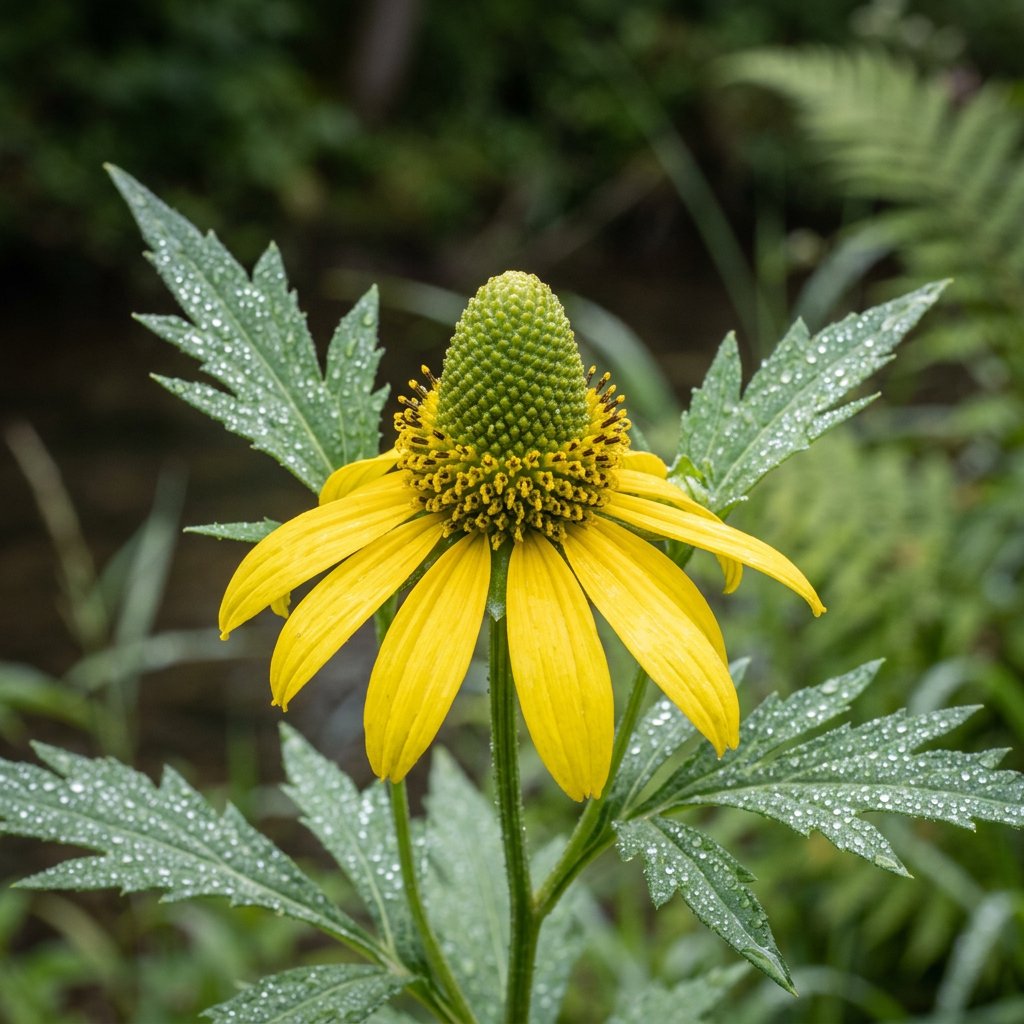
Plant Overview
Commonly known as the Cutleaf Coneflower or Wild Goldenglow, this statuesque perennial is the skyscraper of the summer garden. Native to North American meadows and streambanks, it has been a cottage garden staple for centuries. It’s a plant that commands attention, often towering over fences with its cheerful, sunny disposition and floppy yellow "hats."
🔍 How to Identify
- 🌿 The Foliage: Unlike other Rudbeckias, its leaves are deeply "cut" or lobed, resembling a jagged maple leaf or a hand with many divided fingers.
- 🌼 The Bloom: It features bright yellow ray petals that droop downward, surrounding a prominent, dome-shaped center that starts lime-green and turns yellow-brown as it matures.
- 📏 The Stature: This plant is exceptionally tall, often reaching heights of 7 to 10 feet, supported by smooth, light-green stems that can sometimes have a waxy blue tint.
🏡 In Your Garden
- 🌻 Space & Support: Because of its impressive height, it often needs staking or a sturdy fence to lean against, especially after a heavy summer rain which can cause the tall stems to flop.
- 💧 Thirsty Roots: While many black-eyed Susans are drought-tolerant, the Cutleaf variety prefers consistently moist soil and is often found naturally near creeks or woodland edges.
- 🦋 Pollinator Magnet: It is an absolute powerhouse for wildlife, providing a landing pad for long-tongued bees and butterflies, while goldfinches frequently visit in the fall to snack on the dried seeds.
⚠️ Safety & Toxicity
- ✅ Safe Status: Rudbeckia laciniata is generally considered non-toxic to cats, dogs, and humans, making it a "friendly" choice for family landscapes.
- 🌾 Livestock Note: There have been historical reports of the plant being toxic to cattle and sheep if consumed in very large quantities, though this is rarely an issue in a residential backyard.
- 🧤 Skin Sensitivity: Some gardeners with very sensitive skin may experience mild contact dermatitis when handling the stems for long periods; wearing gloves during autumn cut-back is a smart move.
✨ Fun Fact
The Cherokee and other Indigenous tribes historically harvested the very young spring leaves as "sochan," a nutritious forest green. They would traditionally cook them in spring fats, though they only ate the tender new growth, as the plant becomes much too tough and bitter as it grows toward the sun!

Detailed Care Instructions
To grow Rudbeckia Laciniata (also known as Green-headed Coneflower), follow these steps:
- Location: Choose a sunny or partially shaded spot in your garden for planting. Rudbeckia Laciniata prefers well-draining soil, so make sure the area has good drainage.
- Soil preparation: Before planting, amend the soil with organic matter like compost, as Rudbeckia Laciniata enjoys rich, fertile soil. Additionally, check the pH level, which should be slightly acidic to slightly alkaline (around 6.0-7.5).
- Planting: In spring or fall (avoiding extreme temperatures), dig a hole that is slightly larger and deeper than the plant's container. Place the plant in the hole, ensuring that the crown (where the stem meets the roots) is level with or slightly above the soil surface. Backfill the hole with soil, gently firming it to eliminate air pockets.
- Watering: After planting, thoroughly water the plant to help settle the soil. During the growing season, water regularly to keep the soil evenly moist but not waterlogged. Be careful not to overwater, as this plant can be susceptible to fungal diseases.
- Fertilizing: Apply a balanced, slow-release fertilizer in early spring to provide nutrients for the growing season. Follow the manufacturer's instructions for appropriate dosage and application.
- Mulching: Apply a layer of mulch around the base of the plant to help retain soil moisture and suppress weeds. Avoid mulching directly against the stem to prevent rot.
- Pruning: In late winter or early spring, cut back the dead stems and foliage to the ground to promote fresh growth. This plant is known for its tall stature, reaching up to 6 feet, so it's advisable to provide support like stakes if needed.
- Division and propagation: Rudbeckia Laciniata can be propagated through division. Every few years, once the plant becomes overcrowded, lift and divide the clumps in spring or fall to create new plants. Replant the divisions in well-prepared soil.
- Pest and disease control: Inspect the plant regularly for any signs of pests or diseases such as aphids, spider mites, or powdery mildew. If any issues are noticed, treat accordingly with organic or chemical controls.
- Enjoy: Once established, Rudbeckia Laciniata will reward you with vibrant, yellow, daisy-like flowers from mid to late summer. These flowers also attract pollinators like bees and butterflies, making your garden more vibrant and alive.

Place in a window with dappled sun or a spot in the middle of a room. Or directly in a window facing west or east.

To water this plant, make sure to use a watering can or hose with a gentle spray nozzle. It is important not to overwater, as this can lead to root rot and other issues. Allow the soil to dry out slightly before watering again. Avoid getting water on the leaves, as this can lead to fungal diseases. Check the soil moisture regularly, especially during hot weather or periods of drought. Consider watering in the morning or evening when the temperatures are cooler and the water is less likely to evaporate quickly.
To fertilize this plant, it is recommended to use a balanced fertilizer with a N-P-K (nitrogen-phosphorus-potassium) ratio of 10-10-10. Apply the fertilizer in the late winter or early spring before new growth begins, and again in mid-summer. Avoid over-fertilizing, as this can lead to excessive foliage growth and reduced flowering. Water the plant well after fertilizing to help the nutrients reach the roots.
When planting Rudbeckia Laciniata, it is important to use a well-draining soil that is moist and rich in organic matter. This plant prefers a soil with a pH level of 6.0 to 7.0. It is also recommended to mix in compost or well-rotted manure to help improve soil fertility and drainage. Additionally, adding perlite or sand to the soil can help improve drainage. It is best to plant this species in an area with full sun exposure to promote healthy growth.
There are several methods for propagating this plant, including seed propagation, division, and stem cuttings.
Seed propagation involves collecting the seeds of the plant, allowing them to dry out, and then planting them in soil. This can be done in the fall or spring and typically takes several weeks for the seedlings to emerge.
Division involves separating the plant into smaller clumps and replanting them in new soil. This is typically done in the spring or fall and can be helpful in renewing the plant and encouraging new growth.
Stem cuttings involve taking cuttings from the stem of the plant and rooting them in soil. This method is typically done in the spring or summer and can take several weeks for the cuttings to develop roots and begin growing.
Regardless of the method used, Rudbeckia Laciniata plants typically prefer well-draining soil, regular watering, and full sun to partial shade. With the right care and attention, these plants can be propagated successfully and provide beautiful blooms and foliage for years to come.
Common pests of the cutleaf coneflower include Aphids, thrips. Make a habit of checking your cutleaf coneflower frequently for pests so that any infestations can be caught and managed early.








