Plant Overview
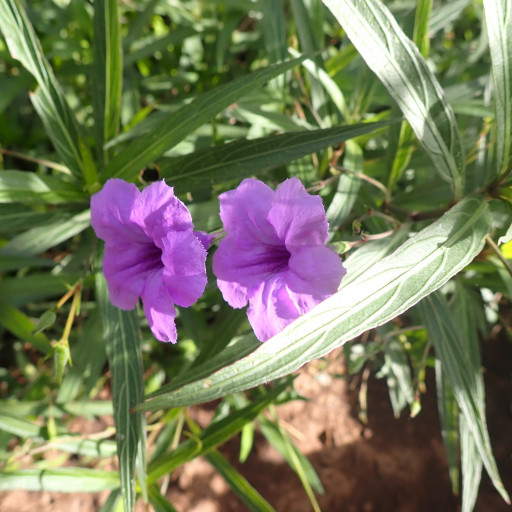
Meet the Mexican Petunia, a vibrant, sun-loving perennial that brings a splash of deep purple to any landscape. Often called the "Mexican Bluebell," this plant is prized for its ability to thrive where others fail—enduring scorching heat, temporary drought, and even "wet feet" in soggy soil. While it isn't a true petunia, its charming trumpet-shaped flowers have made it a staple in warm-climate gardens across the globe.
🔍 How to Identify
- 🌸 Trumpet Blooms: Delicate, five-petaled flowers roughly 2 inches wide. They typically appear in a rich violet-purple, though pink and white "cultivars" are also common.
- 🌿 Willow-like Foliage: Long, narrow, lance-shaped leaves that grow in an opposite pattern. They are a deep, dark green and often have a slightly metallic or burgundy sheen.
- 🟣 Sturdy Purple Stems: The stalks are notably stiff and upright, often taking on a dark purple or maroon hue, especially when exposed to direct sunlight.
🏡 In Your Garden
- 🌊 The Moisture Paradox: This is one of the few plants that can handle both a drought-stricken flower bed and the edge of a water garden. It loves "wet feet" but won't complain if you forget to water it for a few days.
- 🏃 A Spirited Spreader: It grows via underground rhizomes and vigorous self-seeding. Because it spreads so effectively, it is best used as a tall groundcover or in contained pots to prevent it from "wandering" into areas where it isn't wanted.
- ☀️ Sun Seeker: While it can grow in partial shade, the stems will become "leggy" and the flower production will drop. For the most intense purple color, give it as much direct sun as possible.
⚠️ Safety & Toxicity
- 🐾 Pet Friendly: Great news for furry friends! Ruellia simplex is generally considered non-toxic to cats, dogs, and horses, making it a safe choice for backyard landscaping.
- 🚫 Eco-Caution: In certain regions, particularly Florida and parts of the Gulf Coast, this plant is considered invasive. It can outcompete native species in wild wetlands, so gardeners in those areas should look for "sterile" varieties that do not produce seeds.
✨ Fun Fact
💥 Ballistic Seeds: The Mexican Petunia has a dramatic way of reproducing. Its seed pods are "ballistic," meaning that when they ripen and encounter moisture (like a rain shower), they explosively burst open, launching seeds up to 10 feet away from the parent plant!

Detailed Care Instructions
| Humidity | Normal |
| Lighting | Part Sun |
| Difficulty | Medium |
| Hibernation | Cold Period |
| Hardiness Zones | 8 - 10 |
To grow Ruellia simplex plants, also known as Mexican petunia, you can follow these simple steps:
- Climate: Mexican petunias prefer warm, tropical or subtropical climates. Ensure the temperature stays above freezing.
- Sunlight: Plant the Ruellia simplex in a location that receives full sun to partial shade. They prefer at least 6 hours of direct sunlight per day.
- Soil: Provide well-draining soil with a pH range of 6.0-7.5. These plants can tolerate various soil types but prefer moderately fertile and moist soil.
- Watering: Water the plant regularly, especially during dry spells, to keep the soil consistently moist but not waterlogged. A layer of mulch around the base of the plant can help retain moisture.
- Fertilizer: Mexican petunias generally do well without much fertilizer. However, you can use a balanced, slow-release fertilizer once in early spring to encourage healthy growth.
- Pruning: Prune the plants during early spring or late winter to remove any dead, damaged, or overgrown sections. This will help maintain a compact shape and encourage new growth.
- Propagation: Mexican petunias can be propagated through stem cuttings. Take a 5-6 inch cutting with a few leaves and remove the lower leaves. Dip the end in rooting hormone and plant it in a well-draining potting mix. Keep the soil moist and the cutting in a warm, bright location until roots develop.
- Pests and diseases: Mexican petunias are generally hardy, but occasionally can be affected by fungal diseases and pests like aphids or spider mites. Monitor the plants regularly and treat any issues promptly with appropriate organic pest control methods.
Remember to check if Ruellia simplex is considered invasive in your region, as it can be in some areas. If so, consider alternative native species to grow in your garden.

Place in a window with dappled sun or a spot in the middle of a room. Or directly in a window facing west or east.

To water this plant, you should first check the moisture level of the soil by sticking your finger about an inch into the soil. If it feels dry, it is time to water. Use a watering can or hose with a gentle flow and water at the base of the plant, avoiding getting water on the leaves to prevent fungal growth. Be sure not to overwater as this plant is susceptible to root rot. Allow the soil to dry slightly between waterings and adjust watering frequency depending on the temperature and humidity of the plant's environment.
To fertilize the Ruellia Simplex plant, apply a balanced fertilizer with equal amounts of nitrogen, phosphorus, and potassium. The fertilizer should be applied every two to three weeks during the growing season. Be careful not to over-fertilize, as this can cause damage to the plant. It's recommended to dilute the fertilizer to half-strength before applying. Be sure to also water the plant thoroughly before and after fertilizing.
The ideal soil for this plant is one that is rich in organic matter and well-draining. It should have a pH between 6.0 and 7.5, which is slightly acidic to slightly alkaline. The soil should be kept moist, but not too wet, as this can lead to root rot. A sandy loam or loamy sand soil is suitable for efficient water drainage and retention. Topdressing the soil with compost once or twice a year can help replenish nutrients and improve soil structure. It is also recommended to add slow-release fertilizers to the soil during the growing season, as Ruellia Simplex may require additional nutrients to thrive.
To propagate this plant, take a cutting from a healthy stem that is about 4-6 inches long. Cut just below a node, which is where a leaf attaches to the stem. Remove all of the leaves except for the top two or three.
Dip the cut end of the stem in rooting hormone powder and plant it in a pot filled with sterile potting mix. Water the soil lightly and cover the pot with a plastic bag or plastic wrap to create a humid environment for the cutting.
Place the pot in a bright area but out of direct sunlight. Keep the soil moist but not soggy, and mist the leaves occasionally to maintain high humidity.
After 3-4 weeks, check for roots by gently tugging on the cutting. If you feel resistance, that means the roots have started to grow. Once the cutting has rooted, remove the plastic covering and care for it as you would a mature plant.
Common pests of the mexican petunia include Mealybugs, spider mites. Make a habit of checking your mexican petunia frequently for pests so that any infestations can be caught and managed early.








