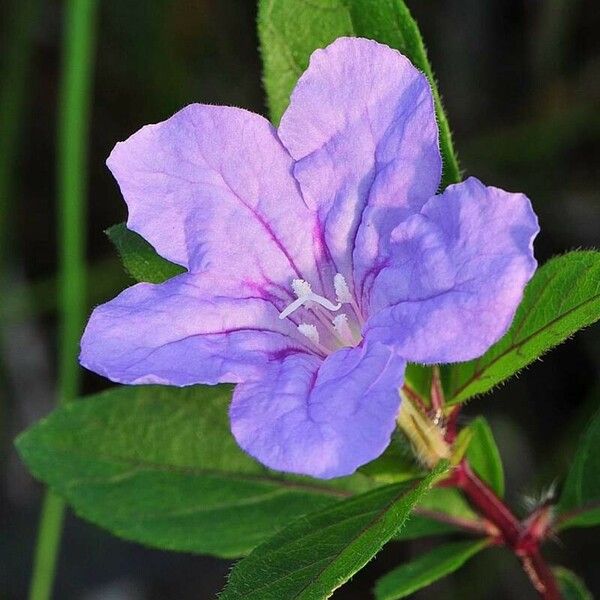
Plant Overview
Known affectionately as the Thickleaf Wild Petunia, this Florida native is a master of adaptation. Unlike its thirstier cousins, this species has evolved fleshy, succulent leaves to survive the harsh cycles of the sunshine state's sandy pinelands. It provides a splash of royal purple to wild landscapes where few other delicate-looking flowers dare to grow.
🔍 How to Identify
- 🌸 The Blooms: Features classic funnel-shaped, five-lobed flowers in shades of lavender to deep purple. They usually bloom one at a time, lasting only a day before falling.
- 🍃 Fleshy Foliage: Look for small, oval leaves that are noticeably thicker and "squishier" than other wild petunias. This is a survival tactic to store water.
- 📏 Growth Habit: It is a low-growing perennial that rarely exceeds a foot in height, often sprawling across the ground to form a hardy groundcover.
🏡 In Your Garden
- ☀️ Resilient Nature: This plant is a "tough cookie." It thrives in the intense heat of full sun and poor, sandy soils where other plants might wilt. It is perfect for rock gardens or native restoration projects.
- 🦋 Butterfly Buffet: It serves as a vital host plant for the Common Buckeye and Malachite butterflies. By planting this, you aren't just adding color; you are providing a nursery for local pollinators.
- 💧 The "Goldilocks" Waterer: While it is drought-tolerant once established, it actually enjoys "wet feet" during the rainy season, mimicking its natural habitat in Florida flatwoods.
⚠️ Safety & Toxicity
- ✅ Non-Toxic: Ruellia succulenta is generally considered safe and non-toxic for humans, dogs, and cats.
- 🌱 Mild Irritant: While not poisonous, the stems are covered in very fine hairs that might cause slight itchiness for gardeners with extremely sensitive skin.
✨ Fun Fact
Ruellia species are famous for their "ballistic" seed dispersal. When the seed pods dry out, a single drop of rain or a heavy dew can cause them to pop open with an audible click, launching seeds several feet away from the parent plant!

Detailed Care Instructions








