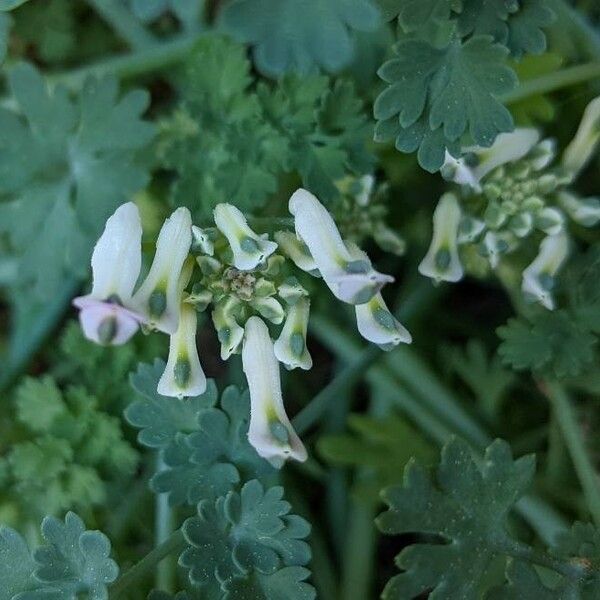
Plant Overview
Often called the African Rockfumitory, this delicate specialist is a master of vertical living. Native to the limestone cliffs of North Africa, it looks like a soft, smoky lace draped over harsh stone. It is a favorite among alpine gardening enthusiasts who appreciate plants that thrive where others would wither.
🔍 How to Identify
- 🌿 Feathery Foliage: The leaves are highly dissected and "glaucous," meaning they have a waxy, blue-gray or silver-green coating that gives them a soft, misty appearance.
- 🌸 Tubular Blooms: It produces clusters of narrow, spurred flowers that are typically white or pale pink, often tipped with a dramatic splash of dark purple or maroon.
- 🧗 Growth Habit: Unlike many garden plants, it doesn't grow "up"—it forms cushions or cascading mats that spill out of crevices and over the edges of containers.
🏡 In Your Garden
- 🪨 The Drainage Specialist: In its natural habitat, this plant grows in vertical rock cracks. In your garden, it "hates" standing water. If its roots stay wet, it will rot quickly; it requires a very gritty, free-draining mineral mix.
- 🌞 Cool Roots, Warm Sun: While it loves the sun, it prefers its root system to stay relatively cool and tucked away behind a stone or in a deep crevice, mimicking its mountain home.
⚠️ Safety & Toxicity
- 🐾 Mildly Toxic: As a member of the Papaveraceae (Poppy) family, it contains various alkaloids.
- 🚫 Keep Away from Pets: While not considered deadly, ingestion can cause stomach upset or lethargy in cats and dogs. It is best kept out of reach of curious nibblers.
✨ Fun Fact
The name "Capnos" comes from the Greek word for smoke. This refers to the smoky, ethereal color of the leaves, or according to ancient folklore, the belief that the plant appeared from the earth like smoke without the need for seeds!

Detailed Care Instructions

Water-loving plants flourish in wet or sloppy soil and near ponds. The extensive root system enables these plants to absorb plenty of water. The surface of the soil should be kept moist at all times. Place your pot in a container filled with water to guarantee that plants get enough water. If the ground becomes dry, it is recommended that you water it well. Plants in smaller pots will need to be watered more frequently. Water the soil in which the plant is standing thoroughly using a watering can.








