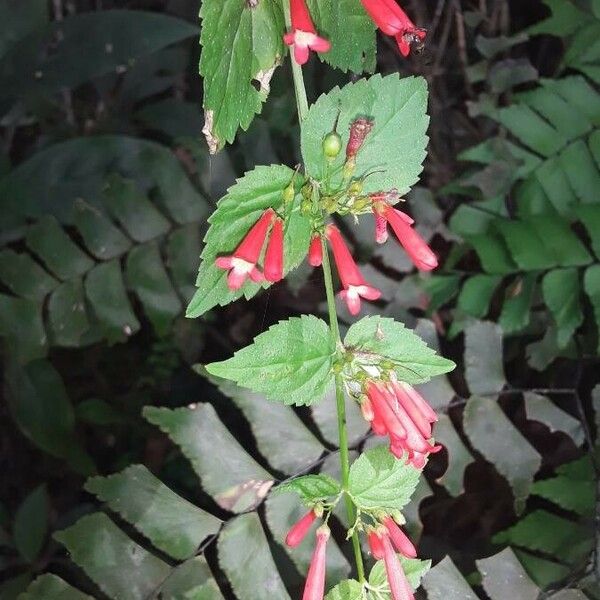
Plant Overview
Known as the Coral Blow or the leafier cousin of the Firecracker Plant, Russelia coccinea is a botanical celebration in motion. Native to the vibrant landscapes of Mexico and Central America, this plant creates a "waterfall" effect of scarlet blooms that look like tiny, glowing embers cascading down a green mountainside. It is a favorite for those looking to add architectural movement and a tropical flare to their outdoor spaces.
🔍 How to Identify
- 🌿 The Foliage: Unlike its cousin R. equisetiformis which has needle-like stems, coccinea features distinct, small, ovate (egg-shaped) leaves that grow in pairs or whorls along the stems.
- 🎺 The Blooms: It produces clusters of fiery red, tubular flowers that hang delicately from the branch tips, specifically shaped to invite long-beaked visitors.
- 📐 Growth Habit: It grows as a multi-stemmed, arching shrub that can reach up to 4–6 feet tall, creating a soft, mounded shape that spills over edges beautifully.
🏡 In Your Garden
- 🌊 Spilling Beauty: This plant is at its best when planted in elevated containers, hanging baskets, or atop retaining walls where its weeping branches can drape naturally toward the ground.
- ☀️ Sun & Stamina: While it loves the sun to produce the best flower show, it is surprisingly resilient to heat. It has a "set it and forget it" quality once its root system is established, though it appreciates a deep drink during peak summer heat.
- ✂️ Maintenance Tip: Because it grows vigorously, it can occasionally look a bit "shaggy." A light pruning in early spring helps maintain a dense, bushy form and encourages a fresh flush of those iconic red tubes.
⚠️ Safety & Toxicity
- ✅ Status: Generally considered non-toxic and safe.
- 🐾 Details: This plant is not known to be poisonous to dogs, cats, or horses. It is a "worry-free" addition to a family garden, though as with any ornamental plant, it’s best to discourage curious toddlers or pets from chewing on the foliage to avoid mild stomach upset.
✨ Fun Fact
- 🐦 The Hummingbird’s Diner: The flowers of the Russelia coccinea are evolutionarily "designed" for hummingbirds. The tubular shape perfectly fits a hummingbird’s bill, and the bright red color acts as a high-visibility neon sign telling them exactly where to find a sugary nectar snack!

Detailed Care Instructions
To grow Russelia coccinea, also known as Firecracker Plant or Coral Fountain, follow these steps:
- Selection of the Plant: Choose a healthy Russelia coccinea plant from a reputable nursery or garden center. Look for plants with vibrant green foliage and no signs of pests or diseases.
- Sunlight: Russelia coccinea requires full sun to thrive. Choose a location in your garden or outdoor space that receives at least 6-8 hours of direct sunlight every day.
- Soil: Russelia coccinea prefers well-draining soil. Amend the soil with organic matter like compost or well-rotted manure to improve its fertility and drainage.
- Planting: Dig a hole in the prepared soil that is slightly wider and deeper than the pot in which the Russelia coccinea plant is currently growing. Gently remove the plant from its pot and place it in the hole, ensuring its crown is level with or slightly above the soil surface. Backfill the hole with soil, firming it gently around the roots.
- Watering: Water the newly planted Russelia coccinea thoroughly to help settle the soil and encourage root establishment. Afterward, water the plant deeply enough to keep the soil consistently moist but not waterlogged. Reduce watering during winter or cooler months.
- Fertilization: Apply a balanced, slow-release fertilizer in spring and summer to promote healthy growth and abundant blooms. Follow the instructions on the fertilizer packaging for the correct application rates.
- Pruning: Russelia coccinea benefits from regular pruning to maintain its shape and encourage continuous blooming. After each blooming cycle, trim back any leggy or overgrown stems to promote bushiness.
- Support: Russelia coccinea tends to grow as a cascading vine-like plant. If desired, provide support such as a trellis or stakes to guide and direct the plant's growth.
- Protect from Frost: Russelia coccinea is not frost-tolerant. If you live in a region with cold winters, consider growing the plant in a container and bringing it indoors or providing frost protection during the colder months.
- Pest and Disease Control: Monitor the plant regularly for any signs of pests or diseases, such as aphids or powdery mildew. If detected, treat the plant with appropriate organic or chemical controls as recommended by a local garden center or horticultural expert.
By following these steps, you can successfully grow Russelia coccinea and enjoy its beautiful cascading red flowers.
- Choose a watering container: Select a watering container that has a long and slender spout. This will help you to water the plant without spilling or splashing water around.
- Watering frequency: Russelia Coccinea plant requires moderate watering and you should keep the soil moist but not waterlogged. Water the plant whenever the top layer of soil appears to be getting dry.
- Time of watering: The best time of the day to water Russelia Coccinea plant is early morning or late afternoon, when the sun is not too strong. Avoid watering during the hottest part of the day as this can cause damage to the plant.
- Amount of water: The amount of water required by Russelia Coccinea plant will depend on the size of the pot and the amount of sunlight it receives. Water the plant slowly and deeply, allowing the water to soak into the soil.
- Drainage: Ensure that the pot has proper drainage holes as this will help to prevent waterlogged soil. Water should flow out of these holes, indicating that the soil has been thoroughly watered.
- Avoid watering the foliage: Water the soil directly, avoiding the foliage as wet leaves can attract pests and disease.
- Monitor the soil moisture: Regularly check the soil moisture to gauge whether it requires watering. Insert your finger into the soil to a depth of 1 inch. If the soil feels dry, it needs watering.
To fertilize this plant, use a balanced fertilizer with equal amounts of nitrogen, phosphorus, and potassium. Apply the fertilizer once a month during the growing season, which is typically spring and summer. Mix the fertilizer according to package instructions and water the plant thoroughly before applying the fertilizer. Avoid fertilizing the plant during the dormant season, which is typically fall and winter.
Russelia Coccinea plant requires well-draining soil that is rich in nutrients. The soil should have good structure and be loose enough to allow water to flow through easily. It is recommended to use a soil mix that consists of equal parts sand, peat moss, and perlite or vermiculite. This will provide the plant with the necessary drainage and moisture retention that it needs to grow healthy and strong. Additionally, a balanced fertilizer should be added to the soil periodically to provide the plant with the necessary nutrients it needs to thrive. Overall, the soil should be kept moist but not overly saturated to prevent root rot.
Russelia Coccinea plant can be propagated by taking stem cuttings during the growing season. To do this, select a healthy stem that is at least 6 inches long and has several leaves and nodes. Using a sharp, clean knife, make a clean cut just below a node. Remove any leaves from the bottom two-thirds of the cutting.
Next, prepare a potting mix of equal parts peat moss and perlite or coarse sand. Moisten the mix and fill a small pot or container with the mixture. Dip the cut end of the stem cutting into a rooting hormone powder, then gently insert it into the potting mix. Firm the mix around the cutting to hold it in place.
Cover the pot with a clear plastic bag to create a humid environment and place it in a bright, warm location out of direct sunlight. Keep the soil moist, but not soggy, and check the cutting regularly for signs of growth. After a few weeks, roots should begin to form and new growth will appear. Gradually acclimate the plant to normal conditions by removing the plastic bag for a few hours each day.
Once the cutting has become established, it can be transplanted into a larger container or outside in a suitable location.








