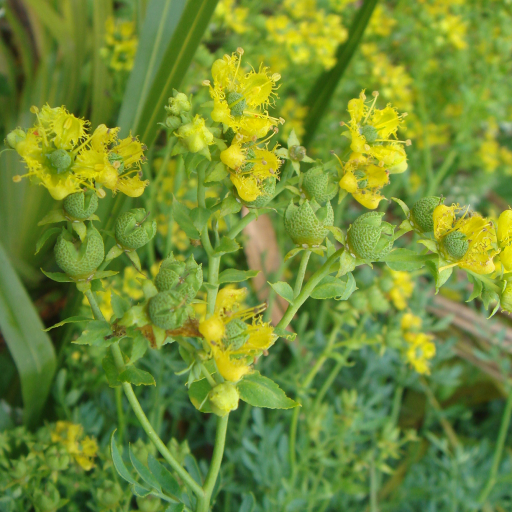
Plant Overview
Known widely as the "Fringed Rue" or "Ruda," Ruta chalepensis is a Mediterranean native steeped in centuries of folklore and mysticism. Often called the "Herb of Grace," it is legendary for its ability to ward off the "evil eye" and bad energy in various cultures. Its blue-green, lacy foliage and pungent, aromatic scent make it a striking, albeit controversial, addition to any herb garden.
🔍 How to Identify
- 🌿 Lacy Foliage: The leaves are a distinct glaucous (blue-gray) color, divided into small, oval-shaped segments that give the plant a delicate, feathery appearance.
- 🟡 Fringed Flowers: Unlike the common Rue, this variety features bright yellow blossoms with petals that are noticeably "fringed" or ciliate at the edges, resembling tiny, jagged stars.
- 👃 Pungent Aroma: When bruised or touched, the plant releases a strong, bitter, and somewhat medicinal scent that is polarizing—some find it refreshing, while others find it overwhelming.
🏡 In Your Garden
- ☀️ Sun-Drenched Hardiness: This plant is a Mediterranean survivor; it craves full sun and thrives in poor, well-draining soil. It is exceptionally drought-tolerant once established, making it perfect for rock gardens or xeriscaping.
- 🦋 Butterfly Magnet: While its scent deters many pests, it is a primary host plant for the Giant Swallowtail butterfly. Don't be alarmed if you see caterpillars munching on the leaves; they are simply preparing for their transformation!
- ✂️ Pruning Habits: It can become quite woody and leggy over time. To keep it lush and mounded, give it a firm pruning in early spring just as new growth begins to appear.
⚠️ Safety & Toxicity
- 🚫 Skin Sensitivity Warning: The most important rule with Rue is "look but don't touch" on sunny days. The plant contains furanocoumarins, which can cause phytophotodermatitis—a painful blistering of the skin when touched and then exposed to sunlight.
- 🐾 Toxic to Pets & Humans: If ingested in significant quantities, it can cause severe stomach upset and liver damage. Historically, it was used medicinally, but it is considered dangerous for pregnant women as it can cause uterine contractions. Keep it away from curious pets and children.
✨ Fun Fact
The specific epithet chalepensis refers to the city of Aleppo in Syria. In the Middle Ages, Rue was so highly regarded for its "cleansing" properties that judges would carry sprigs of it into courtrooms to protect themselves from "jail fever" (typhus) carried by prisoners!

Detailed Care Instructions
To grow Ruta chalepensis, commonly known as the Aleppo Rue plant, you can follow these steps:
- Choose the right location: Ruta chalepensis prefers a sunny spot with well-draining soil. It can tolerate a wide range of soil types but does best in alkaline or neutral soil.
- Obtain seeds or plants: You can purchase seeds from a reputable nursery or online. Alternatively, you can obtain a small plant from a nursery or propagate from stem cuttings.
- Start seeds indoors (optional): If you choose to start from seeds, sow them indoors in late winter or early spring, around 6-8 weeks before the last frost date. Use seed-starting mix or a well-draining soil medium. Barely cover the seeds with soil, as they require light to germinate.
- Transplant or sow outdoors: Once the danger of frost has passed and the seedlings have developed a few true leaves, you can transplant them outdoors. Alternatively, you can sow the seeds directly in the garden, spacing them about 12-18 inches apart.
- Provide appropriate care: Water the plant regularly, especially during dry periods, but avoid overwatering, as this can cause root rot. Ensure good drainage to prevent waterlogging. Apply a layer of organic mulch around the plant to help retain moisture and suppress weed growth. Avoid excessive fertilization, as the plant prefers nutrient-poor soil.
- Prune and harvest: Prune the plant lightly to maintain its shape and remove any dead or damaged branches. You can start harvesting the leaves once the plant is established and has sufficient foliage. Harvest in the morning, as this is when the essential oils are most concentrated. Use the leaves fresh or dried for culinary or medicinal purposes.
- Protect from pests: The Aleppo Rue plant is generally resistant to most pests and diseases. However, aphids, caterpillars, and slugs can occasionally be a problem. Monitor the plant regularly and take appropriate measures such as handpicking pests or using organic pest control methods if necessary.
Remember to always wear gloves when handling Ruta chalepensis, as the plant's sap can cause skin irritation in some individuals, especially when exposed to sunlight.

Place in a window with dappled sun or a spot in the middle of a room. Or directly in a window facing west or east.

To properly water this plant, it is important to consider its habitat and natural environment. Ruta Chalepensis typically grows in dry and rocky areas with well-draining soil. Therefore, it is essential not to overwater the plant and to ensure the soil dries out between watering sessions.
When watering, it is recommended to water deeply, allowing the water to soak into the soil and reach the plant's roots. It is best to water in the early morning or late afternoon, avoiding watering during the hottest part of the day, as this can cause the water to evaporate too quickly and not reach the roots.
Additionally, it is important to avoid getting the foliage wet, as the leaves are prone to burning in direct sunlight when they are wet. Therefore, it is recommended to water at the base of the plant and avoid overhead watering.
Overall, it is important to monitor the plant's soil moisture closely and adjust watering frequency accordingly, ensuring that the soil remains moist but not waterlogged.
To fertilize this plant, mix a balanced fertilizer with equal parts nitrogen, phosphorus, and potassium. Use a liquid fertilizer and apply it to the soil around the base of the plant, avoiding contact with the leaves. Apply the fertilizer every 4-6 weeks during the growing season, or more frequently if the plant shows signs of nutrient deficiency. Avoid over-fertilizing, as this can lead to root burn and other issues. Also, consider using organic fertilizers such as compost or manure to provide nutrients to the plant.
When planting Ruta Chalepensis, it is recommended to use well-draining soil that is rich in organic matter. The ideal soil pH range is between 6.0 and 7.5. It is also important to ensure that the soil is not too compact, as the plant requires good air circulation around its roots. Avoid using heavy clay soils, as these can retain too much moisture and lead to root rot. Instead, choose a sandy loam soil or amend heavy soils with organic matter such as compost or leaf litter. Additionally, it is important to water the plant regularly and to ensure that the soil does not dry out completely between waterings.
To propagate this plant, you will need to collect the seeds and plant them in moist soil. Make sure to choose a location with partial sun exposure and water the plant regularly. Alternatively, you can take stem cuttings and root them in water or soil. To do this, select a healthy stem with several leaves and make a clean cut at a 45-degree angle. Remove the lower leaves and dip the cut end in rooting hormone. Plant the cutting in a pot with moist soil and cover with a plastic bag to create a humid environment. Keep the soil moist and place the pot in partial shade until new growth appears.








