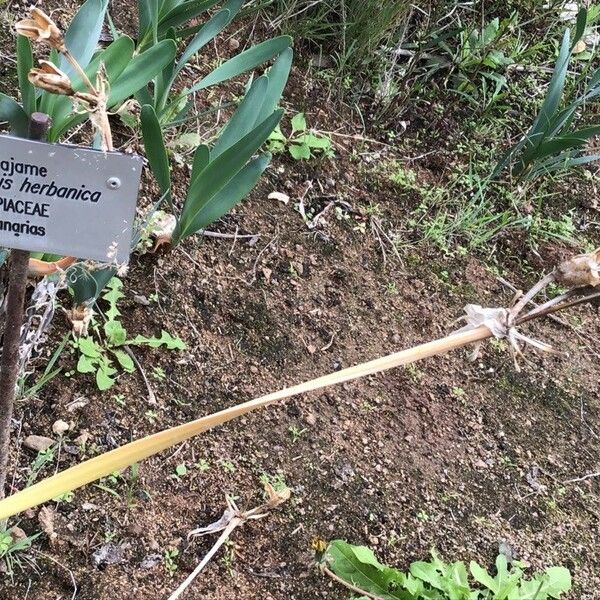
Plant Overview
The Rutheopsis Herbanica, often whispered about as the "Ghost of the Malpaís," is a rare botanical treasure found exclusively in the arid, volcanic landscapes of the eastern Canary Islands. This resilient survivor clings to the rocky plains of Fuerteventura and Lanzarote, showcasing nature's ability to thrive in extreme conditions. Its delicate, feathery appearance belies a "tough-as-nails" constitution that has allowed it to endure for millennia in harsh island microclimates.
🔍 How to Identify
- 🌿 Thread-like Foliage: The leaves are finely dissected into narrow, needle-thin segments. This airy texture isn't just for show; it minimizes surface area to prevent water loss under the scorching sun.
- 🌼 Umbel Blooms: Like its cousins in the carrot family, it produces tiny, creamy-white flowers arranged in flat-topped clusters called "umbels," which look like miniature floral umbrellas.
- 🌱 Woody Base: At the soil line, the plant develops a tough, woody base known as a caudex. This helps it anchor into rocky crevices and store essential nutrients during long droughts.
🌋 Habitat & Ecology
- ☀️ The Sun Specialist: In the wild, this plant lives in "malpaís" (literally "badlands"), where it is exposed to intense UV radiation and salty Atlantic winds. It has evolved a specialized metabolism to handle high light levels that would wither most other plants.
- 🏜️ Water Strategy: It is a master of patience. Rutheopsis Herbanica can remain semi-dormant during dry spells, springing into life and blooming only when the scarce island rains provide the perfect window of opportunity.
⚠️ Safety & Toxicity
- 🐾 General Precaution: While there is no evidence of high toxicity, many members of the Apiaceae family contain furanocoumarins. These compounds can cause "phytophotodermatitis" (skin irritation or blistering) when the sap is exposed to sunlight.
- 👶 Safe Handling: It is best kept out of reach of pets and children. If you are pruning or moving the plant, wearing gloves is a smart way to avoid any potential skin sensitivity.
✨ Fun Fact
Rutheopsis Herbanica is what botanists call a monotypic genus. This means it is a "lonely" plant with no brothers or sisters; it is the only species belonging to the genus Rutheopsis in the entire world!

Detailed Care Instructions








