Plant Overview
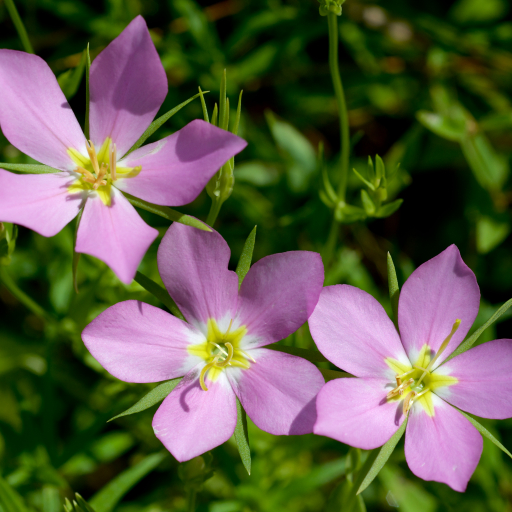
The Texas Star (or Sabatia campestris) is a radiant annual wildflower that turns open prairies into a sea of pink every spring. Often called the Prairie Rose-Gentian, it is famous for its almost perfect geometric symmetry, looking like a hand-painted ornament dropped into the tallgrass. In Southern folklore, seeing a field of these stars was a sign that the harshest weather of the year had finally passed.
🔍 How to Identify
- 🌸 The Flower: Each blossom features five rose-pink petals that surround a bright yellow, star-shaped center rimmed with a thin white border.
- 📐 Square Stems: If you run your fingers along the stem, you’ll notice it feels distinctly four-angled or "square" rather than perfectly round.
- 🍃 Opposite Leaves: The small, oval-to-lance-shaped leaves grow in pairs directly across from one another, hugging the stem closely.
- 🌀 Twisted Anthers: Look closely at the center; the pollen-bearing anthers are initially straight but twist into spirals as they age.
🏡 In Your Garden
- 🌱 Annual Lifestyle: Since this is a true annual, it completes its entire life cycle in one year. If you want them back next season, you must allow the flowers to fade and drop their seeds naturally.
- 🦋 Pollinator Party: These stars are high-value targets for native bees and butterflies. They thrive in open, sunny spots with "heavy" soil—they actually prefer clay or loamy areas that stay slightly moist during the spring.
- 🌾 Low Competition: They are delicate plants. In a garden setting, ensure they aren't crowded out by aggressive grasses or taller perennials, as they need sunlight to reach their low-growing foliage.
⚠️ Safety & Toxicity
- ✅ Status: Generally non-toxic and safe.
- 🐾 Details: There are no known reports of Sabatia campestris being poisonous to dogs, cats, or horses. However, as with any wildflower not intended for consumption, it’s best to keep curious toddlers from snacking on them to avoid any minor stomach upset.
✨ Fun Fact
The "star" in the center of the flower isn't just for decoration; it acts as a "nectar guide." To a bee’s eyes, that bright yellow center stands out like a neon "Open" sign, directing them exactly where to land for a sugary reward!

Detailed Care Instructions
Sabatia campestris, also known as meadow pink or meadow beauty, is a wildflower that is native to North America. Here are some tips on how to grow this plant:
- Planting: Sabatia campestris prefers full sun or partial shade and well-drained soil. Plant seeds in early spring after the last frost or sow seeds in the fall for spring germination.
- Watering: Keep the soil consistently moist but not waterlogged. Water the plant deeply once a week, especially during dry periods.
- Fertilizing: Sabatia campestris does not require heavy fertilization. A light application of balanced fertilizer in early spring should be sufficient.
- Pruning: Deadhead spent flowers to encourage continuous blooming throughout the growing season.
- Pests and diseases: Keep an eye out for pests like aphids and caterpillars, and treat them accordingly. Sabatia campestris is generally resistant to most diseases.
- Propagation: Sabatia campestris can be propagated by seeds or division. To divide the plant, dig up the roots in early spring and separate them into smaller clumps before replanting.
By following these tips, you can successfully grow Sabatia campestris and enjoy its beautiful pink flowers in your garden.

Place in a bright room that is sun drenched almost all day. Or directly in a south-facing window.

Sabatia campestris plants should be watered regularly to keep the soil consistently moist but not waterlogged. It is important to water the plant at the base to avoid getting the foliage wet, which can lead to disease or sunburn. Watering in the morning is ideal to allow the plant to absorb moisture before the heat of the day. During periods of drought or high temperatures, the plant may require more frequent watering. Testing the soil moisture level by sticking a finger into the soil about an inch deep can help determine when the plant needs to be watered. Remember to adjust the watering schedule based on the plant's specific needs and growing conditions.
To fertilize the Sabatia Campestris plant, use a balanced fertilizer with equal parts nitrogen, phosphorus, and potassium. Apply the fertilizer in early spring before new growth appears. Be sure to follow the instructions on the fertilizer packaging for proper dilution and application rates. Water the plant well after applying fertilizers to help incorporate the nutrients into the soil. Avoid over-fertilizing as this can lead to nutrient imbalances and damage to the plant.
Sabatia Campestris plants thrive in well-draining soil that is slightly acidic to neutral in pH. A loamy soil blend that is rich in organic matter is ideal for optimal growth and development. It is important to avoid heavy, clay-like soils that may become waterlogged and impede root growth. Adding a layer of compost or organic mulch to the soil surface can help retain moisture and provide essential nutrients to the plant. Additionally, ensuring proper soil aeration and drainage will help prevent waterlogging and reduce the risk of root rot.
Sabatia campestris plants can be propagated through division or by collecting and sowing seeds.
To propagate through division, carefully dig up a mature plant and use a sharp knife or garden shears to cut the root ball into separate sections. Each section should have a healthy amount of roots and foliage. Replant the divided sections in well-draining soil and water thoroughly.
To propagate by seeds, collect mature seed heads from the plant and allow them to dry out completely. Once dry, remove the seeds from the seed heads and sow them in a seed tray filled with well-draining soil. Cover the seeds lightly with soil and water gently. Place the seed tray in a warm, sunny location and keep the soil consistently moist until germination occurs.
Whether propagating by division or seeds, it is important to provide the new plants with the proper care and growing conditions to ensure their success. Water regularly, provide adequate sunlight, and protect the young plants from extreme temperatures and pests.








