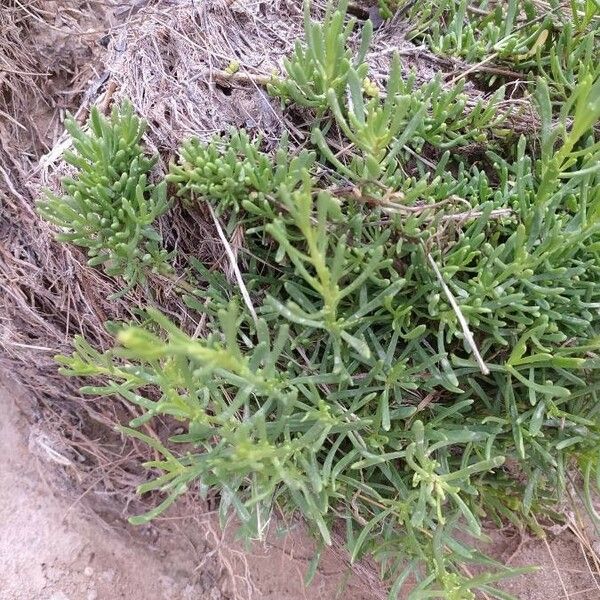
Plant Overview
Often called "Sea Beans" or "Poor Man's Asparagus," Salicornia patula is a master of survival. This succulent-like plant thrives where most others wither—in the salt-soaked marshes and coastal mudflats of the Mediterranean and beyond. In late summer and autumn, these vibrant green "pickles" often transform into striking shades of crimson and violet, painting the shoreline in a seasonal display of color.
🔍 How to Identify
- 🌵 Segmented Stems: The plant looks like a series of tiny, translucent green sausages stacked on top of each other. These fleshy, jointed segments store water and salt.
- 🍃 Scale-like Leaves: You won’t find traditional flat leaves here. Instead, the leaves are reduced to tiny, inconspicuous scales at each joint, giving the plant a smooth, alien appearance.
- 🎨 Autumn Transition: While it starts as a bright, waxy green, the stems turn deep red or purple as the plant matures and the salt concentration within its tissues increases.
🏡 In Your Garden
- 🌊 The Halophyte Life: This is a "halophyte," meaning it is a salt-loving specialist. In a home garden setting, it requires very specific conditions; it usually fails in standard potting soil because it actually craves a certain level of salinity to maintain its crisp structure.
- ☀️ Solar Powered: Because it naturally grows on open, exposed coastlines, it demands full, unobstructed sunlight. It uses its thick, succulent stems to store moisture, helping it endure the harsh, drying reflection of the sun off the salt crusts.
⚠️ Safety & Toxicity
- 🥗 Status: Safe and highly edible for humans. It is a gourmet delicacy known for its naturally salty, "oceanic" flavor and satisfying crunch.
- 🐾 Pets & Kids: It is non-toxic to dogs, cats, and children. However, because the plant naturally accumulates high levels of sodium, it should not be fed to pets in large quantities, as excessive salt can be harmful to their kidneys.
✨ Fun Fact
The common name "Glasswort" isn't a coincidence! In the 18th century, these plants were burned in large quantities to produce "soda ash." This ash was a critical ingredient in the traditional glass-making process, as it helped the silica melt at a lower temperature.

Detailed Care Instructions







