Plant Overview
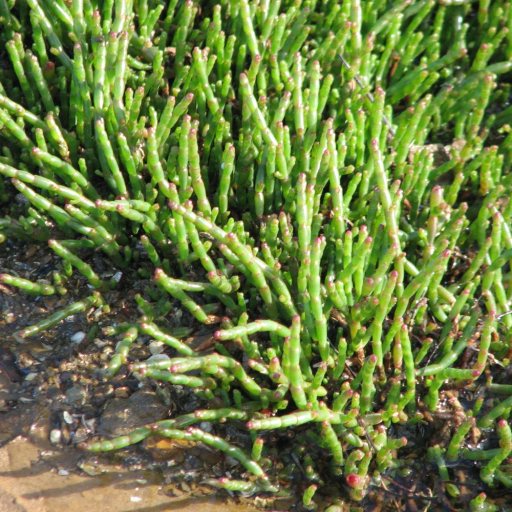
Often called Chickenclaws or Beaded Samphire, Salicornia quinqueflora is a hardy coastal survivor that looks more like a collection of succulent green glass beads than a traditional plant. It thrives in salt marshes and rocky shorelines where other plants would wither from the brine. In the culinary world, it’s a gourmet secret, prized for its crunchy texture and natural burst of salty flavor.
🔍 How to Identify
- 🍖 Segmented Stems: The plant is made up of fleshy, jointed segments that look like tiny green sausages or beads strung together.
- 🍃 Scale Leaves: You won’t see typical leaves; they are reduced to tiny, inconspicuous scales at each "joint" of the stem to minimize water loss.
- 🎨 Color Shifting: While usually a vibrant "sea-green," the entire plant can turn a dramatic fiery red or deep purple during the autumn or when exposed to high salt levels.
🏡 In Your Garden
- 🌊 Salt Lovers: This is a "halophyte," meaning it thrives in salty conditions. It is an excellent choice for coastal gardens or "saline-scaped" pots where sea spray would kill most other succulents.
- Drainage is Key:** Despite living in marshes, it hates sitting in stagnant, fresh water. In a garden setting, it requires a very sandy, free-draining substrate to mimic its native rocky or sandy shoreline.
- 🥗 Foraging Potential: If you grow it yourself, the young, green tips can be harvested in spring and summer. They are delicious sautéed in butter or tossed raw into a salad for a natural salt hit.
⚠️ Safety & Toxicity
- ✅ Status: Generally safe and non-toxic.
- 🐾 Details: It is not known to be toxic to cats, dogs, or horses. However, because it accumulates salt from its environment, it should be consumed in moderation by humans with sodium-restricted diets. Always ensure it is grown or harvested in unpolluted water sources.
✨ Fun Fact
The common name "Glasswort" dates back to the 16th century. The plant was burned to create "soda ash," which was a critical ingredient used in the traditional process of making high-quality glass and soap!

Detailed Care Instructions

Water-loving plants flourish in wet or sloppy soil and near ponds. The extensive root system enables these plants to absorb plenty of water. The surface of the soil should be kept moist at all times. Place your pot in a container filled with water to guarantee that plants get enough water. If the ground becomes dry, it is recommended that you water it well. Plants in smaller pots will need to be watered more frequently. Water the soil in which the plant is standing thoroughly using a watering can.








