Plant Overview
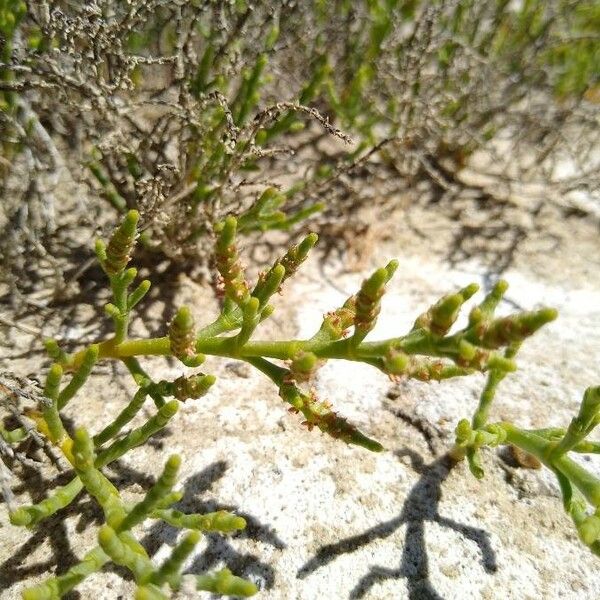
Often referred to as Parish’s Glasswort or Pickleweed, this unusual succulent looks less like a traditional plant and more like a collection of tiny, vibrant green sausages joined together. Thriving in the salty "no-man's-land" of coastal marshes where most plants would wither, it is a master of survival and a cornerstone of sensitive shoreline ecosystems.
🔍 How to Identify
- 🌿 The Stems: Features fleshy, cylindrical segments that are "jointed." These segments store water to help the plant survive in high-salt environments.
- 🍃 The Leaves: It appears leafless at first glance; its leaves are actually reduced to tiny, inconspicuous scales wrapped around the stem joints.
- 🎨 Color Shifts: While it spends much of the year a dull, salty green, the plant often turns a beautiful shades of rusty red or deep purple as it matures or faces environmental stress.
🏡 In Your Garden
- 🌊 Salt Specialist: This isn't your average backyard plant. It requires high salinity and alkaline conditions. If you are coastal gardening or have a "salt-sink" area, it is a perfect candidate for ground cover that prevents erosion.
- 🐦 Wildlife Anchor: In its native California and Mexican habitats, this plant is famous for being the primary nesting ground for the endangered Belding’s Savannah Sparrow. Planting it (if you are in the right zone) provides a vital "mini-marsh" habitat for local biodiversity.
⚠️ Safety & Toxicity
- ✅ Status: Generally non-toxic to humans and pets.
- 👅 Salt Content: Because it is a "halophyte" (salt-lover), the plant accumulates high levels of salt in its tissues. While not poisonous, it would be an incredibly salty snack for a curious dog or child, potentially leading to increased thirst.
✨ Fun Fact
To survive in salty mud, Parish's Glasswort uses a "sacrifice" strategy. It pumps excess salt into the tips of its stems until they turn red and eventually drop off, effectively "excreting" the salt to keep the rest of the plant healthy!

Detailed Care Instructions








