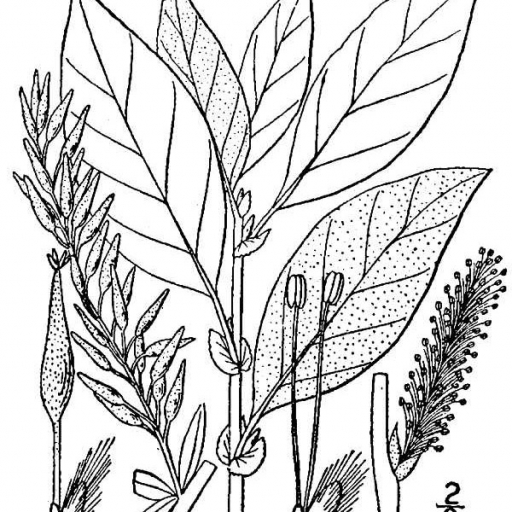
Plant Overview
Meet the Bebb’s Willow, also affectionately known as the Beaked Willow or Diamond Willow. This hardy North American native is a true "pioneer species," often being the first to colonize areas after a fire or flood. While many see it as a simple shrub, woodcarvers treasure it for the "diamonds" found in its bark, which are created when a specific fungus interacts with the tree’s growth.
🔍 How to Identify
- 🍃 Leaf Shape: The leaves are typically elliptical to egg-shaped, featuring a dull green top and a distinctively pale, grayish-blue underside with prominent veins.
- 🦢 The "Beak": It gets the name "Beaked Willow" from its fruit capsules, which are long, slender, and curved, resembling the beak of a bird.
- 🌳 Growth Habit: Unlike towering shade trees, this willow usually grows as a multi-stemmed large shrub or a small, bushy tree with a rounded crown.
🏡 In Your Garden
- 💧 Wetland Warrior: This plant is a specialist for "problem areas." If you have a soggy corner of your yard or a streambank prone to erosion, its aggressive root system acts like biological rebar to hold the soil together.
- 🦋 A Wildlife Hub: In the early spring, its fuzzy catkins are a vital nectar source for waking bees. It also serves as a high-protein "nursery" for the larvae of beautiful butterflies like the Viceroy and the Mourning Cloak.
⚠️ Safety & Toxicity
- ✅ General Safety: Salix bebbiana is considered non-toxic to humans, cats, and dogs.
- 💊 Salicin Content: Like all willows, the bark contains salicin (the chemical precursor to aspirin). While not dangerous to touch, chewing on the twigs is not recommended, especially for those with aspirin sensitivities.
✨ Fun Fact
The famous "Diamond Willow" walking sticks are often made from Bebb’s Willow. The striking diamond patterns in the wood are actually scars where the tree successfully fought off a fungal infection, leaving behind a beautiful, hardened geometric design that is highly prized by artisans.

Detailed Care Instructions
To grow Salix bebbiana plants, also known as Beaked willow, follow these steps:
- Location: Choose a location that receives full sun to partial shade. Beaked willow can tolerate a wide range of soil types, including wet or poorly drained soil, making it ideal for marshy or damp areas.
- Soil Preparation: Prepare the soil by removing any weeds or grass. Loosen the soil with a garden fork or tiller to a depth of about 12 inches. Add compost or well-rotted manure to improve soil fertility and drainage, if necessary.
- Planting: Purchase young Salix bebbiana plants from a reputable nursery or garden center. Dig a hole slightly larger than the root ball of the plant. Place the plant in the hole and backfill with soil, gently firming it around the roots. Water thoroughly after planting.
- Watering: Keep the soil consistently moist, especially during the first growing season while the roots establish. Be careful not to overwater, as this can lead to root rot. A layer of mulch around the base of the plant can help retain moisture.
- Pruning: Prune the beaked willow plant in late winter or early spring while dormant to remove any dead or damaged branches. This will help promote healthy growth and maintain a tidy shape. Beaked willow is fast-growing, so regular pruning may be required to control its size.
- Fertilizing: Apply a balanced, slow-release fertilizer in early spring to provide nutrients for the growing season. Follow the manufacturer's instructions for dosage and application method.
- Propagation: Salix bebbiana can be propagated through hardwood cuttings taken during winter dormancy. Select healthy, disease-free branches, cut them into 6-8 inch lengths, and remove any buds or leaves. Plant the cuttings in moist soil or a container filled with a well-draining rooting medium. Keep the cuttings in a cool, shady location and mist them regularly to maintain humidity. Roots should develop within a few weeks.
- Pest and Disease Control: Beaked willow is generally pest and disease resistant but can be susceptible to aphids, caterpillars, and leaf spot diseases. Monitor the plant regularly and take appropriate measures, such as applying insecticidal soap for pests or removing and destroying infected leaves.
By following these steps, you should be successful in growing Salix bebbiana plants. Enjoy the attractive foliage and unique beaked catkins that this plant produces!

Place in a bright room that is sun drenched almost all day. Or directly in a south-facing window.

Salix Bebbiana is a woody perennial plant that requires regular watering to maintain its growth and health. To water this plant, you should begin by inspecting the soil to determine if it needs watering. You can do this by using your finger to dig a few inches deep into the soil near the base of the plant to check for moistness.
If the soil is dry, it is time to water the plant. Slowly pour water onto the soil near the base of the plant until it is moist. Be careful not to over-water the plant, as this can lead to root rot.
A good way to ensure that you are watering your Salix Bebbiana properly is to water it deeply once a week. This will help establish a deep root system and ensure that the plant is getting the moisture it needs to thrive.
Additionally, it is important to note that Salix Bebbiana prefers well-draining soil, so be sure to avoid watering it too frequently or in excess. It is also a good idea to mulch around the base of the plant to help retain moisture in the soil.
To promote healthy growth in this plant, provide it with a balanced fertilizer in early spring before the new growth appears. Use a slow-release fertilizer with equal amounts of nitrogen, phosphorus, and potassium. Apply the fertilizer on the soil around the plant at a rate of one pound per inch of trunk diameter. Water the plant thoroughly after fertilizing. Avoid fertilizing in late summer or fall as it can encourage new growth that may not have time to harden off before winter.
The ideal soil for Salix Bebbiana plants is a well-draining soil with a pH level between 5.5 and 7.5. The soil should be rich in organic matter and should have good moisture retention properties. It is important to avoid heavy or compacted soils, as this can lead to poor drainage and root rot. Adding perlite or sand to the soil can improve drainage. Additionally, the plant can benefit from regular fertilization with a balanced, slow-release fertilizer.
Propagation of this plant can be achieved through several methods, including stem cuttings, division of roots, and grafting. Stem cuttings are a simple and effective way to propagate this plant. Cuttings should be taken from young, healthy stems and should be approximately 6-8 inches in length. Remove any leaves from the lower half of the stem and dip the cut end in rooting hormone. Plant the cutting in a well-draining soil mix and keep it consistently moist until it develops roots.
Division of roots is another method of propagation. Dig up the plant and carefully separate the roots into smaller sections, each containing several stems. Replant each section in a new location and keep it well-watered.
Grafting is a more advanced technique in which a branch from the desired plant is attached to the rootstock of a related, hardier species. This method is often used for commercial production of the plant.








