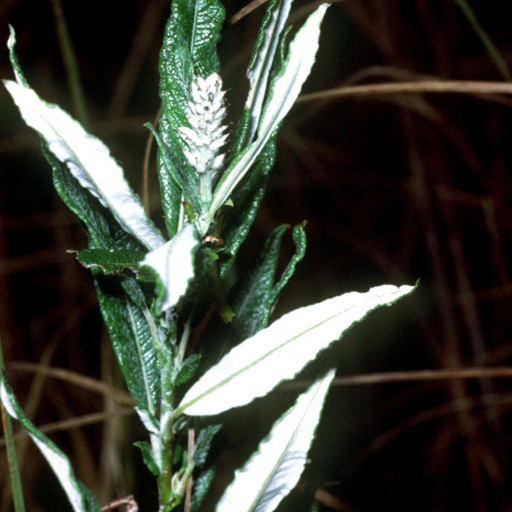
Plant Overview
Known as the Sageleaf Willow or Hoary Willow, this charming shrub looks like it stepped out of a frosted winter fairytale. Native to the cold wetlands of North America, it earned its "hoary" nickname from the dense, white woolly hairs that cover its leaves and stems, giving the plant a ghostly, silvery shimmer. It is a resilient survivor that thrives where other plants might drown, adding a soft, velvet texture to any boggy landscape.
🔍 How to Identify
- 🌿 The Foliage: The leaves are narrow and oblong, resembling culinary sage. While the tops are a dull green, the undersides are covered in a thick, white, felt-like wool.
- 🧶 The Stems: Look closely at the young twigs; they are often densely "tomentose," meaning they are cloaked in white fuzz that protects the plant from cold and drying winds.
- ☁️ The Catkins: In early spring, upright, fuzzy cylindrical flower clusters (catkins) appear. These are typically silvery-white and provide one of the first sources of nectar for waking bees.
🏡 In Your Garden
- 💧 Wetland Specialist: Unlike many garden shrubs that fear "wet feet," the Sageleaf Willow thrives in soggy, poorly drained areas. It is the perfect candidate for rain gardens, pond edges, or low spots in the yard where water tends to collect.
- ⛰️ Alkaline Lover: While many bog plants crave acidic peat, Salix candida is a "calciphile," meaning it actually enjoys lime-rich, alkaline soils. This makes it a rare and valuable find for gardeners with high-pH soil who still want a classic wetland look.
- ✂️ Compact Habit: It remains a relatively small, multi-stemmed shrub, rarely exceeding 5–6 feet, making it much more manageable for home landscapes than its giant weeping cousins.
⚠️ Safety & Toxicity
- ✅ Safe for Contact: This willow is generally considered non-toxic to touch and is safe for planting in areas frequented by children or pets.
- 💊 Chemical Note: Like all members of the Salix family, the bark contains salicin (the natural precursor to aspirin). While not "poisonous," browsing on large amounts of the bark could cause stomach upset in pets or livestock due to this medicinal compound.
✨ Fun Fact
The specific epithet candida comes from the Latin word for "shining white." This is the same root word for "candidate," because, in Ancient Rome, people seeking office wore bright white crystalline-treated togas to symbolize purity!

Detailed Care Instructions
To grow Salix candida (white willow) plant, follow these steps:
- Obtain a cutting or sapling of Salix candida from a nursery or reputable supplier. Alternatively, you can collect seeds from mature tree cones.
- Choose a suitable location for planting. White willows prefer areas with full sun or partial shade and moist, well-drained soil. They can tolerate wet or clayey soil as well.
- Prepare the soil by removing any weeds or grass and loosening it with a garden fork or tiller. Add organic matter like compost or well-rotted manure to improve soil fertility and drainage.
- Dig a hole that is wide and deep enough to accommodate the root ball or cutting. Place the plant or cutting into the hole and backfill it with soil, gently firming it around the roots.
- Water the newly planted white willow thoroughly and continue to keep the soil moist, but not waterlogged, throughout the growing season. Ensure that the plant receives at least an inch of water per week, either through rainfall or manual watering.
- Mulch around the base of the plant with a layer of organic mulch, such as wood chips or straw. This will help retain moisture and suppress weed growth.
- Prune the white willow regularly to maintain its shape and encourage strong, healthy growth. Trim back any dead, damaged, or crossing branches. Pruning can be done in late winter or early spring when the tree is dormant.
- Protect the young white willow from browsing animals like deer. Consider using fences or tree guards until the plant becomes established.
- Monitor the white willow for any signs of pests or diseases, such as aphids, leaf spot, or cankers. Take appropriate measures, such as applying organic insecticides or fungicides, if necessary.
- Enjoy the beauty of your growing Salix candida plant as it matures. The white willow typically reaches a height of 20-40 feet and has attractive white or grayish leaves and bark.

Place in a bright room that is sun drenched almost all day. Or directly in a south-facing window.

Salix Candida is a plant that requires consistent watering to thrive. The soil around the plant should be kept moist but not wet, as overly wet soil can lead to root rot. It is important to ensure that the plant is receiving enough water, especially during hot and dry weather.
To water Salix Candida, you will need to use a watering can or a hose with a gentle nozzle. Water the plant at the base, making sure to saturate the soil around the roots. You may need to water Salix Candida more frequently during periods of drought or if it is planted in a container.
Be careful not to overwater the plant, as this can lead to waterlogged soil, which can cause the roots to rot. Additionally, when watering Salix Candida, avoid getting water on the leaves as this can cause damage and encourage the growth of fungal diseases.
It is recommended to water Salix Candida early in the day or in the evening, as watering during the hottest part of the day can cause the water to evaporate before it reaches the roots. By following these simple watering guidelines, you can help ensure the health and vitality of your Salix Candida plant.
To fertilize the Salix Candida plant, apply a slow-release, balanced fertilizer to the soil around the base of the plant in the early spring, before new growth appears. Use a high-nitrogen fertilizer if the plant appears to be lacking in foliage, and a balanced fertilizer if the plant has enough foliage. Water the plant thoroughly after fertilizing. Repeat the application of fertilizer in the summer if necessary. Avoid over-fertilizing, as this can harm the plant.
Salix Candida should be planted in soil that is rich in nutrients and well-draining. The soil should have a pH between 5.5 and 7.5 and should be slightly acidic to slightly alkaline. It is best to use a soil mix that is specifically designed for growing plants and contains a combination of peat moss, vermiculite, and perlite. The soil should be moist but not waterlogged, and it should be able to retain moisture without becoming too soggy. The plant should be grown in full sun or partial shade, and it should be fertilized regularly with a balanced fertilizer to promote healthy growth.
Salix Candida is a woody perennial plant that belongs to the Salicaceae family. It is possible to propagate this plant through various methods including seed propagation, cutting propagation, and division.
Seed Propagation: You can collect seeds from a mature plant and sow them in a well-draining, nutrient-rich soil mixture. The seeds should be kept moist and warm, and they should germinate in a few weeks. Once the seedlings are established, they can be transplanted into larger pots or directly into the ground.
Cutting Propagation: Select a healthy stem from a mature plant and gently remove it from the plant. Remove any leaves from the lower half of the stem and dip the cut end in rooting hormone. Place the cutting in a pot filled with well-draining soil and keep the soil moist. The cutting should develop roots in a few weeks, at which point it can be transplanted into a larger pot or directly into the ground.
Division: Salix Candida can also be propagated by dividing an established plant. Dig up the plant, gently separate the root ball into several sections, and replant each section in its own pot or in the ground. Make sure each section has a healthy set of roots and foliage. Water the newly planted sections regularly until they become established.
Propagating Salix Candida can be a rewarding experience, and it is a great way to grow new plants for your own garden or to share with friends and family.








