Plant Overview
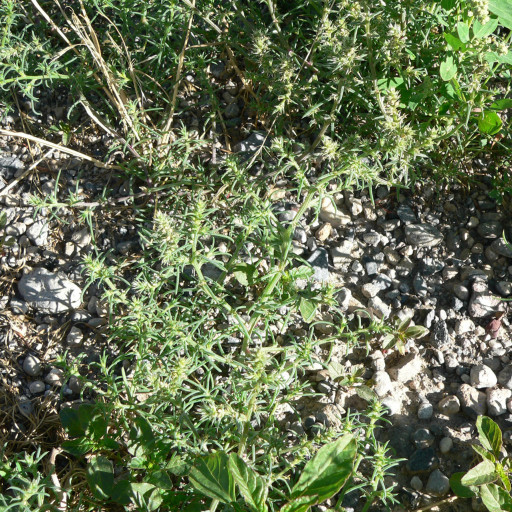
The quintessential symbol of the American Wild West is actually a globe-trotting immigrant from the Russian steppes. Often called the "Wind-witch" or "Russian Thistle," Salsola tragus is famous for its dramatic lifecycle—breaking away from its roots at maturity to roll across the plains. While it looks like a lonely drifter, it is actually a highly efficient, invasive seed-spreading machine.
🔍 How to Identify
- 🌿 Growth Habit: It starts as a soft, dark green seedling with long, succulent leaves but matures into a stiff, skeleton-like sphere that can reach up to three feet in diameter.
- 🌸 Hidden Blooms: The flowers are tiny and lack traditional petals, tucked away behind prickly, leaf-like structures called bracts that end in a sharp, needle-like spine.
- 🍂 The Stems: As the plant matures, the stems become rigid and woody, often featuring distinct reddish or purple longitudinal stripes.
🏡 In Your Garden
- 🚜 Disturbed Soil Enthusiast: This plant thrives where the ground has been cleared, tilled, or overgrazed. It loves "empty" space and uses its deep taproot to scavenge for water where other plants would wither.
- ✂️ Hard to Handle: If you find one in your yard, pull it while it is young and soft (the "grass stage"). Once it matures and hardens, its taproot makes it difficult to dislodge, and its spines make it painful to touch without heavy-duty leather gloves.
- 🏜️ Drought Warrior: It requires almost no supplemental water. Its presence often indicates very dry, sandy, or alkaline soil conditions where few other species can compete.
⚠️ Safety & Toxicity
- 🌵 Mechanical Hazard: The primary danger is physical. The dried spines are incredibly sharp and can easily pierce thin clothing and skin, causing painful scratches or localized irritation.
- 🐾 Nitrate Risk: While young plants are sometimes eaten by livestock, mature tumbleweeds can accumulate toxic levels of nitrates, which can be fatal to cattle and horses if consumed in large quantities.
- 🤧 Allergens: Salsola tragus produces a large amount of wind-borne pollen during the late summer, making it a major culprit for seasonal hay fever and asthma.
✨ Fun Fact
- 🎬 The Ultimate Hitchhiker: A single rolling tumbleweed isn't just a dead bush; it’s a vessel. As it bounces across the landscape, the mechanical shaking releases up to 250,000 seeds, ensuring the species "travels" miles away from where it originally grew.

Detailed Care Instructions
To grow Salsola tragus, also known as Tumbleweed or Russian thistle, follow these steps:
- Climate: Salsola tragus thrives in arid and semi-arid climates with full sun exposure. Ensure the plant will receive at least 6-8 hours of direct sunlight each day.
- Soil: This plant prefers well-draining sandy or loamy soil. If the soil is heavy with clay, amend it by mixing in organic matter such as compost or sand to improve drainage.
- Planting: Salsola tragus can be grown from either seeds or transplants. If starting from seeds, sow them directly into the garden bed after the last frost date or start them indoors 6-8 weeks before the expected planting date and then transplant outdoors. Plant the seeds ¼ inch deep in the soil and space them 12-18 inches apart.
- Watering: Until the seedlings are established, keep the soil consistently moist but not waterlogged. Once the plants are established, they are highly drought-tolerant and require minimal watering. Only water during extended dry periods.
- Weeding: Keep the area around the Salsola tragus plants weed-free, as it can be easily outcompeted by other aggressive weeds.
- Mulching: Apply a layer of organic mulch, such as straw or wood chips, around the base of the plants to help retain moisture, inhibit weed growth, and protect the roots during extreme temperatures.
- Maintenance: Tumbleweed is a relatively low-maintenance plant. Regularly inspect the plants for pests and disease, and apply appropriate treatments if necessary. Since it grows rapidly and can self-seed, remove or control any unwanted or invasive growth.
- Harvesting: If you wish to collect the seeds, allow the plant to dry up completely and turn brown. Shake the plant gently to release the seeds, and collect them for future planting or use.
Note: Salsola tragus can be invasive and is considered a noxious weed in some regions. Make sure to check the local regulations regarding its cultivation and control any spreading.
To water this type of plant, you should carefully monitor the soil moisture levels. It is important to make sure that the soil is evenly moist but not soaking wet. This can be achieved by watering deeply and then allowing the top inch or so of soil to dry out before watering again. It is also important to provide good drainage so that excess water can drain away and not sit around the roots. When watering, it is best to water at the base of the plant and avoid getting water on the foliage, as this can lead to disease and fungal issues. Additionally, during extended dry periods, it may be necessary to water the plant more frequently to keep it healthy and thriving.
To fertilize the Salsola Tragus plant, follow these instructions:
- Select a balanced fertilizer with equal proportions of nitrogen (N), phosphorus (P), and potassium (K).
- Dilute the fertilizer according to the instructions on the label. Be cautious not to use a concentration stronger than recommended.
- Apply the fertilizer during the growing season, typically in spring and summer.
- Water the plant thoroughly before applying the fertilizer to prevent any potential root damage.
- Sprinkle the diluted fertilizer evenly around the base of the plant, keeping a distance from the stems or leaves.
- Gently work the fertilizer into the soil using a hand cultivator or rake.
- Avoid excessive fertilization, as it may lead to nutrient burn or overgrowth.
- Water the plant after applying the fertilizer to help penetrate the nutrients into the soil and prevent any potential burning of roots.
- Monitor the plant's response to the fertilizer and adjust accordingly based on its health and growth.
Salsola Tragus plants prefer well-draining soils that are sandy or loamy in texture and are low in organic matter. The soil pH should be in the range of 6.5 to 8.5. The plant thrives in areas with full sun exposure and is tolerant of dry conditions and infertile soils. In areas with high soil salinity, Salsola Tragus plants can grow without much water. It is recommended to avoid planting this species in soils that are high in moisture and prone to waterlogging. Salsola Tragus can be propagated from seed or stem cuttings and is a fast-growing plant that can reach up to 2 meters in height.
To propagate the Salsola Tragus plant, follow these steps:
- Prepare a propagation bed or container: Choose a well-draining potting mix or create a mixture of equal parts sand and potting soil.
- Obtain plant cuttings: Take stem cuttings from a healthy Salsola Tragus plant. Use sharp and clean pruning shears to cut about 6-8 inches long sections of the stem, ensuring there are at least two nodes present.
- Prepare the cuttings: Remove any lower leaves from the cuttings, leaving just a few leaves at the top. This will help minimize water loss and concentrate energy towards new root growth.
- Optional rooting hormone: Although not necessary, you can dip the cut end of the stem in a rooting hormone powder or gel to promote faster and more successful root development.
- Plant the cuttings: Make holes in the prepared propagation bed or container using a dibber or pencil. Place the cuttings into the holes, ensuring that at least one node is buried beneath the soil surface. Gently press the soil around the stem to secure it in place.
- Provide the right environment: Place the propagation bed or container in a warm and bright location, but away from direct sunlight to prevent wilting or burning. Maintain a temperature of around 70°F (21°C).
- Moisture management: Water the cuttings gently to settle the soil, ensuring it remains consistently moist but not waterlogged. Check the moisture level regularly and water as needed.
- Maintain humidity: To enhance the chances of successful propagation, create a humid environment around the cuttings. You can do this by placing a clear plastic bag or a propagator lid over the entire container or bed. This will help retain moisture and boost root development.
- Monitor root growth: After a few weeks, gently tug on the cuttings to check for resistance, indicating root development. Alternatively, you can also observe for new leaf growth, which indicates successful rooting.
- Transplanting: Once the cuttings have developed a healthy root system, usually within 6-8 weeks, they can be transplanted into individual pots or directly into the garden. Ensure the new planting location has well-draining soil and adequate sunlight.
By following these steps, you can propagate the Salsola Tragus plant successfully and enjoy its unique characteristics in your garden.








