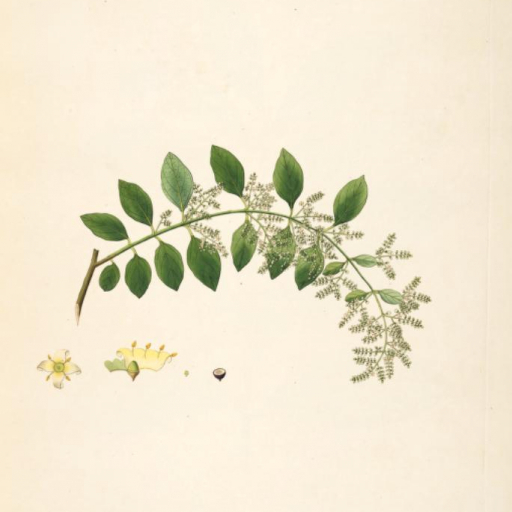
Plant Overview
Known as the Miswak or the Toothbrush Tree, Salvadora persica is the ancient world's answer to modern dental care. This resilient evergreen has been utilized for over 7,000 years across the Middle East, Africa, and India for its remarkable medicinal properties. Often seen as a sprawling, tangled shrub or a low-branching tree, it stands as a symbol of endurance in the harshest, most arid landscapes.
🔍 How to Identify
- 🍃 The Leaves: Small, oval to lance-shaped, and slightly fleshy. They have a leathery texture and a light grayish-green color, often tasting slightly peppery or like mustard greens.
- 🪵 The Bark: The trunk is typically twisted and rugged with greyish-brown bark. When the small twigs are peeled, they reveal a fibrous, cream-colored interior that can be frayed into "bristles."
- 🍇 The Berries: It produces tiny, succulent fruits that transition from pink to a translucent red or purple when ripe. They grow in clusters and have a pungent, aromatic scent.
🏡 In Your Garden
- 🏜️ Salt & Sand Lover: This plant is a "halophyte," meaning it thrives in salty soils and coastal environments where most other plants would perish. It is an excellent choice for stabilizing soil in windy, sandy areas.
- ☀️ Sun and Space: It requires full, intense sunlight to thrive. Because of its deep taproot system, it is incredibly drought-tolerant once established, but it dislikes being moved. Plant it where you want it to stay for the next century!
- 🌳 Growth Habit: While it can be pruned into a neat hedge, its natural tendency is to grow into a "weeping" shape with branches that occasionally touch the ground and take root, creating a dense thicket.
⚠️ Safety & Toxicity
- ✅ Generally Safe: For humans, this plant is non-toxic and widely celebrated. The roots and twigs are used globally for oral hygiene, and the leaves are even eaten in some cultures as a salad.
- 🐾 Pet Safety: There are no documented cases of major toxicity for cats or dogs. However, the high mineral and sulfur content in the plant may cause mild stomach upset if a pet decides to treat the entire shrub as a snack.
- 👅 Pungent Taste: The plant contains mustard oils, which give it a sharp, biting flavor that usually discourages animals from over-grazing.
✨ Fun Fact
The World Health Organization (WHO) has officially promoted the use of Miswak sticks from this tree as an effective tool for oral hygiene! It contains natural fluoride, vitamin C, and silica, which mechanically clean the teeth while chemically fighting bacteria.

Detailed Care Instructions
To grow a Salvadora Persica plant, follow these steps:
- Obtain seeds: You can purchase Salvadora Persica seeds from a garden center, or you may find them online.
- Prepare the soil: The plant prefers well-draining soil rich in organic matter. Loosen the soil and remove any rocks or debris.
- Soak the seeds: Before planting, soak the seeds in water for 24 hours. This helps to soften the seed coat and improve germination.
- Plant the seeds: Sow the seeds directly in the soil or start them indoors in small pots. If planting outdoors, choose a sunny location. If starting indoors, use seed-starting trays or pots filled with seed-starting mix.
- Cover the seeds: Gently cover the seeds with a thin layer of soil or vermiculite. The seeds should only be covered by a layer that is as thick as the seed itself.
- Watering: After planting, water the soil lightly to keep it moist but not overly wet. Maintain consistent moisture until the seeds germinate.
- Germination: Salvadora Persica seeds can take anywhere from 2-6 weeks to germinate. Keep the soil consistently moist and provide warmth to aid germination. Optimum temperature for germination is around 77°F (25°C).
- Transplanting: Once the seedlings have developed a few sets of leaves, usually after 4-6 weeks, you can transplant them into larger pots or directly into your garden.
- Care and maintenance: Salvadora Persica plants prefer full sun and well-draining soil. Water the plant regularly, especially during dry periods, but avoid overwatering. Prune the plant as needed to maintain its shape and promote new growth.
- Harvesting: Salvadora Persica plants can be harvested for their twigs, which can be used for oral hygiene purposes. Harvest the twigs when they are about pencil-thick in size.
Note: Salvadora Persica plants are native to arid regions and are only hardy in USDA zones 10-12. In colder regions, they can be grown indoors in pots and placed in a sunny location.

Place in a bright room that is sun drenched almost all day. Or directly in a south-facing window.

Salvadora Persica is a shrub or small tree that is native to the Middle East and parts of Africa. It is also known by several other names, including toothbrush tree, arak tree, miswak, and mustard tree.
When it comes to watering this plant, it is important to keep in mind that it is drought-tolerant and can survive with minimal watering. However, regular watering can help it grow and thrive.
Here are some tips for watering Salvadora Persica:
1. Check the soil: Before watering the plant, check the soil to see if it feels dry to the touch. If the soil is moist, wait a few more days before watering.
2. Water deeply: When you do water the plant, make sure to give it a deep watering. This means letting the water soak into the soil rather than just watering the surface. This encourages the plant to grow deeper roots and become more drought-tolerant.
3. Water less frequently: Instead of watering the plant every day, try watering it every few days or even once a week. This allows the soil to dry out between waterings, which can help prevent root rot and other issues.
4. Avoid overwatering: Salvadora Persica is sensitive to overwatering, which can cause the roots to rot. Make sure to let the soil dry out between waterings and avoid leaving standing water around the plant.
Overall, watering Salvadora Persica is pretty straightforward. Just make sure to check the soil regularly, water deeply but less frequently, and avoid overwatering. With proper care, this plant can thrive and bring beauty to your garden or landscape.
To fertilize this plant, first ensure that the soil is moist but not saturated. Then, mix a balanced, slow-release fertilizer into the top layer of soil around the base of the plant. Water the plant thoroughly after fertilizing. Repeat this process every 4-6 weeks during the growing season, which typically runs from spring to early fall. Avoid fertilizing during the dormant season.
Salvadora Persica plant requires a well-draining soil that is rich in organic matter and nutrients. The ideal soil mix should contain a blend of sand, perlite, and peat moss that promotes healthy root growth and allows excess water to flow through easily. The pH level of the soil should range between 7-8, which is slightly alkaline. Additionally, the soil should be kept moist but not waterlogged, as overwatering can lead to root rot. It's also recommended to fertilize the plant with a balanced fertilizer every 4-6 weeks during the growing season to ensure optimal growth.
Propagation of this plant can be achieved through various methods such as using softwood stem cuttings, semi-hardwood stem cuttings, and hardwood cuttings. Cuttings should be taken from healthy and disease-free shoots.
For softwood stem cuttings, select new growth from the tip of the plant and cut a 4-6 inch piece with a sharp and clean pair of scissors or shears. Dip the lower cut end in rooting hormone powder and plant it in a well-draining potting mix. Keep the soil moist and provide indirect bright light until the roots have developed.
For semi-hardwood stem cuttings, the process is similar to softwood stem cuttings except that the stem is more mature and the cutting should be taken from the middle of the branch. Cuttings of about 6-8 inches should be made, taking care to remove any leaves on the lower half of the stem. Dip the cut end in rooting hormone and plant it in a potting mix as described above.
For hardwood cuttings, select a branch that is at least a year old and with a diameter of 1/4 inch or more. Cut a 6-8 inch piece of stem and plant it in a well-drained potting mix, making sure that the bottom of the cutting is not buried too deep. Cover the pot with a plastic bag to create a mini greenhouse and place it in a bright location, but not in direct sunlight. The cutting should take root in 4-6 weeks.
In summary, propagation of this plant can be achieved through cuttings taken from healthy disease-free stems of various ages. The cuttings should be dipped in rooting hormone powder and planted in well-draining potting mix, providing indirect bright light until roots have developed.








