Plant Overview
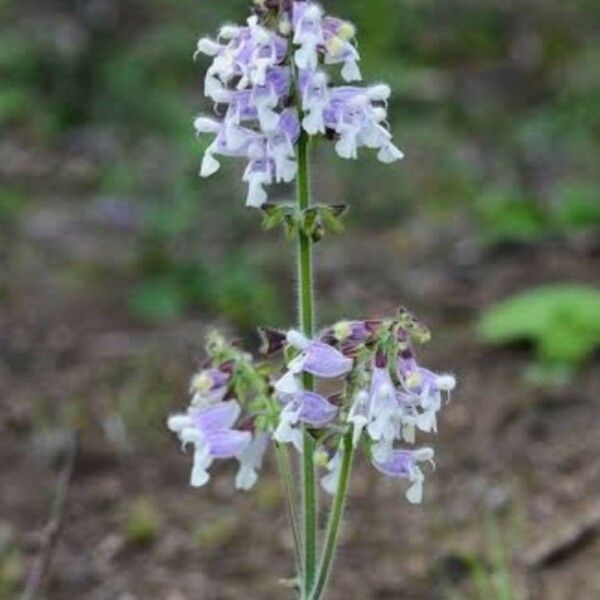
Known as the Grey Sage or Airy Sage, this high-altitude beauty hails from the misty mountain meadows of Southwest China. Its species name, aerea, translates to "airy" or "belonging to the sky," a nod to its native home in the Himalayan foothills where it breathes the thin, cool mountain air. With its silver-toned, velvety foliage and ethereal lilac blooms, it looks less like a common garden herb and more like a soft cloud that has settled into the soil.
🔍 How to Identify
- ☁️ Velvety Foliage: The leaves are large, broad, and heart-shaped, covered in a dense layer of fine white hairs that give the plant a dusty, silvery-green appearance.
- 🟣 Spotted Blooms: It produces elegant spikes of pale lavender or sky-blue flowers. If you look closely at the lower "lip" of the flower, you’ll often see intricate dark purple spots or "nectar guides."
- 🌱 Growth Habit: It grows in a neat basal rosette, meaning the leaves hug the ground closely while the flowering stems reach upward like delicate antennas.
🏡 In Your Garden
- 🏔️ Mountain Roots: Because it originates from rocky slopes, this Salvia demands exceptional drainage. It hates "wet feet" during the winter, so it is best planted in gritty soil or raised beds where water can move away from the roots quickly.
- 🌬️ Climate Preference: Unlike its Mediterranean cousins, Salvia aerea prefers cooler summers. In regions with intense, humid heat, the fuzzy leaves can trap moisture, so ensure it has plenty of air circulation to prevent crown rot.
⚠️ Safety & Toxicity
- ✅ Safe for All: Salvia aerea is generally considered non-toxic to humans, cats, and dogs.
- 👅 Texture Warning: While safe, the "hairy" texture of the leaves is usually unappealing to curious pets, making it a naturally deer-and-rabbit-resistant choice for your landscape.
✨ Fun Fact
This plant is a true "alpine" survivor; in the wild, it can be found growing at altitudes of up to 10,800 feet (3,300 meters). This is higher than many clouds, perfectly earning it the name "Airy Sage."

Detailed Care Instructions








