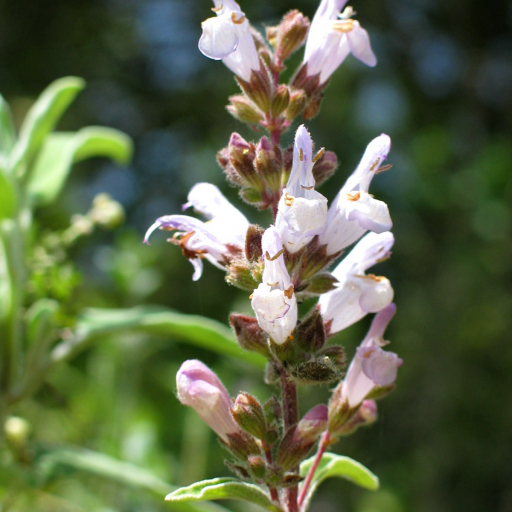
Plant Overview
Known as the Greek Sage, this hardy perennial is a cornerstone of Mediterranean landscape and culture. Often confused with its cousin, the common garden sage, Salvia fruticosa is distinguished by its more robust growth and a history that stretches back to the frescoes of Knossos in ancient Crete. It is the source of the famous Greek herbal tea "Faskomilo," loved for its pungent, earthy aroma and silver-mist appearance.
🔍 How to Identify
- 🍃 Trilobed Leaves: Look closely at the base of the larger leaves; you will often find two smaller leaflets flanking the main leaf, giving it a unique "three-lobed" appearance.
- 🌫️ Velvety Texture: The foliage is draped in a dense coat of fine white hairs, giving the plant a soft, woolly feel and a distinct silvery-green color.
- 🌸 Whorled Flowers: In late spring, it produces elegant, upright spikes holding whorls of tubular flowers that range from pale lavender to delicate pink.
🏡 In Your Garden
- ☀️ The Sun-Worshiper: This plant is a true "xeriscape" champion. It hates "wet feet" and will thrive in rocky, poor-quality soil where other plants might wither, provided it gets a full day of Mediterranean sun.
- ✂️ Woody Management: As a shrubby species, it can become leggy and sparse over time. Pruning it back by a third after the flowering season helps maintain a compact, bushy shape and prevents the center from becoming overly woody.
⚠️ Safety & Toxicity
- 🐾 Pet Friendly: Salvia fruticosa is generally considered non-toxic to dogs, cats, and horses, making it a safe addition to a sensory garden.
- 🍵 Potency Note: While edible and used in teas, Greek Sage has a higher camphor content than common sage. It is much more pungent, so a little goes a long way in cooking or brewing!
✨ Fun Fact
🏺 Ancient Art: This specific sage is so iconic to the Mediterranean that it was depicted in Minoan wall paintings dating back to 1400 BCE. It is one of the oldest recorded medicinal plants in human history!

Detailed Care Instructions
To grow Salvia Fruticosa, also known as Greek sage or firecracker sage, you can follow these steps:
- Choose a suitable location: Salvia Fruticosa prefers full sun to part shade, so select a spot in your garden or balcony that receives at least 6-8 hours of sunlight daily.
- Soil preparation: Ensure that the soil is well-draining and fertile. If your soil is heavy, clayey, or compacted, consider adding organic matter like compost or well-rotted manure to improve drainage and nutrient content.
- Planting: You can grow Salvia Fruticosa from seeds or purchase young plants from a nursery. If starting from seed, sow them in a seed tray or small pots filled with seed-starting mix. Press the seeds gently into the soil surface and lightly water. Once the seedlings are a few inches tall, you can transplant them to their final location, ensuring they are spaced about 12-18 inches apart to allow for growth.
- Watering: Salvia Fruticosa prefers moderate watering, so aim for an even and consistent moisture level. It is important not to overwater as it can lead to root rot. Allow the top few inches of soil to dry out between waterings.
- Fertilizing: Feed your plants with a balanced organic fertilizer, such as a slow-release granular formula, in spring and early summer. Repeat the application following the instructions on the fertilizer package.
- Pruning: Prune Salvia Fruticosa regularly to promote bushy growth and to remove any dead or damaged branches. Pinch the tips of the branches to encourage branching and more flowers.
- Mulching: Apply a layer of organic mulch around the base of the plants, such as wood chips or straw. This helps to conserve moisture, suppress weeds, and regulate soil temperature.
- Pests and diseases: Salvia Fruticosa is generally not prone to major pest or disease issues. However, keep an eye out for aphids, spider mites, or powdery mildew. If necessary, treat these issues with appropriate organic pest control methods.
- Propagation: You can propagate Salvia Fruticosa through stem cuttings. Take cuttings in spring or early summer, and root them in a well-draining soil mix. Provide bottom heat or use a propagator to aid rooting.
Remember to check the specific needs and recommendations for Salvia Fruticosa in your particular region, as growing conditions can vary.

Place in a bright room that is sun drenched almost all day. Or directly in a south-facing window.

Salvia Fruticosa is a shrub-like plant that requires good drainage in the soil to grow properly. It is important to water Salvia Fruticosa on a regular basis, but not too frequently, as this can lead to root rot.
When watering Salvia Fruticosa, it is best to water deeply, allowing the water to soak deep into the soil. However, it is also important to not allow the soil to become waterlogged, as this can cause damage to the roots.
To water Salvia Fruticosa, pour water onto the soil around the plant's base, taking care to avoid getting water on the leaves or stems. Water only when the soil is dry to the touch, and avoid overwatering. During hot and dry weather conditions, you may need to water Salvia Fruticosa more frequently.
It is also important to make sure that the soil around the plant has good drainage, as this will prevent water from accumulating and causing root rot. Consider adding gravel or sand to the soil to ensure good drainage.
Overall, watering Salvia Fruticosa requires careful attention to the soil moisture levels, as well as good drainage to prevent root damage.
- Choose a balanced and slow-release granular fertilizer.
- Apply the fertilizer in the spring before new growth appears.
- Spread the fertilizer evenly around the base of the plant.
- Water the plant lightly after fertilizing.
- Avoid over-fertilizing, as this can lead to excessive growth or damage to the plant.
- Monitor the plant's growth and adjust fertilization as needed.
Salvia Fruticosa prefers to grow in well-draining soils with a pH of 6.0 to 8.0. It thrives in soils that are rich in organic matter and have good drainage to prevent waterlogging. Sandy, loamy soils that are well-aerated are also suitable for this plant. Heavy clay soils must be amended with sand and organic matter to improve drainage before planting Salvia Fruticosa. Additionally, this plant grows best in soils that retain some moisture but do not become waterlogged, so the soil must be moist but not saturated. Generally, a soil mix that contains a mixture of sand, loam, and compost works well with Salvia Fruticosa.
Salvia Fruticosa plant can be propagated by taking stem cuttings in the spring or summer. Choose healthy stems that are 3-6 inches long and free from disease or damage. Remove the lower leaves from the cutting and dip the cut end in rooting hormone powder. Plant the cutting in a pot filled with well-draining soil and keep it moist. Place the pot in a warm, bright location, out of direct sunlight. In a few weeks, new roots should form, and the cutting will begin to grow. Once the new plant is well established, it can be transplanted into its permanent location.








