Plant Overview
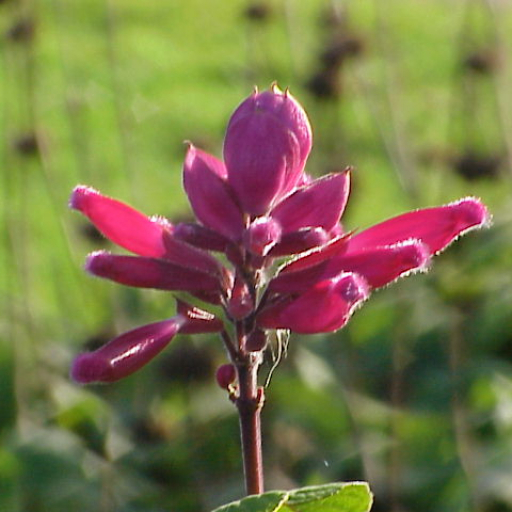
Known as the Roseleaf Sage, this Mexican beauty is a favorite for its dramatic, oversized pink blooms. It gets its botanical name from the rose-colored "bracts" (specialized leaves) that wrap around the flower buds like protective gift wrap before they unfurl. In a late-summer garden, it acts as a majestic focal point that practically hums with activity from visiting pollinators.
🔍 How to Identify
- 🌸 The "Rose" Bracts: Before the flowers open, the tips of the stems feature large, rounded, pinkish-maroon knobs that look like tiny cabbages or rosebuds.
- 🍃 Heart-Shaped Foliage: The leaves are bright green, shaped like wide hearts (ovate), and often have a velvety texture with subtle veining.
- 📏 Stately Stature: This is a tall, bushy perennial that can easily reach 5 to 6 feet in height, featuring arching, woody stems that often have a reddish tint.
🏡 In Your Garden
- 🌬️ Wind Protection: Because it grows so tall and fast, its stems can be surprisingly brittle. It is best planted against a wall or fence to prevent summer storms or heavy winds from snapping the branches.
- ✂️ The Spring Cut: This Salvia blooms most vigorously on new growth. Cutting the plant back significantly in early spring (after the last frost) encourages a bushier habit and prevents it from becoming too "leggy."
- 🦋 Pollinator Magnet: If you want to see hummingbirds or butterflies, this is the plant to choose. The tubular shape of the magenta flowers is perfectly evolved for long beaks and tongues.
⚠️ Safety & Toxicity
- ✅ Status: Generally Non-Toxic.
- 🐾 Details: Salvia involucrata is not known to be poisonous to cats, dogs, or horses. While it isn't a culinary herb like its cousin, Common Sage, it is considered safe for family gardens where kids and pets play.
✨ Fun Fact
In its native Mexican highlands, this plant serves as a vital "refueling station" for migrating hummingbirds. The birds are specifically attracted to the high-contrast magenta color, which stands out brilliantly against the green forest canopy.

Detailed Care Instructions
To grow Salvia involucrata (also known as Roseleaf Sage), follow these steps:
- Determine your climate: Salvia involucrata is native to Mexico and requires warm temperatures. It thrives in USDA hardiness zones 8-11, where temperatures stay above freezing.
- Select a suitable location: Choose a spot in your garden that receives at least 6-8 hours of direct sunlight each day. It should have well-draining soil, as the plant does not tolerate waterlogged conditions.
- Prepare the soil: Prior to planting, amend the soil with organic matter, such as compost, to improve its fertility and drainage. Mix it well into the existing soil.
- Planting: Dig a hole that is slightly larger than the root ball of the Salvia involucrata. Place the plant in the hole, ensuring that the crown (where the stems meet the roots) is level with or slightly above the soil surface. Backfill the hole with soil, gently firming it around the plant.
- Watering: Water the plant immediately after planting, saturating the soil. Salvia involucrata prefers regular watering, but it should be done sparingly, allowing the soil to dry out slightly between waterings. Overwatering can lead to root rot.
- Mulching: Apply a layer of organic mulch, such as wood chips or straw, around the base of the plant. Mulching helps retain moisture, suppress weeds, and regulate soil temperature.
- Fertilizing: Salvia involucrata is not a heavy feeder, but you can apply a balanced, slow-release fertilizer once or twice a year, following the manufacturer's instructions. Alternatively, you can feed it with a water-soluble fertilizer every two to four weeks during the growing season.
- Pruning: Prune the plant regularly to remove dead or diseased stems and promote bushiness. Cut back the plant by up to one-third in late winter or early spring to stimulate new growth.
- Pest and disease control: Salvia involucrata is generally pest and disease resistant. However, you should watch out for common garden pests like aphids, spider mites, or whiteflies. Regularly inspect the plants and take necessary steps, such as handpicking pests or using organic insecticidal soap if needed.
- Winter protection: If you live in a colder climate outside the recommended hardiness zones, provide winter protection by mulching heavily around the base of the plant or moving it indoors.
By following these steps, you should be able to successfully grow Salvia involucrata and enjoy its beautiful rose-colored flowers.

Place in a bright room that is sun drenched almost all day. Or directly in a south-facing window.

Salvia Involucrata is a perennial plant that requires a moderate amount of water to thrive. When watering this plant, it is important to ensure that the soil is moist but not waterlogged. To achieve this, you should water the plant deeply but infrequently, allowing the soil to dry out slightly between waterings.
To water Salvia Involucrata, you should first check the soil moisture level by sticking your finger about an inch into the soil. If it feels dry to the touch, your plant needs water. When watering, you should aim to provide enough moisture to penetrate the root zone. You can do this by watering for about 30 seconds to 1 minute depending on the size of your plant.
You may also want to consider watering early in the morning or late in the afternoon. This will help the plant avoid water loss through evaporation and ensure that the water has time to penetrate the soil before the sun evaporates it.
Finally, you should be careful not to overwater the plant. This can lead to root rot and other issues. If you feel that you may be overwatering your Salvia Involucrata, you can reduce the frequency of watering or adjust the amount of water you provide at each watering.
To properly fertilize this particular plant, you will need to use a balanced, slow-release fertilizer that is rich in nitrogen. Apply the fertilizer at a rate of one tablespoon per square foot of the plant's root area. Be sure to water the plant thoroughly after applying the fertilizer to ensure that it is properly absorbed into the soil. Fertilize the plant every four weeks throughout its growing season, which typically runs from early spring to late fall. Avoid over-fertilizing the plant, as this can lead to nutrient burn and damage to the root system.
Salvia involucrata is a perennial plant that requires a well-draining soil mix that retains enough moisture to support its growth. It can thrive in a range of soil types, but prefers loamy soils that are rich in organic matter. The soil pH should be slightly acidic, with a pH range of 6.0-7.5. It is also important to ensure that the soil has good aeration and is not too compacted, as this can hinder the plant's root development and growth. Additionally, it is recommended to mix in a layer of compost or other organic matter before planting to provide nutrients and improve soil quality. Overall, a well-draining, nutrient-rich soil mix with good aeration and moderate moisture retention is recommended for Salvia involucrata.
The process of propagating this plant involves taking cuttings from the mother plant and placing them in soil or water until they develop roots. To do this, select healthy branches from the plant that are at least six inches long and make a clean cut with a sharp knife or pruning shears just below a node. Remove the lower leaves on the stem and dip the cutting in rooting hormone powder. Plant the cutting in a pot containing a mixture of potting soil and perlite or sand, and water well. Keep the soil moist and place the pot in a warm, bright location but out of direct sunlight. Alternatively, place the cuttings in a vase filled with water and change the water every few days to prevent stagnation. Once the roots have developed, the new plants can be transplanted into larger pots or into the garden.








