Plant Overview
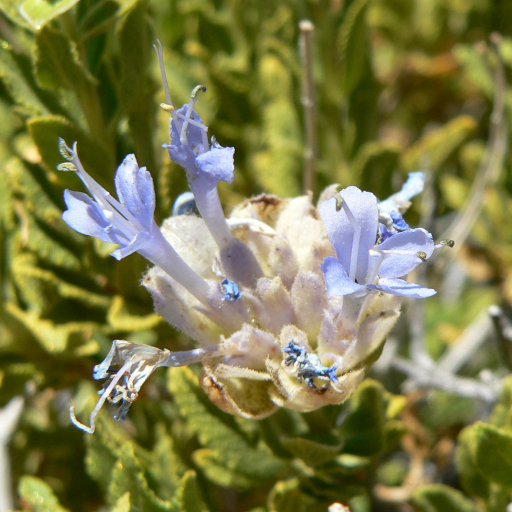
Known as the Mojave Sage, this compact shrub is a resilient desert native that thrives where other plants wither. Often found clinging to rocky slopes and dry washes in the Mojave and Sonoran deserts, it acts as a vibrant blue jewel against the sun-bleached landscape. It is a favorite for "xeriscaping" enthusiasts who want a plant that marries rugged toughness with ethereal beauty.
🔍 How to Identify
- 🍃 Textured Leaves: The foliage consists of small, rounded, silver-green leaves with a pebbled (rugose) texture. These fine hairs help the plant reflect intense desert sunlight and retain moisture.
- 🪻 Vibrant Blooms: The flowers are a striking shade of cobalt or deep lavender-blue, emerging in tight, rounded "pom-pom" clusters at the ends of the stems.
- 🛡️ Protective Bracts: Each flower cluster is cradled by colorful, papery bracts that range from green to purplish-tan, providing structural beauty even after the petals fall.
🏡 In Your Garden
- 🏜️ Drainage is Key: Because it evolved in rocky canyons and gravelly washes, this sage will quickly rot in heavy, clay-rich soil. It requires exceptionally well-draining soil and a "tough love" approach—too much water is often more dangerous than too little.
- 🐦 Pollinator Magnet: In a garden setting, it serves as a vital pit-stop for nature. Its nectar-rich tubular flowers are specifically shaped to attract hummingbirds and native bees, making it a cornerstone for a wildlife-friendly backyard.
⚠️ Safety & Toxicity
- ✅ Safe Status: Salvia mohavensis is considered non-toxic to humans, cats, and dogs.
- 🌿 Strong Aromatics: Like most members of the Mint family, the leaves contain aromatic oils. While safe, the pungent "sagey" scent is usually enough to discourage curious pets or deer from taking more than a single exploratory nibble.
✨ Fun Fact
Despite its delicate-looking flowers, Mojave Sage is a true minimalist; it can survive on less than 6 inches of rain per year by entering a semi-dormant state during the hottest summer months to conserve its energy for the next bloom.

Detailed Care Instructions
To grow Salvia Mohavensis, also known as the Mojave sage, follow these steps:
- Climate: Ensure that you live in a suitable climate for this plant. Salvia Mohavensis is native to the Mojave Desert and requires a warm and dry environment. It thrives in USDA hardiness zones 8-11.
- Soil: Provide well-draining soil for the plant. Sandy or loamy soil is ideal for maintaining the right moisture levels, as standing water can cause root rot.
- Sunlight: Salvia Mohavensis requires full sun exposure. Ensure that the plant receives at least 6-8 hours of direct sunlight each day.
- Watering: This plant is drought-tolerant, so water sparingly. Allow the soil to dry out between waterings to avoid overwatering. Once established, the plant can survive with little to no supplemental watering.
- Planting: Either sow seeds or plant nursery-bought Salvia Mohavensis plants. If sowing seeds, sow them in well-prepared soil in early spring. Plant seedlings or nursery-bought plants at the same depth they were growing in their containers.
- Spacing: Space the plants about 2-3 feet apart to ensure good airflow and prevent overcrowding.
- Mulching: Apply a layer of organic mulch around the base of the plant to retain moisture and suppress weed growth. Avoid piling mulch against the stem to prevent rotting.
- Fertilizer: Salvia Mohavensis doesn't require much fertilizer. Apply a balanced, slow-release fertilizer in spring, following the package instructions. You can also incorporate compost into the soil before planting to provide natural nutrients.
- Pruning: Prune the plant in late winter or early spring to remove any dead or damaged growth. This will encourage new growth and maintain a compact shape.
- Pest and disease control: Salvia Mohavensis is generally resistant to pests and diseases. However, keep an eye out for common issues such as aphids, spider mites, or powdery mildew. If necessary, treat with organic pest control methods.
Remember to research any specific care requirements for Salvia Mohavensis to ensure the best results in your particular climate and growing conditions.

Place in a bright room that is sun drenched almost all day. Or directly in a south-facing window.

1. Identify the plant: Before watering, make sure you have correctly identified the plant as Salvia Mohavensis. This will help you understand its watering needs.
2. Check the soil: Before watering, check the soil moisture. Stick your finger about an inch into the soil. If it feels dry, it's time to water.
3. Watering frequency: Salvia Mohavensis plants prefer dry soil and do not need frequent watering. Water only when the soil is completely dry.
4. Amount of water: When watering, make sure to give enough water to saturate the soil. However, do not overwater as it may lead to root rot. A deep watering once a week is sufficient.
5. Watering technique: To prevent water from running off and to ensure even watering, water the base of the plant and not the leaves. You can also use a watering can or drip irrigation system.
6. Optimal time to water: The best time to water Salvia Mohavensis plants is in the early morning or early evening when the temperatures are cooler.
7. Monitor the plant: Keep an eye on the plant for signs of over or under watering. If the leaves start yellowing, it may be a sign of overwatering. On the other hand, if the plant wilts or the leaves start curling, it may need more water.
8. Adjust watering in extreme weather: During extreme weather conditions such as heatwaves or droughts, you may need to adjust the watering frequency to keep the soil moist.
To fertilize this plant, use a balanced fertilizer with equal amounts of nitrogen, phosphorus and potassium. Apply the fertilizer according to manufacturer instructions, typically every 2-3 weeks during the growing season. Avoid over-fertilizing, as this can lead to excessive growth or damage to the plant. Always water the plant thoroughly before and after fertilizing, and avoid fertilizing during periods of drought or extreme heat. Use a slow-release fertilizer for longer-lasting effects.
When growing Salvia Mohavensis, it's important to use a specific type of soil that is well-drained and has good air circulation. The ideal soil should not be too heavy or too compact, and should be able to retain moisture without becoming waterlogged. A good mix would consist of sandy loam soil mixed with perlite or coarse sand to make it more porous and allow for proper drainage. Organic matter such as compost or leaf mold can also be added to enrich the soil and provide nutrients to the plant. When planting Salvia Mohavensis, the soil should be moistened a day prior to planting and should be planted at a depth of around 1-2 inches below the soil surface. Regular watering is recommended and fertilization is necessary to maintain healthy growth of the plant.
To propagate this plant, you will need to take stem cuttings from a mature plant. The best time to take cuttings is in the spring when the plant is actively growing. Use sharp, clean pruning shears to cut a stem that is about 4-6 inches long. Make the cut just below a node, which is where a leaf attaches to the stem.
Remove the bottom leaves from the cutting, leaving only a few at the top. Dip the cut end of the stem in rooting hormone powder and gently tap off any excess. Then, plant the cutting in a pot containing a well-draining soil mix.
Water the cutting enough to moisten the soil, but be careful not to overwater it. Place the pot in a bright, warm location with indirect sunlight. Mist the cutting with water regularly to keep it hydrated.
Within a few weeks, you should see new growth begin to emerge from the top of the cutting. This is a sign that roots have formed and the cutting is taking hold. It may take several months for the cutting to establish a strong root system, so be patient and continue to care for it as it grows.








