Plant Overview
Known as the "Herb of Immortality" by the ancients, Common Sage (Salvia officinalis) has journeyed from the rocky Mediterranean hillsides to kitchen gardens worldwide. Its name derives from the Latin word salvere, meaning "to heal," reflecting a history where it was valued more as a cure-all medicine than a seasoning for Sunday roasts.
🔍 How to Identify
- 🌿 Velvety Foliage: The leaves are oblong and thick, featuring a unique "pebbled" or rugose texture that feels soft and fuzzy to the touch.
- 🎨 Silvery Hue: The foliage isn't just green; it has a distinct grayish-silver cast caused by tiny fine hairs that help the plant retain moisture.
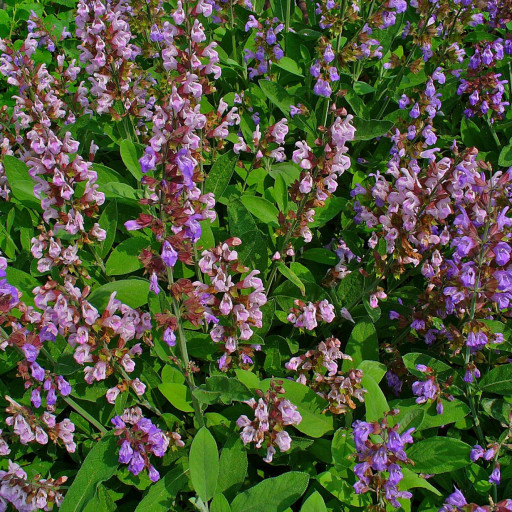
- 💜 Summer Spires: In late spring and summer, the plant produces upright spikes of two-lipped flowers, usually in shades of lavender, violet, or occasionally white.
🏡 In Your Garden
- ☀️ The Sun-Seeker: Sage is a Mediterranean native that thrives on neglect but demands sunshine. It produces its most fragrant oils when baked in the sun, which is why "leggy" or stretched plants usually mean they are light-starved.
- ✂️ The Pruning Puzzle: As sage ages, it becomes "woody" at the base. To keep it from becoming a tangled mess, prune it back in early spring, but never cut into the old, leafless wood, as it likely won't regrow from those points.
- 💧 Dry Feet Only: This plant hates "wet feet" more than anything else. If your soil is heavy clay, consider growing sage in a raised bed or a terracotta pot to ensure the roots stay dry and oxygenated.
⚠️ Safety & Toxicity
- ✅ Safe for All: Common Sage is non-toxic to humans, dogs, cats, and horses. It is widely used in cooking and herbal teas.
- 🤰 Moderation is Key: While safe as a culinary herb, concentrated sage essential oils contain thujone, which should be avoided in high medicinal doses by pregnant individuals or those with certain medical conditions.
✨ Fun Fact
In the Middle Ages, there was a popular proverb: "Cur moriatur homo, cui salvia crescit in horto?" which translates to, "Why should a man die while sage grows in his garden?" It was believed that a flourishing sage plant reflected the prosperity—and the literal health—of the household.

Detailed Care Instructions
| Soil Ph | 6-7 |
| Humidity | Normal |
| Lighting | Full Sun |
| Soil Type | Loamy, Sandy, Well-Drained |
| Bloom Time | Mid-Summer |
| Difficulty | Medium |
| Plant Type | Herb, Perennial |
| Hibernation | Cold Period |
| Mature Size | 2–2.5 Ft. Tall, 2–3 Ft. Wide |
| Native Area | Mediterranean |
| Temperature | 15°C - 21°C |
| Sun Exposure | Full Sun |
| Hardiness Zones | 4-8 |
To grow Salvia officinalis (common sage) successfully, follow these steps:
- Select a sunny location: Choose a spot with at least 6 to 8 hours of direct sunlight per day. Sage prefers full sun but can tolerate partial shade.
- Prepare the soil: Sage thrives in well-drained soil. Amend the soil by adding organic matter like compost or aged manure to improve moisture retention and drainage. Ensure the soil pH is between 6.0 and 7.0.
- Planting: Sage can be grown from seeds, cuttings, or nursery-grown plants. If starting from seeds, sow them directly in the garden after the last frost date or start indoors 6-8 weeks before the last frost. Plant the seeds 1/4 inch deep and keep them moist until germination occurs. Space the plants 18-24 inches apart.
- Watering: Sage is drought-tolerant once it is established. During the first year, provide regular watering until the plant develops a deep root system. Water deeply once a week during dry spells, but allow the soil to dry out between watering to prevent root rot.
- Mulching: Apply a layer of organic mulch around the plants to help retain moisture, suppress weeds, and regulate soil temperature.
- Pruning: Regularly trim or pinch back the sage plant to encourage bushier growth and prevent it from becoming leggy. It is best to prune in early spring before new growth starts.
- Harvesting: Wait until the sage plant reaches a height of about 6-8 inches before harvesting the leaves. Pick the outer leaves regularly, avoiding cutting into the woody stems. Harvesting encourages new growth. For the best flavor, harvest the leaves before the plant flowers.
- Pests and diseases: Sage is relatively resistant to pests and diseases. However, keep an eye out for common issues such as aphids, spider mites, and powdery mildew. If necessary, treat pests or diseases using organic methods such as insecticidal soap or neem oil.
By following these steps, you should be able to successfully grow Salvia officinalis.

Place in a bright room that is sun drenched almost all day. Or directly in a south-facing window.

To properly water this plant, the soil should be kept evenly moist but not soaked. To achieve this, water the plant deeply and thoroughly when the top inch of soil is dry to the touch. Be sure to water at the base of the plant rather than from above to prevent wetting the foliage, which can lead to disease. Avoid allowing the plant to sit in standing water, as this can also cause root rot. During periods of drought or extreme heat, you may need to water more frequently, but always check the soil moisture level before watering to prevent overwatering.
For best results, fertilize this plant in the early spring before it starts actively growing. Use a balanced fertilizer, with equal amounts of nitrogen, phosphorus, and potassium. Apply the fertilizer lightly, according to the instructions on the package, and water well after. In general, avoid over-fertilizing this plant, as it can lead to poor growth and pest problems.
The ideal soil for Salvia Officinalis should have a well-draining texture and be rich in organic matter to support healthy growth and development of the plant. It should have a pH level between 6.0 and 7.0 and provide good aeration to the roots. This type of soil will allow for proper water retention without causing the plant to become waterlogged. Additionally, it should be free of any harmful chemicals or contaminants that could harm the plant and should be regularly fertilized to provide essential nutrients.
Salvia Officinalis is a perennial herb that can be easily propagated through softwood cuttings. The best time to take cuttings is in the early morning, when the plant is well-hydrated. Select a healthy stem that has not yet flowered and is about 3-4 inches long.
Using clean, sharp pruning shears, cut the stem at an angle, just below a leaf node. Remove the lower leaves and any flowers or buds, leaving only a few leaves at the top of the stem.
Fill a small pot with moist potting soil and make a hole in the center with a pencil or your finger. Dip the cut end of the stem in rooting hormone powder and shake off any excess. Place the stem in the hole and gently press soil around it to hold it in place. Water the cutting thoroughly and cover the pot with a plastic bag to create a mini greenhouse.
Place the pot in a bright, but shaded area. Keep the soil moist but not waterlogged, and mist the cutting every few days to maintain humidity. After about four to six weeks, roots should have formed. You can test this by gently tugging on the stem. If you feel resistance, it means that roots have formed and the plant has taken root.
Once the cutting has rooted successfully, you can remove the plastic bag and gradually expose the plant to more sunlight. After a few weeks, you can transplant the young plant into a larger pot or outside in the garden.
Common pests of the common sage include Spider mites, thrips, whiteflies. Make a habit of checking your common sage frequently for pests so that any infestations can be caught and managed early.








