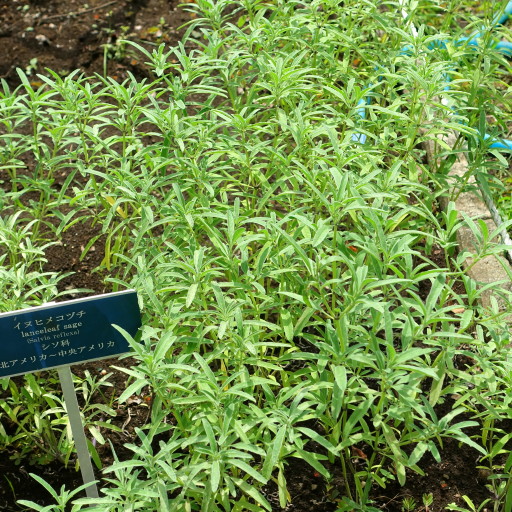
Plant Overview
Known as "Mintweed" in many parts of the world, Salvia reflexa is a hardy traveler from North America that has made a name for itself as a tough, opportunistic survivor. While it shares the signature square stems of the mint family, it lacks the pleasant culinary charm of its garden-variety cousins. Often found in disturbed soils or pastures, this sage is a master of adaptation, though it is frequently viewed more as a persistent intruder than a welcome guest.
🔍 How to Identify
- 🌿 Lance-shaped Leaves: The leaves are narrow, grayish-green, and have slightly serrated edges, giving them a distinct "lance-like" or "narrow-leaf" appearance.
- 🔲 Square Stems: True to the Lamiaceae family, its stems are distinctly four-sided and are often covered in fine, downward-pointing silver hairs.
- 🪻 Tiny Blue Flowers: The flowers are quite small, pale blue to violet, and emerge in sparse clusters at the tips of the branches during the summer.
- ↩️ Reflexed Calyx: After the flowers bloom, the calyx (the green base) often points downwards or "reflexes," which is exactly how the plant earned its scientific name.
🏡 In Your Garden
- 🌱 The Disturbance Lover: This plant thrives in disturbed, compacted, or overgrazed soil. In a garden setting, it often appears as a "volunteer" in spots where the soil has been turned over or where other plants are struggling to grow.
- 💧 Drought Specialist: Its silver-toned, hairy foliage is a clever survival tactic to reflect harsh sunlight and retain moisture, allowing it to stay green even when the ground is bone-dry.
- 📦 Aggressive Seeder: It is a prolific producer of seeds that can remain dormant for years. If you find one in your garden, it’s best to remove it before it flowers, or you’ll likely have a colony by the following season.
⚠️ Safety & Toxicity
- 🚫 Livestock Warning: Salvia reflexa is a known nitrate accumulator. While it might look like a harmless herb, it can be deadly to cattle and sheep if consumed in large quantities, especially when the plant is wilted.
- 🐾 Pets & Kids: Though it is not typically considered a high risk for household pets, its high nitrate potential means it should never be ingested. It is strictly an ornamental or wild plant and has no culinary use.
✨ Fun Fact
- ✨ The Minty Imposter: Despite its common name "Mintweed" and its faint minty aroma when crushed, this plant is a member of the Sage genus. In Australia, it became such a problem for farmers in the early 1900s that it is still legally classified as a noxious weed in several regions today!

Detailed Care Instructions
To grow Salvia reflexa, also known as lance-leaved sage or wild sage, follow these steps:
- Seed selection: Purchase Salvia reflexa seeds from a reputable supplier. Ensure that the seeds are fresh and of good quality.
- Soil preparation: Choose a well-draining soil mix that is rich in organic matter. Salvia reflexa prefers slightly acidic to neutral soil pH. If needed, amend the soil with compost or peat moss to improve drainage and fertility.
- Sowing: Start sowing the seeds indoors, about 6-8 weeks before the last expected frost date in your area. Place a few seeds in each seed tray or pot, ensuring they are covered with a thin layer of soil. Mist the soil surface lightly to maintain proper moisture levels.
- Light and temperature requirements: Salvia reflexa thrives in full sun to partial shade. Provide at least 6-8 hours of direct sunlight daily. Maintain a temperature range of 60-75°F (15-24°C) for optimal growth.
- Watering: Keep the soil consistently moist but not waterlogged. Water the plants thoroughly whenever the top inch of soil feels dry. Avoid overwatering, as it can lead to root rot.
- Transplanting: When the seedlings have developed several sets of leaves and are about 2-3 inches tall, they can be transplanted into larger pots or the garden. Space the plants about 12-18 inches apart to allow proper airflow and growth.
- Fertilization: Feed the plants with a balanced, water-soluble fertilizer once a month during the growing season. Follow the package instructions for dosage and application.
- Pruning: Trim back the plants regularly to promote bushier growth and prevent them from getting leggy. Pinch off the stem tips or prune the plants by cutting above a leaf node to encourage branching.
- Pest and disease control: Salvia reflexa is generally resistant to pests and diseases. However, keep an eye out for common garden pests like aphids, spider mites, or whiteflies. If necessary, treat with insecticidal soap or neem oil according to the instructions.
- Harvesting: The leaves of Salvia reflexa can be harvested once the plant is mature, usually after 90-120 days from sowing. Harvest in the morning when the leaves contain the highest amount of essential oils. Use the leaves fresh or dry them for later use in teas or culinary applications.
By following these steps, you should be able to successfully grow Salvia reflexa and enjoy its attractive foliage and aromatic leaves.

Place in a bright room that is sun drenched almost all day. Or directly in a south-facing window.

To care for this plant, it is important to water it regularly and deeply. Water should be applied at the base of the plant to avoid getting the foliage wet. It is best to water in the morning or late afternoon, avoiding the hottest part of the day, to allow the water to soak into the soil before evaporating. The frequency of watering will depend on the climate and season, but it is important not to let the soil completely dry out between watering. Overwatering can cause root rot and other fungal diseases, so it is important to ensure the soil has good drainage and to avoid standing water. During the growing season, adding a balanced, water-soluble fertilizer every two weeks can also help promote healthy growth.
For best results, fertilize this plant using a balanced, slow-release fertilizer during its growing season. Apply the fertilizer around the base of the plant, being careful not to get it on the leaves or flowers. Water the plant thoroughly after fertilizing to help move the nutrients into the soil. Avoid over-fertilizing, as this can lead to excessive growth and weakened branches. Instead, aim for a light application of fertilizer once every two to three months.
The ideal soil for Salvia Reflexa should be well-draining and a mix of organic and inorganic materials. It should have a slightly acidic to neutral pH level of around 6.5 to 7.5. The soil type should be sandy or loamy and should not retain too much moisture as the plant does not like being in waterlogged soil. It is recommended to add compost or well-rotted manure to the soil to enrich it with nutrients such as nitrogen, phosphorus, and potassium. It is also essential to ensure the soil has good aeration and is not compacted, which can limit the plant's root growth and development.
Salvia Reflexa plant can be propagated through various methods such as seeds, cuttings, and division.
- Seed Propagation: Collect the seeds from the plant and sow them in a well-drained soil medium. Keep the soil moist and maintain the required temperature of around 20-25°C. The seeds will germinate within 2-3 weeks. Once the seedlings are large enough to handle, transplant them into individual pots or the garden.
- Cutting Propagation: Take cuttings of around 10-15 cm length from healthy stems of the plant. Remove the lower leaves from the stem and dip the cut end in rooting hormone powder. Pot the cuttings in a well-drained soil mix and place them under bright, indirect light. Keep the soil moist and maintain the temperature around 18-22°C. The cuttings will develop roots within 3-4 weeks. Once the roots are established, transplant the cuttings into individual pots or the garden.
- Division Propagation: Dig up the plant in early spring or late summer when it becomes too large. Divide the plant into small sections with the help of a garden fork or knife. Each section should have roots and new growth. Pot the divided sections in a well-drained soil mix and water thoroughly. Keep the pots in a shaded area and maintain the temperature around 18-22°C. The divided sections will establish new roots within a few weeks. Once the roots are established, transplant them into individual pots or the garden.
Proper care and maintenance of the propagated Salvia Reflexa plant, such as regular watering, fertilization, pruning, and pest control, will ensure healthy growth and an abundant harvest.








