Plant Overview
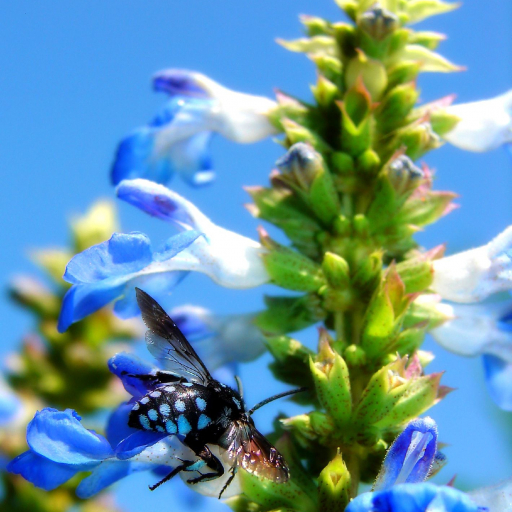
Known as the "Bog Sage," this South American beauty is a showstopper prized for its rare, ethereal sky-blue blossoms. While many members of the Salvia family thrive in bone-dry heat, this species is the "water baby" of the group, originally hailing from the marshlands of Brazil and Argentina. It adds a sense of movement and height to any landscape, swaying gracefully on slender stems like a sea of blue mist.
🔍 How to Identify
- 🌸 Heavenly Blooms: Small, two-lipped flowers of an intense, clear azure blue, often featuring a distinct white "bee-landing strip" on the lower petal.
- 🌿 Serrated Foliage: Bright green, lance-shaped leaves with finely "toothed" edges that release a mild, herbal scent when bruised.
- 📏 Airy Stature: Tall, wiry, and somewhat square stems that can reach up to 5 feet, giving the plant a see-through, architectural quality.
🏡 In Your Garden
- 💧 The Moisture Exception: True to its name, this plant loves "wet feet." It is one of the few sages that will thrive in heavy clay or damp spots where other perennials might struggle with root rot.
- 🏃 A Social Wanderer: It spreads via underground runners (rhizomes). While it isn't "invasive" in the traditional sense, it is a vigorous grower that likes to colonize its space, making it excellent for filling large gaps quickly.
- 🦋 Pollinator Party: Because it blooms late into the autumn, it serves as a critical "fuel station" for migrating butterflies and hummingbirds seeking nectar.
⚠️ Safety & Toxicity
- ✅ Non-Toxic: Salvia uliginosa is generally considered safe and non-toxic for cats, dogs, and horses.
- 🧤 Garden Hygiene: While safe, the stems are slightly sticky and hairy. Sensitive individuals might find the texture a bit irritating to the skin during heavy pruning, so gloves are a good idea.
✨ Fun Fact
- 🧬 Latin Roots: The species name uliginosa literally translates to "of the marshes" or "soaking wet," serving as a permanent botanical reminder that this plant should never be allowed to completely dry out!

Detailed Care Instructions
To grow Salvia Uliginosa, also known as Bog Sage or Golden Sage, follow these steps:
- Climate and sunlight requirements: Salvia Uliginosa prefers full sun to partial shade and thrives in a climate with mild summers and cold winters. It is native to regions with cooler temperatures, such as South America.
- Soil preparation: Ensure the soil is well-drained, rich in organic matter, and slightly acidic to neutral (pH 6.0 to 7.5). Salvia Uliginosa can tolerate slightly alkaline soil as well.
- Planting: Start by obtaining a Salvia Uliginosa plant or seeds from a nursery or plant store. Dig a hole that is slightly larger than the root ball of the plant. Place the plant in the hole, backfill with soil, and gently firm it around the base of the plant. Space multiple plants at least 2 to 3 feet apart.
- Watering: Keep the plant well-watered, especially during the initial establishment phase. Water consistently but avoid over-watering, as this plant prefers moist soil but is not tolerant of waterlogged conditions.
- Mulching: Apply a layer of organic mulch around the base of the plant to conserve moisture, suppress weeds, and protect the roots from extreme temperatures.
- Fertilizer: Salvia Uliginosa generally doesn't require heavy fertilization. However, you can apply a balanced slow-release fertilizer in early spring or use a liquid fertilizer according to the instructions provided by the manufacturer.
- Pruning: Prune the plant in early spring before new growth emerges to remove any dead or damaged stems. You can also trim it to promote bushier growth and maintain its shape. Avoid cutting into old wood, as Salvia Uliginosa tends to bloom on new growth.
- Protection from winter: If you live in an area with severe winters, protect the plant by mulching heavily around the base in late fall. This will help insulate the roots from freezing temperatures.
- Disease and pest control: Salvia Uliginosa is relatively resistant to diseases and pests. However, you should regularly inspect the plant for any signs of issues such as powdery mildew or aphid infestations. Treat any problems promptly using appropriate organic or chemical controls.
- Propagation: Salvia Uliginosa can be propagated from cuttings or by dividing established clumps. Take semi-ripe cuttings in late summer and root them in a well-draining medium. Divide the plant in early spring by carefully separating the clumps and replanting them.
By following these steps, you can successfully grow and care for Salvia Uliginosa in your garden.

Place in a bright room that is sun drenched almost all day. Or directly in a south-facing window.
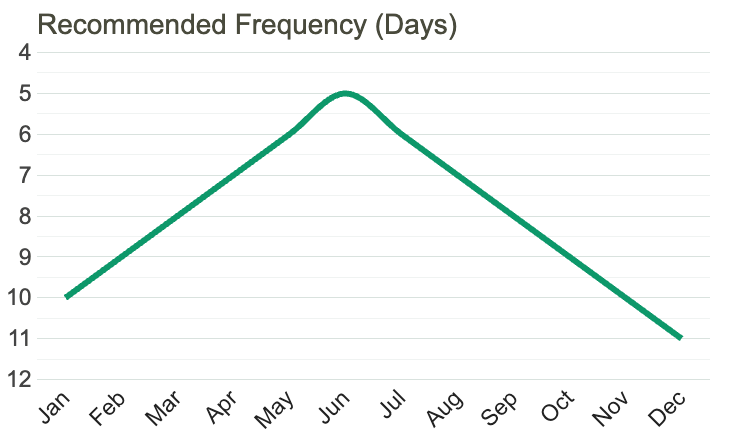
When watering this plant, you want to make sure that the soil is moist but not waterlogged. It is best to wait until the top inch of soil has dried out before watering again. When watering, try to water the soil around the base of the plant rather than the leaves, as wet leaves can be susceptible to disease. It is also important to make sure that the plant is not sitting in standing water, as this can lead to root rot. If you are unsure if the plant needs water, you can insert your finger into the soil to check the moisture level.
To fertilize this plant, select a balanced fertilizer with equal proportions of nitrogen, phosphorus, and potassium. Apply the fertilizer to the soil around the base of the plant in the early spring and late summer when the plant is actively growing. Be sure to water the plant thoroughly after fertilizing. Avoid over-fertilizing, as this can cause excessive growth and reduce blooming.
Salvia Uliginosa plant prefers well-draining soil with a neutral pH level. The soil should be rich in organic matter and fertile. It is essential to avoid waterlogged soil as it can cause root rot. Sandy loam soil with added compost or peat moss would be an ideal choice for this plant. The soil should be kept moist but not water-logged as the plant requires consistent moisture. It is recommended to amend the soil with compost or organic fertilizer every few months to improve soil fertility. The plant can also benefit from mulching to retain moisture and regulate soil temperature.
To propagate this plant, you will need to take a stem cutting from a healthy and mature plant during the early growing season. Be sure to use clean and sharp gardening scissors or a knife to prevent damage to the stem.
Next, remove any leaves from the lower two-thirds of the stem to prevent moisture loss. Dip the cut end of the stem in rooting hormone powder to encourage root development. Then, place the cutting in a pot with well-draining soil and water it thoroughly.
The cutting will need to be kept in a warm and humid environment, with temperatures between 65 to 75°F (18 to 24°C). You can cover the pot with a plastic bag or place it in a propagator to maintain humidity levels.
Once the cutting has developed roots and new growth, usually in 2 to 4 weeks, it can be transplanted into a larger pot or directly into the garden. Water the new plant regularly and provide it with ample sunlight to encourage healthy growth.