Plant Overview
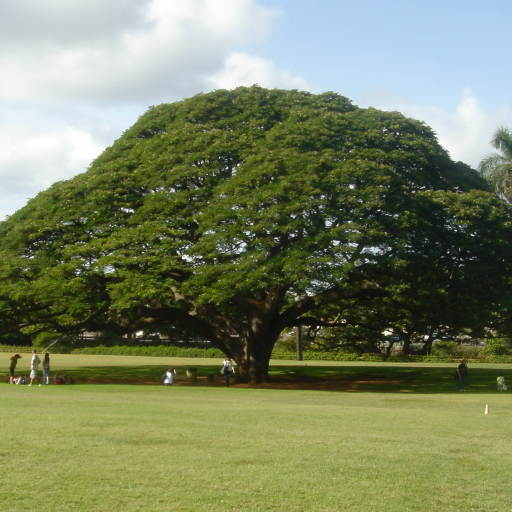
Known as the "Rain Tree" or "Monkey Pod," Samanea saman is the legendary shade-giver of the tropics. Its massive, umbrella-shaped canopy is so iconic that it has become a symbol of protection and community in many Southeast Asian and Caribbean cultures. The name "Rain Tree" comes from its curious habit of folding its leaves when it rains or at sunset, allowing moisture to reach the grass directly beneath it.
🔍 How to Identify
- 🌳 The Canopy: A magnificent, wide-spreading crown that often spans much wider than the tree is tall, creating a perfect, symmetrical natural umbrella.
- 🌸 The "Puffball" Flowers: Distinctive clusters of long, silky pink and white stamens that look like delicate, fuzzy pom-poms scattered across the green foliage.
- 🍃 Sensitive Leaflets: Dark green, feathery leaves that are "nyctinastic," meaning they fold together in pairs during cloudy weather, rain, or at night.
🏡 In Your Garden
- 🏗️ Space Requirements: This is a giant of the plant world. It is not suitable for small backyards or indoor pots; its powerful, surface-level roots need immense room to spread away from sidewalks and foundations.
- 🌦️ The Grass Effect: Because the leaves fold during storms and at night, the ground beneath a Rain Tree often stays greener than under other trees, as more rainwater and morning dew reach the soil.
- 🪵 Craftsman’s Choice: If you own "Monkey Pod" furniture, it likely came from this tree. The wood is prized by artisans for its beautiful, swirling dark chocolate and golden-yellow grain.
⚠️ Safety & Toxicity
- ✅ Safe Status: The Rain Tree is generally considered non-toxic to humans, cats, and dogs.
- 🍬 Sweet Pods: The tree produces thick, black, leathery pods containing a sticky, sweet pulp. In many regions, these are used as "cow candy" because livestock find them delicious and nutritious.
- 🧹 Maintenance Note: While safe, the falling seed pods can be quite messy on driveways and may attract foraging wildlife or insects to your yard.
✨ Fun Fact
The "rain" that people sometimes feel falling from a perfectly clear sky while standing under a Saman tree isn't actually water—it is often the sugary honeydew excreted by colonies of cicadas feeding high up in the canopy!

Detailed Care Instructions
To grow a Samanea saman plant, also known as the Rain Tree or Monkeypod tree, follow these steps:
- Choose a suitable location: Samanea saman plants prefer a sunny location with well-draining soil. Ensure that the area has enough space for the tree to grow and spread its branches.
- Planting: Dig a hole that is twice as wide and as deep as the root ball of the plant. Place the plant in the hole and backfill it with the soil, gently pressing it down to eliminate air pockets. Water the plant thoroughly after planting.
- Watering: Water the plant regularly, especially during dry periods, to keep the soil consistently moist. However, avoid over-watering, as this can lead to root rot. Water deeply rather than frequently to encourage deep root growth.
- Mulching: Apply a layer of organic mulch, such as wood chips or straw, around the base of the tree. Mulch helps retain moisture, suppresses weed growth, and provides additional nutrients as it decomposes.
- Pruning: Prune the tree regularly to remove dead or damaged branches and promote a desirable shape. Pruning should be done during the dormant season to avoid excessive sap bleeding.
- Fertilizing: Apply a balanced slow-release fertilizer or a well-composted organic fertilizer once in spring and again in fall to supply essential nutrients to the tree.
- Protection from pests and diseases: Monitor the tree for any signs of pests or diseases, such as aphids, caterpillars, or fungal infections. If necessary, use appropriate insecticides or fungicides to control the problem.
- Provide support: As the tree grows, it may need support to prevent it from falling over during strong winds or storms. Install sturdy stakes or tree ties to anchor the tree until its root system becomes well-established.
- Patience: Samanea saman trees can take several years to reach their full size and maturity. Be patient and continue to provide proper care and maintenance to ensure healthy growth over time.
Please note that Samanea saman plants can be considered invasive in some regions, so it is essential to check local regulations and restrictions before planting.
To water this plant, you should first check the soil moisture level by inserting your finger or a moisture meter into the soil. If the soil feels dry, it is time to water the plant. When watering, ensure that the water reaches the root zone by applying water at the base of the plant, avoiding watering the leaves or trunk. Use a watering can or a hose with a nozzle on a gentle setting to control the flow and prevent overwatering. Water the plant deeply, allowing the water to soak into the soil, but not to the point where the soil becomes waterlogged. It is important to note that this plant prefers slightly moist soil, so avoid allowing it to completely dry out between watering. The frequency of watering will depend on environmental factors such as humidity, temperature, and sunlight, so monitor the soil moisture regularly and adjust your watering routine accordingly.
For optimal growth, use a balanced fertilizer with an N-P-K ratio of 10-10-10 or 14-14-14. Apply the fertilizer once every 2-3 months during the active growing season, which is typically spring and summer. Follow the package instructions for the appropriate amount to use based on the size of your plant. Be careful not to over-fertilize, as this can harm the plant. Water the plant before and after fertilizing to prevent burning.
Samanea Saman is a tropical tree species that requires well-drained soil that is rich in nutrients. The ideal soil should have good water retention capacity to ensure consistent moisture levels and high organic matter content for improved soil fertility. The soil should be slightly acidic, with a pH range of 5.5 to 6.5, to promote optimal growth and nutrient uptake.
To achieve the right soil conditions, it is recommended to mix regular garden soil with organic matter such as compost, manure, or leaf mold. This will improve soil structure, increase water-holding capacity and nutrients availability. Before planting the Samanea Saman seedling, it is advisable to dig a planting hole that is twice the size of the root ball and add a layer of mulch on top to help conserve moisture.
Avoid using sandy or heavy clay soil, as it may not provide the ideal growing conditions for the tree. Additionally, ensure that the soil is free of any toxic chemicals or pollutants that could damage the plant's roots and stunt its growth. Regular soil testing can also help identify and correct any nutrient deficiencies or imbalances that may be affecting the tree's health and growth.
To propagate this plant, you will need to start with a healthy mother plant. Take cuttings of the plant that are around 6 inches long and remove the leaves from the lower 2/3 of the cutting. Dip the cut end of the cutting in rooting hormone to encourage root development. Place the cutting in a pot filled with moist potting soil and cover it with a plastic bag to hold in moisture. Keep the pot in a warm and bright location, but out of direct sunlight. Mist the cutting occasionally to keep the soil moist. After a few weeks, you should start to see new roots forming. Once the cutting has rooted, remove the plastic bag and continue to care for the new plant as you would a mature Samanea Saman plant.








