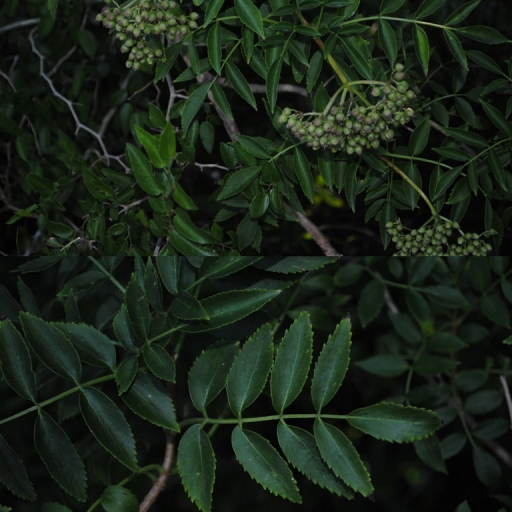
Plant Overview
Known affectionately as the Southern Elderberry or Sauco, this resilient shrub is a botanical treasure of South America. From the humid banks of the Paraná River to the rural gardens of Argentina and Brazil, it has been cherished for centuries as a "medicine chest" plant. Its umbrella-like clusters of snowy flowers and heavy bunches of dark berries make it a striking ornamental choice that bridges the gap between wild nature and home gardening.
🔍 How to Identify
- 🌿 The Foliage: Features bright green, compound leaves with 5 to 11 lance-shaped leaflets. If you look closely, the edges are finely serrated, resembling the edge of a tiny saw.
- 🌸 The Blooms: Tiny, creamy-white flowers are packed into large, flat-topped clusters. These "floral umbrellas" emit a delicate, sweet fragrance that can perfume an entire corner of a garden.
- 🍇 The Fruit: As the season progresses, the flowers transform into dense, drooping bunches of small, glossy berries that transition from green to a deep, inky purple-black when ripe.
🏡 In Your Garden
- 💧 A Thirst for Life: This species naturally thrives along riverbanks and moist plains. In a garden setting, it is happiest in "soggy" spots where other plants might struggle with wet feet, though it still requires well-draining soil to prevent root rot.
- 🐦 The Bird Magnet: If you are a birdwatcher, the Sauco is a must-have. Its berries are a high-energy feast for local avian species, who will flock to your garden in late summer to help themselves to the harvest.
⚠️ Safety & Toxicity
- 🚫 Toxic When Raw: All green parts of the plant, including the stems, leaves, and unripe/raw berries, contain cyanogenic glycosides. Ingesting them raw can cause nausea, vomiting, and severe digestive distress.
- 🐾 Pets and Kids: Keep curious pets and toddlers away from the raw berries. While the berries are often used for syrups and jams, they must be fully ripe and thoroughly cooked to neutralize the toxins and make them safe for consumption.
✨ Fun Fact
In South American folklore, the hollowed-out branches of the Sambucus australis were traditionally used to craft simple flutes and whistles. The inner "pith" of the wood is so soft that it can be easily pushed out, leaving a perfect natural tube for making music!

Detailed Care Instructions
To grow Sambucus Australis, also known as the Australian Elderberry, you can follow these steps:
- Choose a suitable location: Sambucus Australis prefers full sun to partial shade and well-draining soil. Ensure that the chosen spot receives at least 6 hours of direct sunlight per day.
- Prepare the soil: Make sure the soil is fertile, rich in organic matter, and well-draining. Add compost or aged manure to improve its fertility and drainage if necessary.
- Planting: Dig a hole that is twice as wide and deep as the plant's root ball. Place the plant in the hole, making sure the top of the root ball is level with or slightly above the soil surface. Backfill the hole with soil, gently firming it around the plant.
- Watering: Provide ample water to establish the plant. Water thoroughly after planting and keep the soil consistently moist during the first year until the plant becomes established. Afterward, Sambucus Australis is quite drought-tolerant but benefits from regular watering during dry spells.
- Mulching: Apply a layer of organic mulch, such as wood chips or straw, around the base of the plant. Mulch helps retain moisture, suppress weeds, and regulate soil temperature.
- Pruning: Prune the plant in late winter or early spring before new growth starts. Remove any dead, damaged, or crossing branches. Additionally, stimulate bushier growth by cutting back a third of the older stems each year.
- Fertilizing: Sambucus Australis generally does not require heavy fertilization. However, you can apply a balanced slow-release fertilizer in early spring to encourage healthy growth.
- Pest and disease control: Sambucus Australis is relatively resistant to pests and diseases. However, it's always a good idea to keep an eye out for common issues like aphids or powdery mildew. Use organic insecticides or fungicides if necessary.
- Harvesting: The Sambucus Australis plant produces dark purple edible berries in late summer or early fall. Wait until they are fully ripe before harvesting. Berries can be used for making jams, jellies, syrups, or consumed fresh.
Remember that proper care and maintenance are crucial for the healthy growth of Sambucus Australis. Regular watering, mulching, pruning, and protecting from pests and diseases will help your plant thrive.
To properly water this plant, you should first check the soil to see if it is dry to the touch. If the soil feels dry, then it is time to water the plant. You should water thoroughly but avoid overwatering, as this is detrimental to the plant's health. When watering, direct the water at the base of the plant and avoid getting the leaves wet. Watering should be done in the morning or evening, as watering during peak sunlight can cause sunscald or burn the leaves. Additionally, this plant prefers well-draining soil, so make sure not to let it sit in standing water.
For optimal growth and health, fertilize this plant in early spring using an organic, slow-release fertilizer. Apply the fertilizer according to the package instructions, and water thoroughly after application. During the growing season, you can also supplement with a liquid, water-soluble fertilizer every three to four weeks. Avoid fertilizing during periods of drought or extreme heat, as this can stress the plant. Finally, be sure to monitor the plant's response to fertilizer and adjust your fertilizing schedule as needed to avoid over-fertilization.
The Sambucus Australis plant prefers a well-draining soil that is rich in organic matter. It does well in loamy soils that are slightly acidic to neutral in pH. The soil should be slightly moist but not waterlogged to avoid root rot. The use of humus, compost or well-rotted manure is recommended to improve soil structure and fertility. Additionally, aerating the soil before planting and mulching afterwards will help to retain moisture and suppress weeds. Avoid using heavy clay soil or soils with high alkalinity.
To propagate this plant, take cuttings from a healthy parent plant in the early spring before the plant starts to grow. Cut a 4-inch section of the stem just below where a set of leaves attach to the stem. Remove the leaves on the lower 2 inches of the cutting, leaving only the top leaves. Dip the cut end of the cutting in rooting hormone, and place the cutting in a pot filled with a mixture of perlite and peat moss. Keep the soil moist but not waterlogged, and place the pot in a warm, bright area that receives indirect sunlight. After a few weeks, roots should appear at the bottom of the cutting. Once the cutting has established roots, it can be transplanted into a larger pot or directly into the garden.








