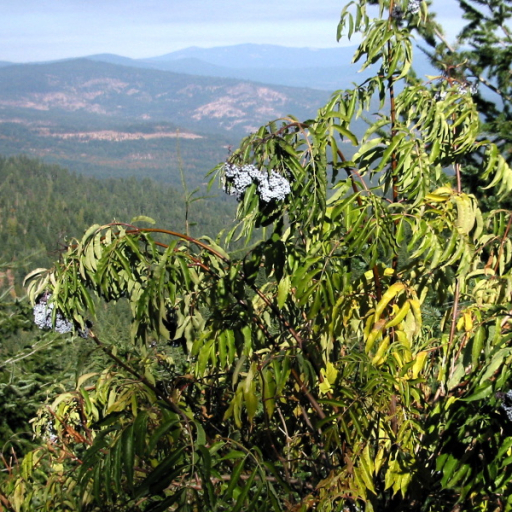
Plant Overview
Affectionately known as the Blue Elderberry, this plant is a shimmering centerpiece of the American West. While most elderberries lean toward dark purple or black, this species coats its fruit in a distinct, powdery blue "bloom" that looks like a dusting of frosted sugar. It is a cornerstone species for native gardeners looking to transform their backyard into a bustling wildlife sanctuary.
🔍 How to Identify
- 🫐 The Fruit: The most striking feature is the clusters of small, dark berries covered in a thick, waxy, light-blue powder (glaucous coating), giving them a soft "denim" appearance.
- 🌸 The Blooms: In late spring, it produces large, flat-topped clusters of tiny, creamy-white flowers that emit a faint, sweet perfume.
- 🍃 The Foliage: Leaves are "pinnately compound," meaning they grow in opposing pairs of 5 to 9 leaflets with sharply saw-toothed edges.
- 🌳 Growth Habit: It typically grows as a large, multi-stemmed shrub but can be pruned into a graceful, small tree reaching up to 30 feet in ideal conditions.
🏡 In Your Garden
- 🦋 Wildlife Hotel: This is one of the best plants for biodiversity; it provides nectar for butterflies, nesting sites for small birds, and high-energy food for migrating songbirds.
- 💧 Adaptable Roots: While it naturally thrives near stream banks, it is surprisingly drought-tolerant once established. It prefers "tough love" over pampered, soggy soil, which can lead to root rot.
- ✂️ Fast Growth: Be prepared for speed! It can grow several feet in a single season, making it excellent for quick privacy screens or filling empty corners of a landscape.
⚠️ Safety & Toxicity
- 🚫 Status: Toxic when raw; edible only when processed.
- 🧪 The Details: Like all elderberries, the roots, stems, leaves, and unripe/raw berries contain cyanogenic glycosides. If ingested raw, they can cause severe nausea and vomiting.
- 🐾 Pets & Children: Keep curious pets and kids away from the raw berries. However, once the berries are cooked into jams, syrups, or pies, the heat neutralizes the toxins, making them a famous herbal remedy.
✨ Fun Fact
Native Americans traditionally referred to the Blue Elderberry as the "Tree of Music." They used the straight, hollowed-out soft-pithed branches to craft flutes and "clapper sticks" for ceremonial songs.

Detailed Care Instructions
To grow Sambucus Cerulea (also known as blue elderberry), you can follow these steps:
- Obtaining seeds or seedlings: You can either collect seeds from mature blue elderberry fruits or purchase seedlings from a nursery or online supplier.
- Site selection: Choose a suitable location for planting. Blue elderberries prefer full sun or partial shade and well-drained soil.
- Soil preparation: Prepare the planting area by clearing away any weeds, rocks, or debris. The soil should ideally have a pH level between 5.5 and 7.5. If needed, amend the soil with compost or organic matter to improve its quality and fertility.
- Planting seeds or seedlings: If using seeds, sow them in well-prepared soil at the appropriate depth recommended on the seed packet. If using seedlings, dig a planting hole that is slightly larger than the root ball and place the seedling into the hole, backfilling with soil and gently firming it around the base.
- Watering: Water the newly planted seeds or seedlings thoroughly to ensure proper absorption and root establishment. Provide regular watering to keep the soil consistently moist during the first growing season.
- Mulching: Apply a layer of organic mulch around the base of the plant, such as wood chips or straw, to help retain moisture, suppress weeds, and provide insulation.
- Pruning and maintenance: Trim back any dead or damaged growth as needed. Blue elderberries benefit from annual pruning to remove old or weak branches, promote airflow, and maintain a desired shape. Prune during the dormant season, typically in late winter or early spring.
- Fertilizing: Blue elderberries usually do not require regular fertilization, but if the soil is nutrient-poor, you can apply a balanced organic fertilizer in early spring before new growth begins.
- Pest and disease control: Monitor the plant for any signs of pests, such as aphids or spider mites, and apply appropriate organic treatments if necessary. Blue elderberries are generally resistant to diseases, but it's still important to keep an eye out for any issues.
- Harvesting: Blue elderberries usually start producing fruit in their second or third year. Harvest the ripe, dark berries by gently shaking the flower clusters or cutting them from the stem. Use gloves as the berries can stain your hands. The berries can be eaten fresh, used in cooking, or made into delicious jams, jellies, or syrups.
Remember to check your local regulations before planting Sambucus Cerulea, as it may be considered invasive in some regions.

Place in a bright room that is sun drenched almost all day. Or directly in a south-facing window.

To properly water Sambucus Cerulea, it is important to keep a few key factors in mind. First, be mindful of the plant's specific water requirements and aim to provide adequate hydration without over-watering.
One crucial step is to ensure the plant is located in the appropriate type of soil, such as well-draining soil with good moisture retention properties. This kind of soil encourages proper drainage, preventing issues such as waterlogging and root rot.
When it comes to watering frequency, it is generally recommended to check the soil moisture before deciding to water. The top layer of soil should feel slightly dry to the touch, indicating that it is time to water the plant. However, be cautious not to allow the soil to become bone dry between watering sessions.
A thorough watering is crucial to ensure that water reaches the root zone of the plant. Watering the plant until the excess moisture drains out through the drainage holes is a good practice. This helps to flush out any accumulated salts or impurities in the soil.
It is advisable to water Sambucus Cerulea in the early morning or late evening when temperatures are cooler. Watering during these periods minimizes the risk of evaporation, allowing the plant to uptake the required moisture effectively.
In hot and dry climates, or during periods of drought, it may be necessary to increase the frequency of watering. Consistent monitoring of the plant's water needs and adjusting the watering schedule accordingly is key to maintaining its health and vitality.
Lastly, it is important to consider the overall climate and weather conditions in your region when determining the watering schedule for the Sambucus Cerulea plant. Factors like rainfall and humidity can impact the plant's water requirements, so it is crucial to adapt and provide water accordingly.
Remember, providing appropriate and consistent watering practices is essential for the overall health and survival of Sambucus Cerulea.
To fertilize your Sambucus Cerulea plant, follow these instructions:
- Choose a balanced water-soluble fertilizer with equal ratios of nitrogen (N), phosphorus (P), and potassium (K). A 10-10-10 or 20-20-20 fertilizer is suitable.
- Dilute the fertilizer according to the manufacturer's instructions. Typically, this involves mixing a specific amount of fertilizer with water.
- Apply the diluted fertilizer to the soil around the base of the Sambucus Cerulea plant. Avoid direct contact with the plant's leaves or stems as it may cause burn marks.
- Water the plant immediately after applying the fertilizer to help it absorb the nutrients.
- Repeat the fertilization process every four to six weeks during the plant's active growth period, which is generally from spring to early fall. Avoid fertilizing during winter dormancy.
- Monitor the plant's response to the fertilizer application. If you notice any signs of over-fertilization, such as leaf burn or wilting, reduce the amount of fertilizer or frequency of application.
- Remember to follow a regular watering schedule, ensuring the plant receives adequate moisture alongside the fertilizer.
Note: It is important to research the specific needs of Sambucus Cerulea as these instructions may vary depending on the individual plant species and its growing conditions.
For the Sambucus cerulea plant, it is important to use a specific type of soil that caters to its specific needs. The ideal soil type for this plant is well-draining and rich in organic matter. It should have a slightly acidic to neutral pH level, ranging from 6.0 to 7.5.
The soil should be loose and loamy, allowing for proper root growth and development while also facilitating good drainage. A loamy soil texture allows for adequate moisture retention, preventing the plant from becoming waterlogged or experiencing excessive dryness.
In terms of nutrients, the soil should be fertile and well-supplied with essential elements such as nitrogen, phosphorus, and potassium. These nutrients are necessary for the plant's overall growth, flowering, and fruiting.
Additionally, incorporating organic matter into the soil is beneficial. Organic matter improves soil structure, enhances nutrient availability, and promotes better moisture retention. This can be achieved by mixing in compost or well-rotted manure before planting.
It is worth noting that Sambucus cerulea prefers consistently moist soil but is also sensitive to waterlogged conditions. Therefore, proper drainage is crucial to prevent the roots from sitting in water, which can lead to root rot and other detrimental issues.
Overall, selecting a well-draining, slightly acidic to neutral, loamy soil that is rich in organic matter and nutrients will provide an optimal growing environment for the Sambucus cerulea plant.
To propagate Sambucus cerulea plant, you can follow these steps:
- Select a healthy and mature Sambucus cerulea plant that is at least two years old. Ensure that the parent plant is free from diseases or pests.
- In early spring, when the plant is still dormant, locate a suitable shoot that you wish to propagate. Look for a young and vigorous stem that is around 6-8 inches in length.
- Using clean and sharp pruning shears or a knife, make a slanted cut just below a leaf node. A leaf node is a swollen area on the stem where a leaf is or was attached.
- Prepare a rooting hormone by following the instructions on the label. Dip the bottom end of the cutting, including the leaf node, into the rooting hormone to encourage root development.
- Fill a small pot or container with a well-draining rooting medium. Ideally, you can use a mix of equal parts peat moss and perlite or a commercial seed-starting mix.
- Make a planting hole in the rooting medium using a pencil or your finger. Insert the cutting into the hole, burying at least half of the stem. Firmly press down the soil to stabilize the cutting.
- Mist the cutting with water to provide moisture and create a humid environment. Cover the pot with a plastic bag or use a propagation dome to retain moisture and warmth.
- Place the pot in a bright area with indirect sunlight. Maintain a temperature of around 70-75°F (21-24°C) to promote root growth.
- Check the moisture level of the rooting medium regularly and make sure it stays consistently moist, but not soaking wet. Water the cutting as needed.
- After a few weeks, gently tug the cutting to check for resistance, indicating root development. Once roots have formed and the cutting can withstand a slight tug, it is ready to be potted into a larger container.
- Prepare a larger pot or choose a suitable spot in your garden for transplanting. Fill the container or prepared hole with well-draining soil.
- Carefully remove the cutting from the small pot, taking care not to damage the fragile roots. Place the cutting into the new pot or hole and backfill with soil. Firmly press down to secure the plant in place.
- Water the newly planted cutting thoroughly to settle the soil and provide initial hydration. Maintain regular watering to keep the plant adequately moist during its establishment phase.
- Monitor the growth of the propagated Sambucus cerulea plant and provide appropriate care such as regular watering, fertilizing, and pruning as needed.
Note: It is essential to conduct research on the specific requirements and care instructions for Sambucus cerulea for optimal propagation success.








