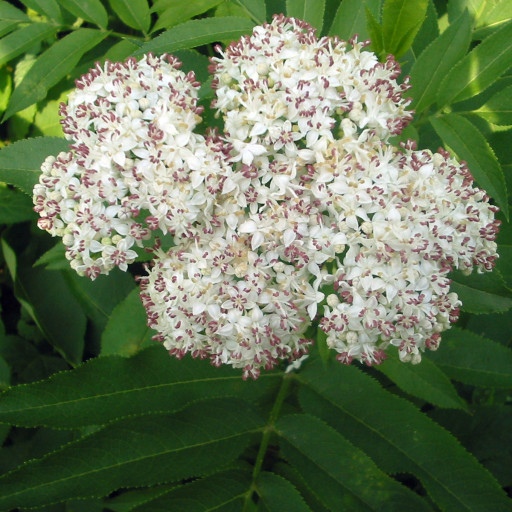
Plant Overview
Known widely as the Danewort or Dwarf Elder, this herbaceous perennial is the smaller, ground-dwelling cousin of the common Elderberry tree. According to ancient folklore, it was said to spring up only where the blood of Danes or Vikings had been spilled in battle, earning it a somewhat macabre but fascinating reputation. While it shares the delicate floral lace of its relatives, this plant stays low to the earth and carries a much more potent punch of toxicity.
🔍 How to Identify
- 🌿 The Leaves: Long, elegant leaflets (usually 5 to 9) that are sharply serrated and pointier than the common elderberry. They have a distinct, slightly unpleasant smell when crushed.
- 🌸 The Flowers: Large, flat-topped clusters of tiny white or pink-tinted flowers with striking purple-red anthers. Unlike the woody elder, these bloom at the top of green, fleshy stems.
- 🍒 The Berries: Small, glossy black drupes that sit upright in clusters. They look enticingly like edible elderberries, but they stay upright rather than drooping down when ripe.
🏡 In Your Garden
- 🌱 Spreading Habit: Unlike the common elder bush, the Dwarf Elder is a true perennial that dies back to the ground in winter. It spreads aggressively via underground rhizomes, meaning it can quickly take over a garden bed if not contained.
- 💧 Moisture Lover: You will most likely find this plant in damp ditches, woodland clearings, or along old roadsides. It thrives in nitrogen-rich soil and loves a spot where its "feet" can stay cool and moist.
⚠️ Safety & Toxicity
- 🚫 Status: TOXIC. Every part of Sambucus ebulus is poisonous to humans and animals, particularly the roots and the raw berries.
- 🤮 The Risk: Ingestion causes severe nausea, violent vomiting, and abdominal pain. It is often confused with the edible Sambucus nigra, so extreme caution is advised for foragers; the key difference is that Danewort is a "herb" (no woody bark) while Common Elder is a "tree."
- 🐾 Pets and Kids: The attractive berries are a significant risk for curious children and pets. It is generally recommended to remove this plant from play areas.
✨ Fun Fact
In medieval times, Danewort was used as a dye to turn hair black. It was also believed that if you planted it around your house, it would prevent snakes from entering, though modern science suggests the snakes probably just didn't like the smell!

Detailed Care Instructions
To grow Sambucus Ebulus, also known as dwarf elder or danewort, follow these steps:
- Planting: Start by selecting a suitable location. Sambucus Ebulus prefers full sun to partial shade and well-drained soil. Ensure the soil pH is neutral to slightly acidic. Soak the seeds in water for 24 hours before planting to help with germination.
- Germination: Sow the seeds in the prepared soil, either directly in the ground or in pots. Plant the seeds about ¼ inch deep and space them 12-18 inches apart. Water the soil gently to keep it moist.
- Watering: Keep the soil consistently moist, especially until the seeds germinate. Once the plant becomes established, it can tolerate some drought. However, regular watering during dry spells will promote healthier growth and higher fruit yield.
- Maintenance: Remove any competing weeds around the Sambucus Ebulus plants to give them room to grow. Mulching around the plants can help retain soil moisture and suppress weeds. Provide occasional fertilizer to promote healthy growth, using a balanced organic fertilizer.
- Pruning: Prune the plant in early spring to remove old, damaged, or weak branches. This encourages new growth and helps maintain the plant's shape. Remove any dead flowers or foliage regularly to prevent disease.
- Harvesting: Once the plant reaches maturity, it will produce clusters of small black berries. Harvest the berries when they are fully ripe, usually in late summer or early fall. The berries can be used for culinary purposes or dried for medicinal use.
Remember to check the local regulations regarding growing Sambucus Ebulus, as it may be considered an invasive species in some regions.

Place in a bright room that is sun drenched almost all day. Or directly in a south-facing window.

The plant requires frequent watering during the growing season, especially when there is a drought. It is important to ensure the soil is continuously moist but not waterlogged to avoid waterlogging and root rot. The best time to water is early morning or late afternoon when the sun is not too intense. It is advisable to water at the base of the plant, rather than overhead, to prevent the leaves from getting wet and risking fungal infections. Mulching around the base of the plant can also help to retain moisture in the soil. In winter, the plant requires less watering, but the soil should not be allowed to dry out completely.
To fertilize this plant, first, choose a well-balanced fertilizer that contains equal amounts of nitrogen, phosphorus, and potassium. Next, apply the fertilizer evenly around the base of the plant, avoiding direct contact with the stem or leaves. Finally, water the plant thoroughly to help distribute the fertilizer throughout the soil. It is important to follow the manufacturer's instructions on the fertilizer packaging and not to over-fertilize, as this can harm the plant.
The ideal soil for Sambucus Ebulus plant is well-draining, slightly acidic, and rich in organic matter. The pH level of the soil should be between 5.5 to 6.5. The plant prefers loamy or sandy soil that is not too heavy or clayey as it can result in poor drainage and root rot. It thrives in moist soil but can tolerate short periods of drought. It is important to avoid using soil that has been previously cultivated with chemicals or pesticides as it can affect the plant's growth and health. A good soil mix for Sambucus Ebulus plant can be made by combining garden soil, peat moss, and perlite or vermiculite. Additionally, regular fertilization with a balanced, slow-release fertilizer can help promote healthy growth.
To propagate this plant, take stem cuttings from the parent plant in the early spring or early fall. Cuttings should be about 6-8 inches long and should have at least two sets of leaves. Remove the bottom set of leaves and dip the cut end of the stem in rooting hormone. Plant the cuttings in well-draining soil and keep them consistently moist but not saturated. Cover the cuttings with a plastic bag or clear container to create a humid environment. Keep the container in a bright but indirect light location. After about 4-6 weeks, roots should start to form and new growth should appear. Once the new plants have established a root system, they can be transplanted to their permanent location.








