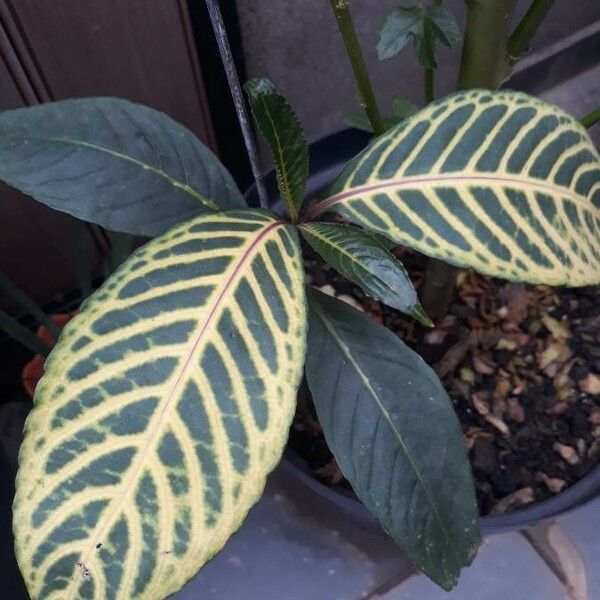
Plant Overview
Often called the Zebra Plant or Fire-finger, Sanchezia nobilis is a tropical masterpiece known for its "electric" yellow veins and architectural presence. Native to the lush rainforests of Ecuador and Peru, this plant was a Victorian-era favorite and continues to be a staple for anyone wanting to create a dramatic, prehistoric jungle aesthetic in their home or garden.
🔍 How to Identify
- 🍃 Bold Foliage: Large, lance-shaped leaves that are deep emerald green, marked by striking, symmetrical veins in creamy yellow or ivory.
- 🔥 Vibrant Blooms: Upright flower spikes featuring bright red or orange bracts (leaf-like structures) from which tubular yellow flowers emerge.
- 📏 Growth Habit: A semi-woody, upright shrub that can grow quite large—reaching up to 6–8 feet in the wild, though much smaller in indoor pots.
🏡 In Your Garden
- 💧 Humidity is Key: Because of its rainforest origins, this plant is prone to "crispy edges" if the air is too dry. Misting or a pebble tray is often necessary for indoor specimens.
- ✂️ Shape Management: It tends to get "leggy" or thin at the bottom as it grows. Regular pruning or pinching back the stems encourages a bushier, more compact shape that highlights the foliage.
- ☀️ Light Nuance: While it loves bright light to keep its yellow veins vivid, direct afternoon sun can scorch the leaves. It thrives in filtered "dappled" light, mimicking the forest canopy.
⚠️ Safety & Toxicity
- 🟢 Status: Generally considered non-toxic to humans and pets.
- 🧴 Skin Sensitivity: While not poisonous, the milky sap inside the stems can occasionally cause mild skin irritation for those with sensitive skin. It is best to wear gloves when pruning.
✨ Fun Fact
The Sanchezia is a biological magnet for hummingbirds! In its native habitat, the bright red bracts and tubular yellow flowers are perfectly shaped for a hummingbird’s beak, making it a vital "fueling station" for these tiny birds.

Detailed Care Instructions
| Humidity | Normal |
| Lighting | Part Sun |
| Difficulty | Medium |
| Hibernation | Cold Period |
| Temperature | 18°C - 27°C |
| Hardiness Zones | 9 - 11 |
To grow a Sanchezia Nobilis plant, also known as the gold fever plant, you can follow these steps:
- Planting: Choose a well-draining pot filled with rich and nutrient-dense soil. Select a pot that is slightly larger than the root ball of the plant, as these plants don't require a lot of space. Make sure the pot has drainage holes to prevent waterlogging.
- Lighting: Provide bright, indirect light to the plant. Avoid placing it in direct sunlight as it may scorch the leaves. Sanchezia Nobilis thrives in partial shade or a filtered light environment.
- Temperature: This plant prefers warm temperatures ranging between 60-80°F (15-27°C). It can tolerate slightly cooler conditions, but it is best to keep it away from drafts and extreme temperature fluctuations.
- Watering: Keep the soil consistently moist but avoid overwatering, as it may lead to root rot. Water when the top inch of soil feels dry to the touch. Mist the plant occasionally to provide humidity, especially during drier months.
- Fertilization: Feed your Sanchezia Nobilis plant every 2-4 weeks during the growing season with a balanced liquid fertilizer. Follow the instructions on the fertilizer packaging for proper dosage and application.
- Humidity: The plant prefers higher humidity levels, so misting the leaves regularly or placing a tray of water nearby can help increase the humidity around the plant.
- Pruning: Trim the yellow or brown leaves to maintain the aesthetics of the plant. Prune any excessively leggy or overgrown stems to encourage compact growth.
- Repotting: Sanchezia Nobilis plants are slow growers, so repotting is only necessary if the plant becomes root-bound. Repot it in the spring using a slightly larger pot with fresh soil.
- Propagation: You can propagate Sanchezia Nobilis through stem cuttings. Take a cutting with at least two leaf nodes and place it in moist soil or water until it develops roots. Keep the cuttings in a warm and humid environment until established.
By following these guidelines, you can successfully grow a Sanchezia Nobilis plant and enjoy its beautiful foliage.

Place in a window with dappled sun or a spot in the middle of a room. Or directly in a window facing west or east.

Sanchezia Nobilis is a tropical plant that requires frequent watering to thrive. The best way to water this plant is by using the soak and dry method. This means thoroughly saturating the soil until the excess water drains out of the bottom of the pot. Wait until the topsoil is dry to the touch before watering again. It's important not to let the soil dry out completely, as this can cause the leaves to wilt and the plant to become stressed. It's also important not to overwater the plant and let it sit in water, as this can cause root rot. When watering, it's best to use room temperature water to avoid shocking the plant. Additionally, Sanchezia Nobilis prefers high humidity, so misting the leaves regularly can help keep it healthy and happy.
To fertilize Sanchezia Nobilis plant, use a balanced fertilizer with equal parts nitrogen, phosphorus, and potassium. Apply the fertilizer once every two weeks during the growing season (spring and summer) and reduce the frequency to once a month during the winter. Water the plant thoroughly before fertilizing to prevent root burn. Avoid over-fertilizing as this can cause leaf burn and stunted growth. Follow the recommended dosage on the fertilizer label for maximum effectiveness.
Sanchezia Nobilis plant prefers a well-draining soil that is rich in organic matter. The soil should be acidic to slightly acidic with a pH range between 6.0 and 7.0. A soil mix that is suitable for this plant includes a combination of peat moss, perlite, and coarse sand. The peat moss helps to retain moisture and nutrients while the perlite and coarse sand provide good drainage. It is recommended to avoid heavy clay soils that do not drain well. A good quality, nutrient-rich soil mix that is well-draining is essential for the healthy growth and development of Sanchezia Nobilis plant.
There are several methods to propagate this plant. Here are some details:
- Stem cuttings: Take a stem cutting from the mother plant that is around 4 to 6 inches long, and make a cut right below the node. Remove the lower leaves and dip the cut end in rooting hormone. Then, place the cutting in a pot filled with moist soil. Keep the soil moist and maintain a warm, humid environment until new growth appears.
- Division: Carefully dig up the mother plant and separate the stems into smaller sections, making sure each division has a good root system. Transplant each section into its own pot filled with moist soil and keep it evenly moist until new growth appears.
- Layering: Bend a low-growing stem down to the ground and cover it with soil, leaving the tip exposed. Secure the stem with a wire or pin. After several weeks, roots should develop from the buried portion of the stem. Cut the stem from the mother plant and transplant the new plant into a pot filled with moist soil.
Whichever method you choose, make sure to keep the newly propagated plant out of direct sunlight and keep the soil evenly moist until it establishes a strong root system. Once the plant is established, gradually expose it to brighter light and maintain a regular watering and fertilizing schedule.
Common pests of the shrubby whitevein include Mealybugs, spider mites. Make a habit of checking your shrubby whitevein frequently for pests so that any infestations can be caught and managed early.








