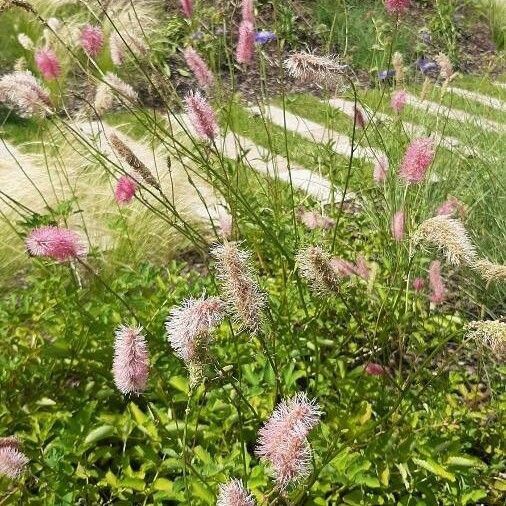
Plant Overview
Known as the Japanese Burnet, this elegant perennial is a favorite for those seeking a touch of whimsy and movement in their landscape. Native to the mountain meadows of Japan, it is beloved for its nodding, "bottlebrush" flower spikes that look like fuzzy pink caterpillars dancing on the breeze. It brings a soft, romantic texture to the garden that few other plants can replicate.
🔍 How to Identify
- 🌸 Fuzzy Blooms: The most striking feature is the arching, cylindrical flower spikes, which are densely packed with tiny pink or rose-colored stamens that give the plant a "fluffy" appearance.
- 🍃 Serrated Foliage: The leaves are pinnate (feather-shaped) with deeply toothed edges, often sporting a sophisticated blue-green or glaucous tint that stays attractive all season.
- 🏹 Elegant Stature: It grows in mounded clumps with slender, wiry stems that rise above the foliage, reaching about 2 to 3 feet in height.
🏡 In Your Garden
- 💧 Moisture Lover: Unlike many garden perennials that prefer to dry out, the Japanese Burnet thrives in soil that stays consistently moist. It is a perfect candidate for the edges of ponds or low-lying areas of the garden where water naturally settles.
- 🦋 Pollinator Party: The unique shape of the flower spikes makes them an easy landing pad for butterflies and bees. It is a fantastic "structural" plant that provides food for late-summer pollinators when other flowers might be fading.
⚠️ Safety & Toxicity
- ✅ Pet & Human Safe: Sanguisorba obtusa is generally considered non-toxic to humans, dogs, and cats. It is a very safe addition to a family-friendly garden.
- 🌿 Texture Warning: While not dangerous, the serrated edges of the leaves can be slightly sharp. If you have very sensitive skin, you may want to wear gloves when dividing large clumps or pruning the base.
✨ Fun Fact
🩸 The Blood-Stopper: The name Sanguisorba comes from the Latin words sanguis (blood) and sorbeo (to soak up). Historically, its relatives were used in traditional medicine as a styptic to stop bleeding, thanks to the high tannin content found in their roots and leaves!

Detailed Care Instructions








